Tag Archives: Late in ’88

10 Ways to Explore Calgary’s Queer History This Pride Season

Calgary’s queer history is closer than you might think. It lives in our parks and theatres, former nightclubs and community spaces—and in the stories of people who fought, organized, celebrated and created community here. This Pride season, go beyond the parade with these 10 ways to explore Calgary’s 2SLGBTQ+ history.

1. Test Your Knowledge at Queer History Trivia

Kick things off tonight at Lougheed House on August 27 with Trivia Night: The Queer History of Pride. This free, 18+ event explores queer history through the ages, with a special focus on Calgary.

Doors open at 6:30 p.m., and trivia begins at 7 p.m. No registration is required, but seating is limited and available on a first-come, first-served basis.

2. Stand Where Calgary’s First Pride Rally Happened

Visit Central Memorial Park, where approximately 140 people gathered for Calgary’s first political Pride rally in June 1990.

Some participants wore masks or paper bags over their heads because they feared being publicly identified as gay or lesbian. Standing there today reminds us how dramatically public 2SLGBTQ+ visibility in Calgary has changed.

3. Explore Transgender History at the CIH Pride Lecture

On September 2 at 7 p.m., historian Dr. Howard Chiang presents Decolonizing Transgender History: The View from the Asia Pacific as part of the Calgary Institute for the Humanities’ annual Queer History Lecture.

This free public event asks us to reconsider how transgender history is written. Drawing on examples from the Sinophone Pacific, Chiang explores gender diversity while questioning whether Western ideas about “transgender” always provide the best framework for understanding experiences in other cultures.

4. See Torch Song and Step Back into the 1970s

From October 1–10, Scorpio Theatre presents Harvey Fierstein’s Torch Song at Calgary’s Pumphouse Theatres.

Set between 1974 and 1980, the landmark play provides a window into gay life after Stonewall and before the AIDS crisis. Director Joey Sayer first directed the play in Calgary in 1990 at the old Forest Lawn Library theatre. For this production, historical material will help audiences better understand the queer world in which the story takes place.

5. Learn About Everett Klippert

Discover the remarkable—and troubling—story of Everett Klippert, a Calgary bus driver who became the last Canadian to be imprisoned for homosexuality.

Everett Klippert (top middle) and his brothers and father—”The Klippert Nine” baseball team.

Klippert was declared a “dangerous sexual offender” and given an indefinite prison sentence simply because he was gay. His case reached the Supreme Court of Canada and became part of the national debate that preceded the partial decriminalization of homosexuality in Canada in 1969.

Watch the award-winning short documentary Gross Indecency: The Everett Klippert Story, which follows Calgary Gay History Project historian Kevin Allen as he investigates Klippert’s life and legacy. The film won Best Alberta Short at the 2018 Calgary International Film Festival.

6. Visit Lois Szabo Commons

Visit Lois Szabo Commons in Calgary’s Beltline and discover the story of one of the city’s pioneering 2SLGBTQ+ community builders. Szabo was one of the founders of Club Carousel, the private social club established in 1970 that became an important gathering place for Calgary’s gay community at a time when openly queer spaces were rare.

Today, the park bearing her name puts that history directly into Calgary’s landscape.

7. Read Not So Normal

Sometimes the best way to understand history is through someone who lived it.

In Not So Normal: Memoirs of a Gay Boomer, Tom Symington recalls growing up gay in postwar Calgary and navigating a society where homosexuality carried stigma, discrimination and very real legal consequences.

His memoir provides a personal window into decades of enormous change in gay life and 2SLGBTQ+ rights—and reminds us how much can change within a single lifetime.

8. Listen to Late in ’88

Put on your headphones and experience Calgary queer history as oral history with Late in ’88, the podcast created by Bronwin Parks and Elinor Svoboda.

Season Two jumps ahead to 1998 and asks what had changed for queer youth during the previous decade—and what hadn’t. They interview many special guests, including Calgary-raised musicians Tegan Quin, Rae Spoon, and historian Kevin Allen. The podcast reminds us that queer history doesn’t just happen in legislatures and courtrooms. It happens in classrooms, social circles, and the memories people carry.

9. Explore A Queer Map of Calgary

Turn the city itself into a history lesson with A Queer Map: A Guide to the LGBTQ+ History of Calgary.

Created through the Calgary Atlas Project using research from the Calgary Gay History Project, the map identifies significant gathering places, organizations, bars and sites of activism and resistance.

Use it to create your own queer history walking tour and discover the stories hiding behind familiar Calgary streets and buildings.

10. Read Our Past Matters

Finally, if you want to understand how all these stories fit together, pick up Kevin Allen’s Our Past Matters: Stories of Gay Calgary.

The book brings together stories of the people, gathering places, organizations, scandals and political struggles that shaped gay life in Calgary. It’s an ideal starting point for anyone who wants to dig deeper into the city’s 2SLGBTQ+ past.
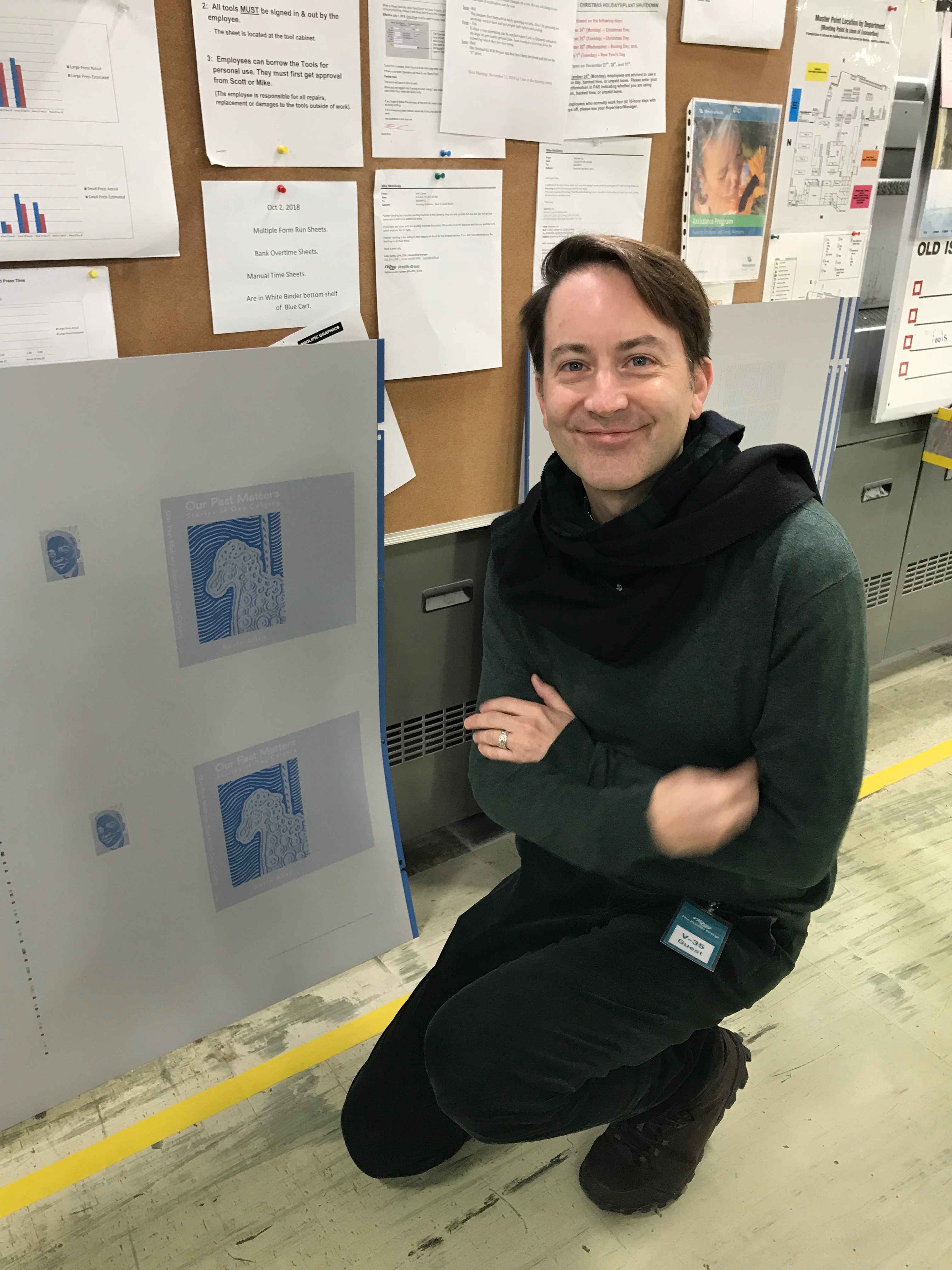
Author Kevin Allen with the print negatives of Our Past Matters in 2018

Calgary’s queer history isn’t just something to read about. It’s something you can walk through, listen to, watch onstage and experience for yourself. Love your City; Know your City. Happy Pride!

{KA}
Late in ’88 Returns for a Second Season

Memory is a funny thing. We remember the big moments, but it is often the smaller details that tell us who we were and how we survived.

That is one of the great strengths of Season Two of Late in ’88, the podcast created by Bronwin Parks and Elinor Svoboda. This new season jumps ahead to 1998, their senior year at a Calgary high school, and asks what had changed for queer youth in the decade since 1988—and what had not.

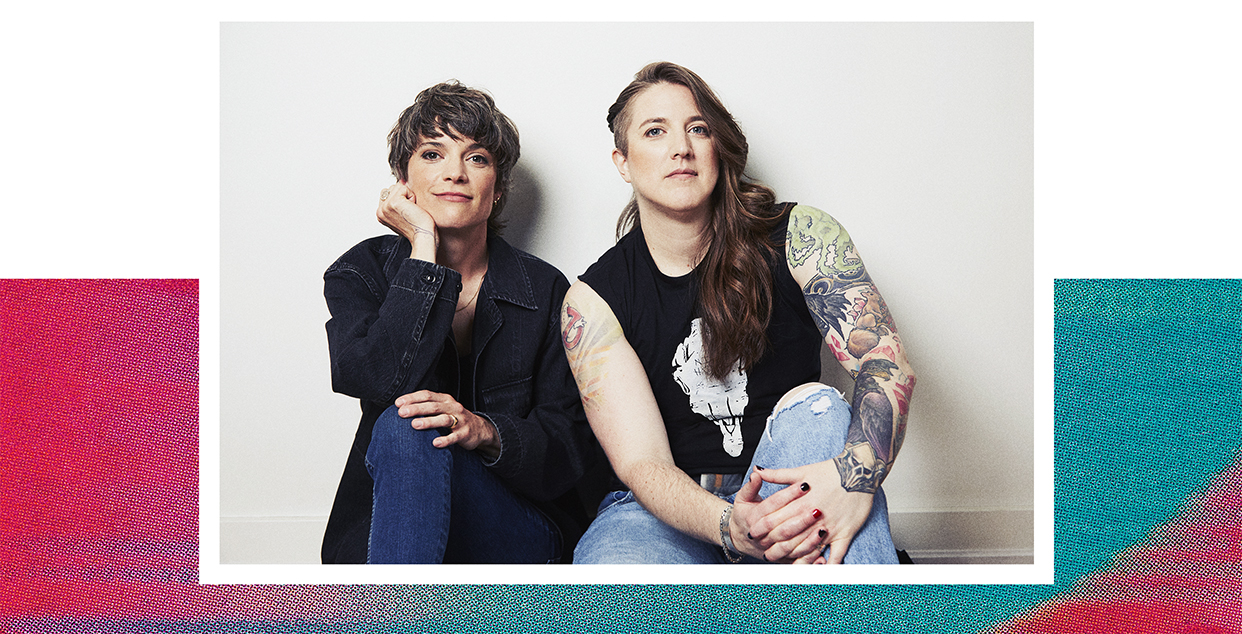
Elinor Svoboda and Bronwin Parks: Late in ’88 Podcast Hosts

The Calgary Gay History Project’s Kevin Allen was pleased to join Bronwin and Elinor again in Episode 2, “The Decade That Changed Queer Canada.” Together, we discuss the AIDS crisis, Calgary’s first Pride parade in 1990, the Delwin Vriend case, cultural backlash, queer community spaces, and the activism that helped reshape Canada in the 1990s.

The episode is a reminder that queer history is not abstract. It lives in classrooms, bars, courtrooms, bedrooms, hospital rooms, community meetings, and the memories we carry with us. The 1990s brought meaningful legal and social change, but that progress was hard-won. It came from people willing to organize, speak up, care for one another, and imagine a different future.

Podcasts like Late in ’88 matter. They do what good oral history should do: they connect personal memory to a larger historical moment. Bronwin and Elinor are generous and thoughtful guides through their own past. They understand that memory is complicated—and powerful.

Image from Late in ’88 Season Two

Season Two of Late in ’88 is well worth your time. Listen, share it, and then ask yourself: whose story still needs to be recorded?

{KA}

Queering the Calgary Games

{Welcome to the final installment in our Winter Olympic Series, written by William Bridel!}

You may have heard of a recent show that is—pardon the pun—burning up the internet. Heated Rivalry has quickly garnered critical acclaim as well as a massive viewing audience both within Canada and globally. Situated in the context of men’s ice hockey, the show, while not without its flaws, is nevertheless broaching important conversations about queer representation in sport. Representation matters. That’s one of the reasons I wanted to write this series of posts about queer Olympians from Calgary.

Sharing these stories has provided an opportunity to celebrate queer representation in sport and to highlight that we’ve always been here! While building on that theme, this post has a somewhat different focus: the 1988 Olympic Winter Games, which were held in Calgary.

While some infrastructure built for those Games is now defunct (think ski jumps and the sliding track at Canada Olympic Park) and others torn down (think Olympic Plaza downtown), throughout Calgary, there are reminders everywhere that this city hosted the world now nearly 40 years ago—the Olympic Oval, the Saddledome, Nakiska Station, the C-Train northwest expansion, to name just a few. During our interview, Lindsay Alcock talked about the lasting influence seeing Olympic events in Calgary had on her athletic career. Alcock, Anastasia Bucsis, John Fennell, and Eric Mitchell all trained in Olympic venues built for the ’88 Games. Brian Pockar, the figure skater featured in the first of this series, played a key role in the production of the Closing Ceremonies.

At the community level, a local bus driver, Mark Perry-Schaub, was accepted as a transportation volunteer for the Games but was forced to fight for that position when it was discovered he had AIDS, and the organizing committee told him he was no longer welcome to serve in that role. You can read more about Perry-Schaub’s story here.

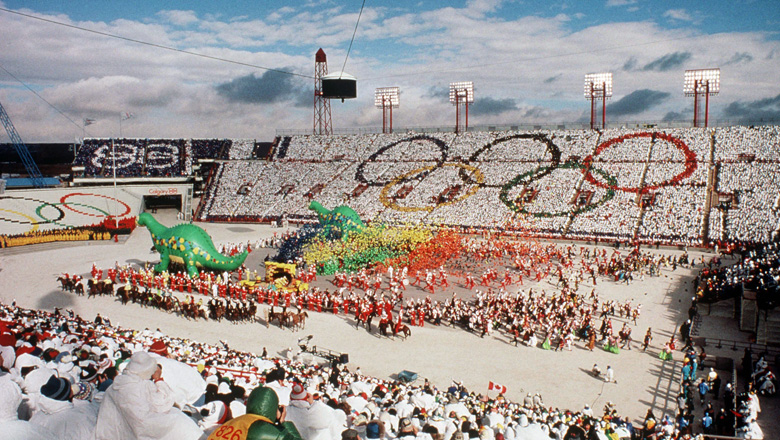
An image from the 1988 Opening Ceremonies, held at McMahon Stadium. This photo was retrieved from the Canadian Olympic Committee website.

The 1988 Games also had an impact on queer fans of sport. One research participant, Fred, spoke about the impact of the Games on community at the time, including meeting at Off Centre, a queer bar that would eventually become Money-Pennies, to meet friends from the community, talk about events, and the general vibe in the city at the time. He also shared this memory:

“Tons of us went… when the Jamaican bobsled team was down on Stephen Ave selling their t-shirts and stuff to raise money to pay for their trip. The bar was stuffed. I’ve got pictures of us all wearing Jamaican bobsled t-shirts, because everybody from the bar had to own that. We all went down to Olympic Plaza and cheered on Eddy the Eagle for being the last and the worst ski jumper. But we were all together. Like you cheer on the underdog. I’ve got pictures of us going into the big Olympic pin swapping tents… I still have all my pins in a box somewhere.”

Queer podcasters Bronwin Parks and Elinor Svoboda of the Late in ’88 podcast reminisced about the 1988 Games in their second episode, “Hometown Olympic Fever.”  In general, they commented that anyone in Calgary at the time was aware of the Games, with a noticeable change in the city leading up to and during the event, which they recognized even though they were quite young at the time. They also discussed with friends—and historian Kevin Allen—the impact various events had on them in relation to gender identity and sexuality. One friend commented on figure skater Brian Orser, specifically the celebration of his silver medal and the disconnect between Orser being applauded for that, whereas performances of non-traditional masculinity were viewed negatively in pretty much all other aspects of social life at the time. The whole podcast series is a great listen, but I recommend this one in particular as well as the bonus “Olympic Relics” episode.

While I didn’t live in Calgary at the time, as a 15-year-old figure skater, I was glued to the CBC for all the figure skating events. I cried when Tracy Wilson and Rob McCall won the bronze medal in ice dance—the first ever Olympic medal for a Canadian team in that event. I cried when Brian Orser finished second in the men’s event; an outstanding result without question, but one that I knew he was disappointed with at the time. And I lost my mind when Elizabeth Manley had the skate of her career, famously sporting that white cowboy hat as she exited the ice, earning the silver medal. I also ADORED Katarina Witt for her many achievements in the sport, her performance ability, and the DRAMA she brought to the ice (and off the ice as well)! I may have, in fact, performed along with her in my family room, the opening moves to her long program, choreographed to music from the opera Carmen. Only in recent years, however, have I begun to understand the impact Witt had on other queer folks. Comedian and actor Carolyn Taylor, for example, created a whole television series—I Have Nothing—around the indelible impact the Calgary Olympics had on her, including Witt’s talents and looks, leading to a sexual awakening for Taylor.

The Olympic Games and the International Olympic Committee are, of course, not without their many, many problems. Sport more generally remains a problematic space for queer folks, and a space from which trans and gender diverse folks are excluded through exclusionary practices, policies, and government legislation, such as Bill-29 in Alberta. It is imperative to recognize the work that remains to be done while at the same time finding and celebrating queer joy—be that through the recognition of queer athletes’ successes, their resiliency and bravery in breaking down barriers, or folks finding connection in and through sport, regardless of their role. I hope to have captured some of that joy in this series of posts about queer Calgarians at the Olympics and the Calgary Games. Thanks for reading along.

{WB}

Links to the Winter Olympic Series:

Part One: From the Calgary Winter Club to Olympic Ice

Part Two: Hurtling Headfirst Down Mountains and Into the History Books

Part Three: Faster, Higher, Stronger… Resist