This week, Calgary lost one of its most accomplished storytellers with the death of Harry “the Historian” Sanders. For many, Harry brought Calgary’s past to life through his writing, research, walking tours, and countless conversations about the city he knew so well. For me, his loss is also personal. Harry was a colleague, a fellow researcher, and someone I shared a love of Calgary history with.
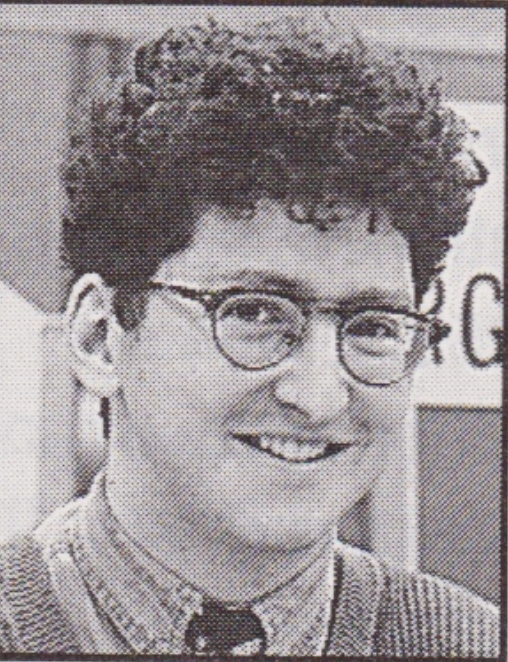
Harry Sanders circa 1995, in the University of Calgary’s alumni magazine.
Decades ago, Harry and I worked together at the Central Library, and although I came late to the history community, Harry welcomed me with open arms. Since the Calgary Gay History Project was founded in 2012, we’ve shared historical information, compared discoveries, and helped one another track down the details that turn an interesting story into an accurate one. Harry had an extraordinary store of knowledge, but what I especially appreciated was his generosity with it.
Dozens of times over the years, Harry came across pieces of Calgary’s gay history while pursuing his own research and made a point of passing them along to me. A newspaper clipping, a name, an event, an unexpected connection—if Harry bumped into something he thought would be useful to my research, he made sure I had it. Those exchanges meant a great deal to me. They also said something fundamental about Harry: history was never something to possess or guard. It was something to share.
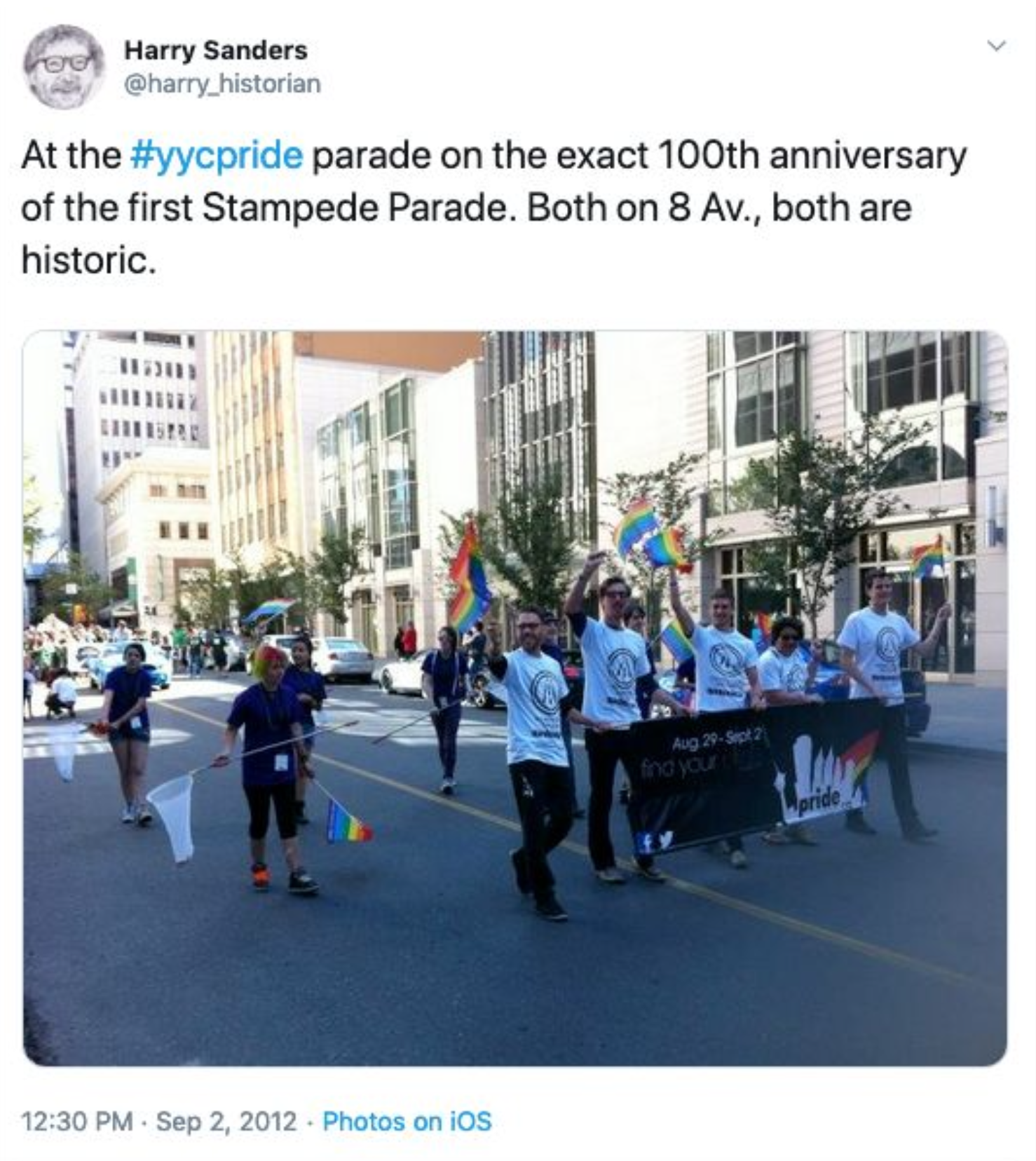
A tweet from Harry in 2012
That generosity extended far beyond his colleagues. Through his books, research, public appearances and walking tours, Harry had a wonderful ability to make local history engaging and accessible. Most recently, he became editor of Alberta History magazine, succeeding another legend of Alberta history, Hugh Dempsey. It was a fitting passing of the torch between two remarkable keepers of Alberta’s stories.
In a CBC memorial interview this week, Harry’s friend Bob van Wegan said his death leaves a “Harry-shaped crater” in Calgary’s historical community. Harry created an impressive body of work, but his legacy also lives on in countless smaller acts of generosity—the discoveries shared, the questions answered, the connections made, and the curiosity encouraged.
Harry was an extraordinary historian. His passion for history was inspiring. The stories he gave us will endure.
Calgary knows itself better because Harry Sanders cared so deeply. I feel fortunate to have been his colleague, and I will miss him greatly.
Calgary’s queer history is closer than you might think. It lives in our parks and theatres, former nightclubs and community spaces—and in the stories of people who fought, organized, celebrated and created community here. This Pride season, go beyond the parade with these 10 ways to explore Calgary’s 2SLGBTQ+ history.
1. Test Your Knowledge at Queer History Trivia
Kick things off tonight at Lougheed House on August 27 with Trivia Night: The Queer History of Pride. This free, 18+ event explores queer history through the ages, with a special focus on Calgary.
Doors open at 6:30 p.m., and trivia begins at 7 p.m. No registration is required, but seating is limited and available on a first-come, first-served basis.
2. Stand Where Calgary’s First Pride Rally Happened
Some participants wore masks or paper bags over their heads because they feared being publicly identified as gay or lesbian. Standing there today reminds us how dramatically public 2SLGBTQ+ visibility in Calgary has changed.
3. Explore Transgender History at the CIH Pride Lecture
This free public event asks us to reconsider how transgender history is written. Drawing on examples from the Sinophone Pacific, Chiang explores gender diversity while questioning whether Western ideas about “transgender” always provide the best framework for understanding experiences in other cultures.
Set between 1974 and 1980, the landmark play provides a window into gay life after Stonewall and before the AIDS crisis. Director Joey Sayer first directed the play in Calgary in 1990 at the old Forest Lawn Library theatre. For this production, historical material will help audiences better understand the queer world in which the story takes place.
5. Learn About Everett Klippert
Discover the remarkable—and troubling—story of Everett Klippert, a Calgary bus driver who became the last Canadian to be imprisoned for homosexuality.
Everett Klippert (top middle) and his brothers and father—”The Klippert Nine” baseball team.
Klippert was declared a “dangerous sexual offender” and given an indefinite prison sentence simply because he was gay. His case reached the Supreme Court of Canada and became part of the national debate that preceded the partial decriminalization of homosexuality in Canada in 1969.
Watch the award-winning short documentary Gross Indecency: The Everett Klippert Story, which follows Calgary Gay History Project historian Kevin Allen as he investigates Klippert’s life and legacy. The film won Best Alberta Short at the 2018 Calgary International Film Festival.
6. Visit Lois Szabo Commons
Visit Lois Szabo Commons in Calgary’s Beltline and discover the story of one of the city’s pioneering 2SLGBTQ+ community builders. Szabo was one of the founders of Club Carousel, the private social club established in 1970 that became an important gathering place for Calgary’s gay community at a time when openly queer spaces were rare.
Today, the park bearing her name puts that history directly into Calgary’s landscape.
7. Read Not So Normal
Sometimes the best way to understand history is through someone who lived it.
In Not So Normal: Memoirs of a Gay Boomer, Tom Symington recalls growing up gay in postwar Calgary and navigating a society where homosexuality carried stigma, discrimination and very real legal consequences.
His memoir provides a personal window into decades of enormous change in gay life and 2SLGBTQ+ rights—and reminds us how much can change within a single lifetime.
8. Listen to Late in ’88
Put on your headphones and experience Calgary queer history as oral history with Late in ’88, the podcast created by Bronwin Parks and Elinor Svoboda.
Season Two jumps ahead to 1998 and asks what had changed for queer youth during the previous decade—and what hadn’t. They interview many special guests, including Calgary-raised musicians Tegan Quin, Rae Spoon, and historian Kevin Allen. The podcast reminds us that queer history doesn’t just happen in legislatures and courtrooms. It happens in classrooms, social circles, and the memories people carry.
Created through the Calgary Atlas Project using research from the Calgary Gay History Project, the map identifies significant gathering places, organizations, bars and sites of activism and resistance.
Use it to create your own queer history walking tour and discover the stories hiding behind familiar Calgary streets and buildings.
The book brings together stories of the people, gathering places, organizations, scandals and political struggles that shaped gay life in Calgary. It’s an ideal starting point for anyone who wants to dig deeper into the city’s 2SLGBTQ+ past.
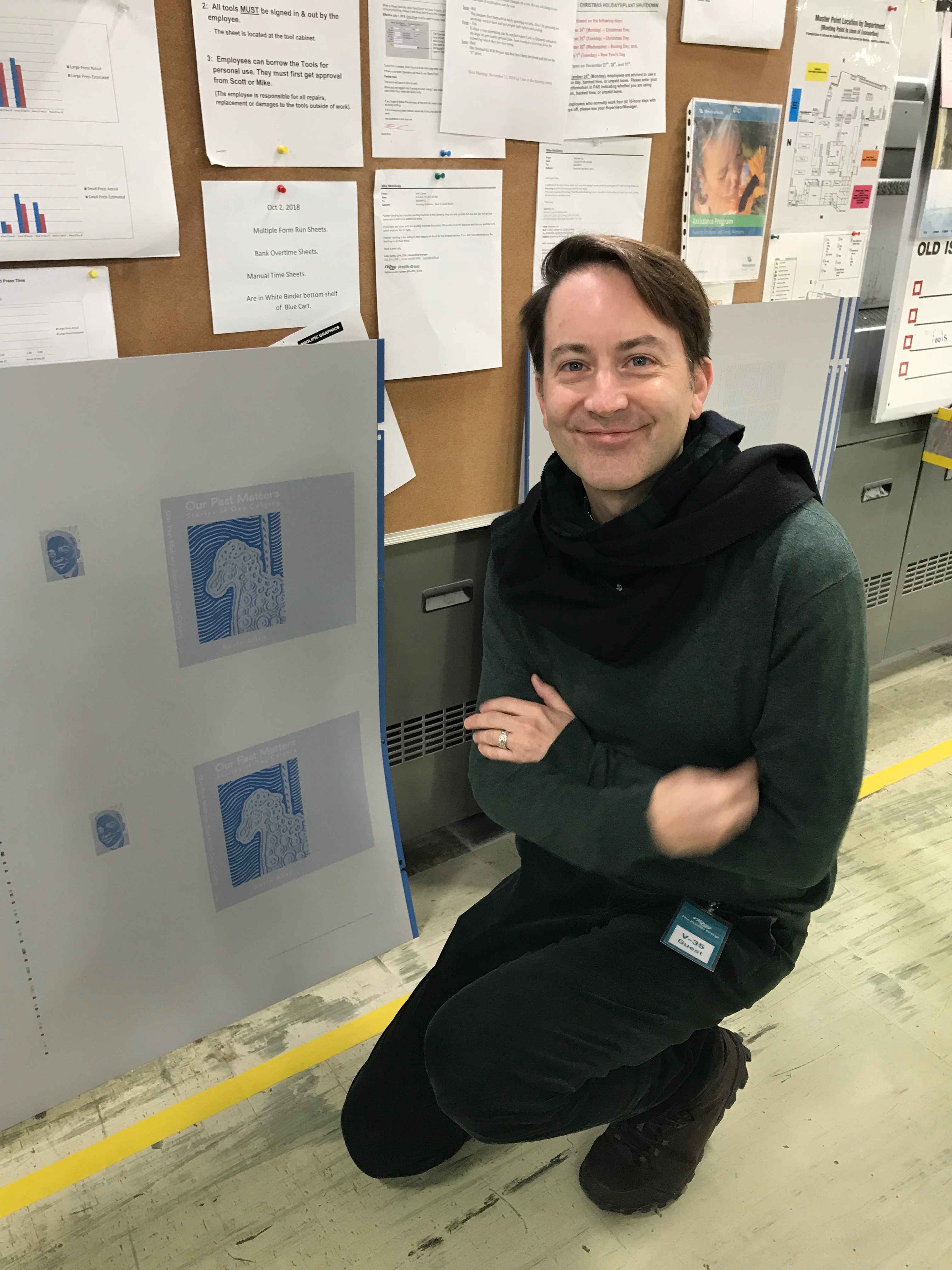
Author Kevin Allen with the print negatives of Our Past Matters in 2018
Calgary’s queer history isn’t just something to read about. It’s something you can walk through, listen to, watch onstage and experience for yourself. Love your City; Know your City. Happy Pride!
The Calgary Gay History Project is heartbroken to learn about the passing of Mike Hooves. We wanted to honour them as a peer, a friend, and as someone who has made a massive impact on the city’s arts and culture scene, and queer and trans communities. They are incredibly loved, and deeply missed.
Mike Hooves was a beloved local artist, a cherished family member and friend, and a remarkable force in their communities. A well-known figure in the public arts, drag scene, and queer and trans community, their welcoming and kind nature, bold sense of style, and fiercely unapologetic personality lit up rooms, and empowered those around them.
In the weeks since their passing, I’ve heard many people exclaim just how much their presence made an impact. Even if you didn’t know Mike personally, you may have encountered them on the dance floors of queer parties and music events, or been moved by their magnetic stage presence and sensational sense of style. And even if none of this rings true, you’ve almost certainly experienced their art.
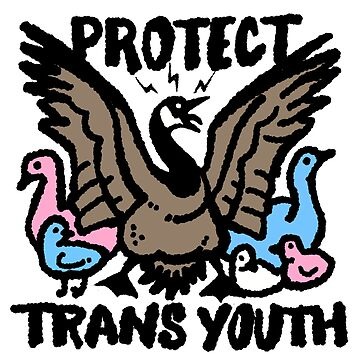
With an impressive breadth of work spanning film, programming, illustration, public art, and drag performance, their work resisted categorization and touched many. Their style was bold, playful, and instantly recognisable. From distinct design work often featuring bubbly bodies and local birds, to vibrant murals that both adorn indoor walls and scale the facades of local buildings; Mike is everywhere in this city.
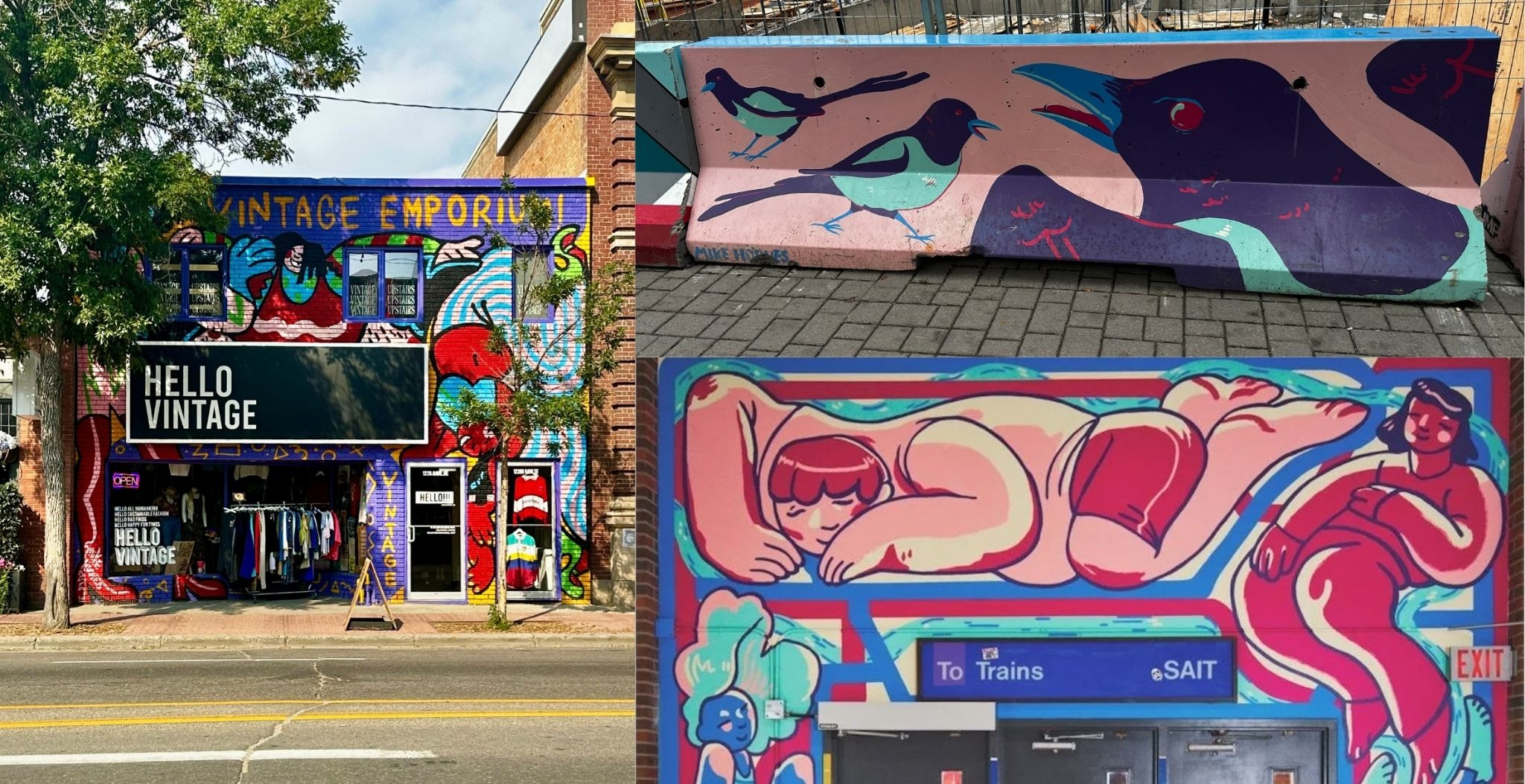
Just a few of Mike’s murals that I’ve run into by chance in the past few weeks. Left: mural on the facade of Hello Vintage in Inglewood (2025). Top Right: Birds of Calgary (2021), one of five painted concrete barriers as part of the BUMP Road Works Program. Bottom Right: Vivid (2021), mural at the entrance to AUArts.
As a muralist, they painted the walls of the palimpshed, AUArts, Hello Vintage, and many more in collaboration with local businesses and community groups. They created a number of works for BUMP Festival Arts Society, with whom Mike was heavily involved as both a muralist and juror. BUMP recently hosted the event A Life Across Disciplines: Celebrating Mike Hooves in honour of their legacy and lasting impact.
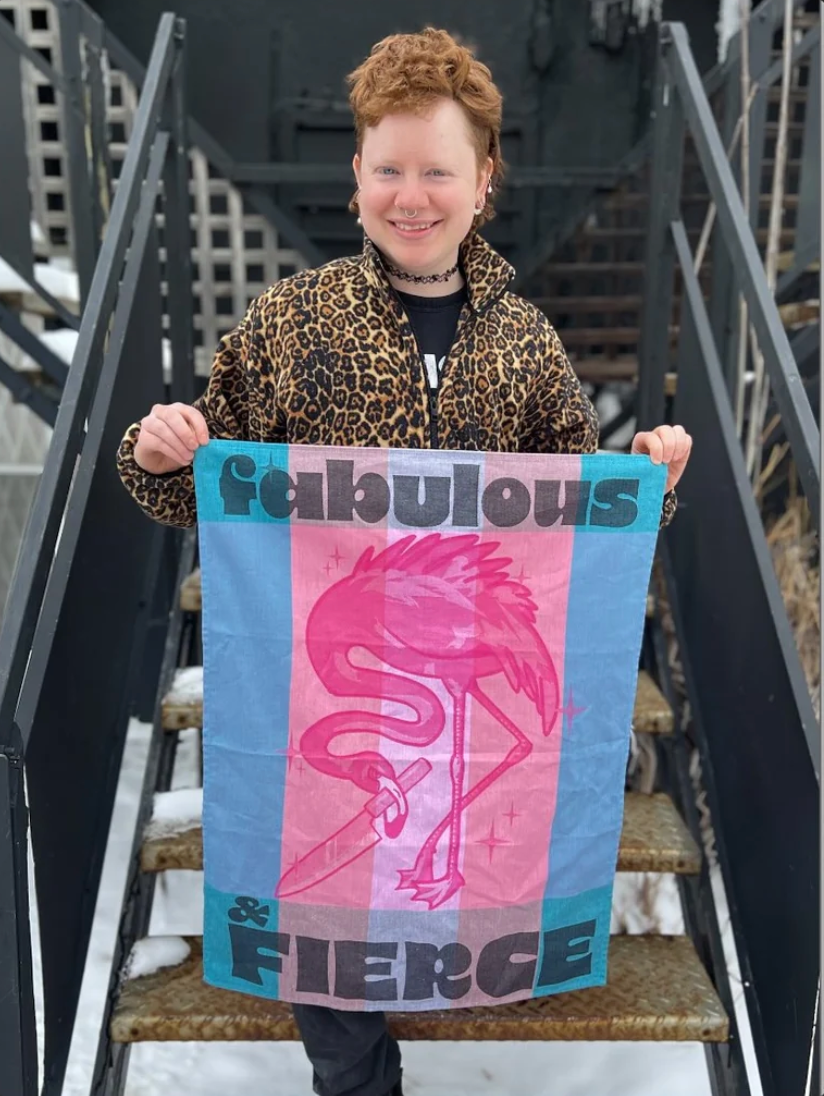
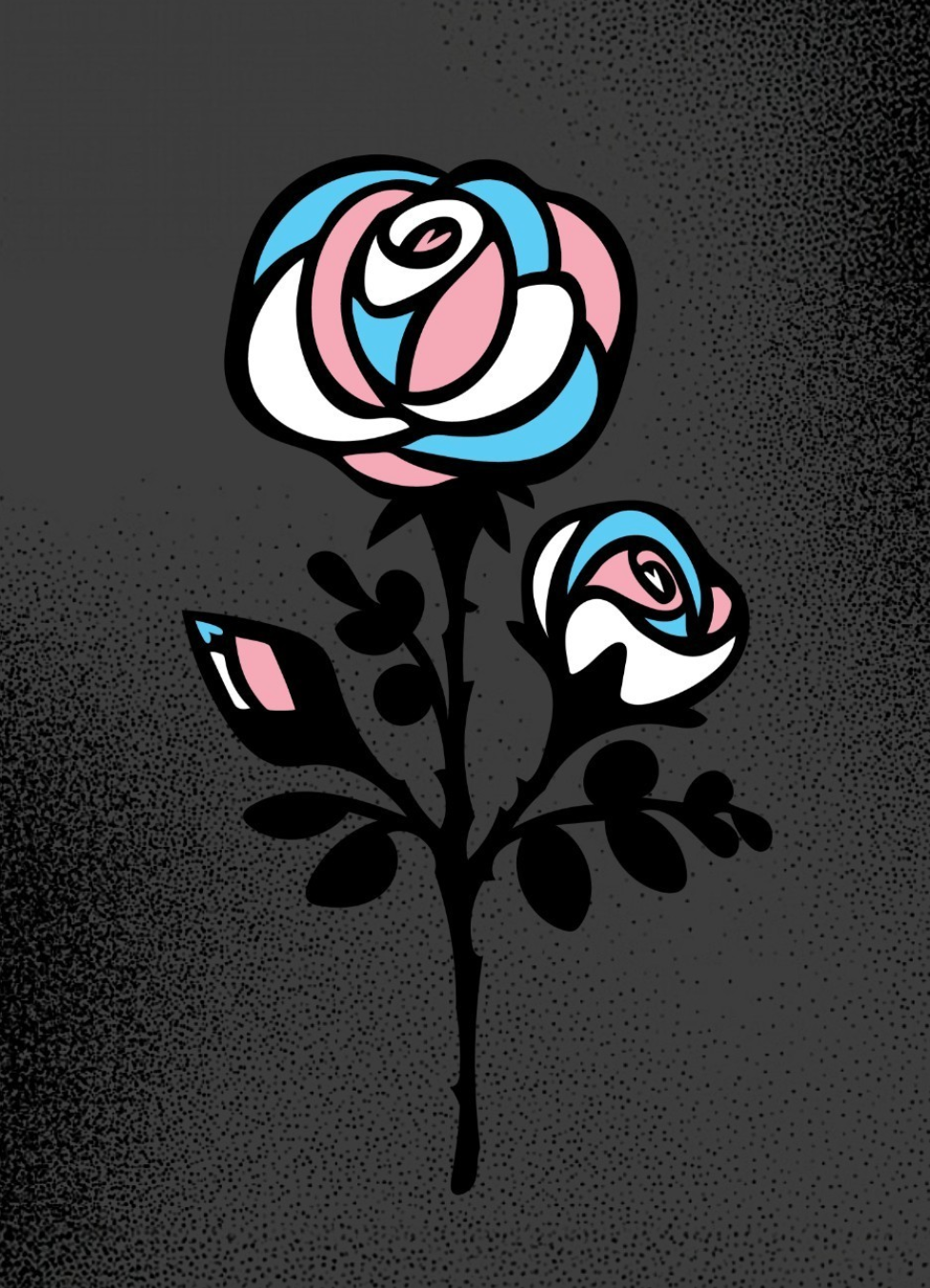
Being trans and non-binary informed much of their work, which they frequently used to advocate for the livelihood and provide resources to trans people. This took shape in the form of stickers, posters, printed textiles, and their 2022 exhibition Trans Is A Flower.
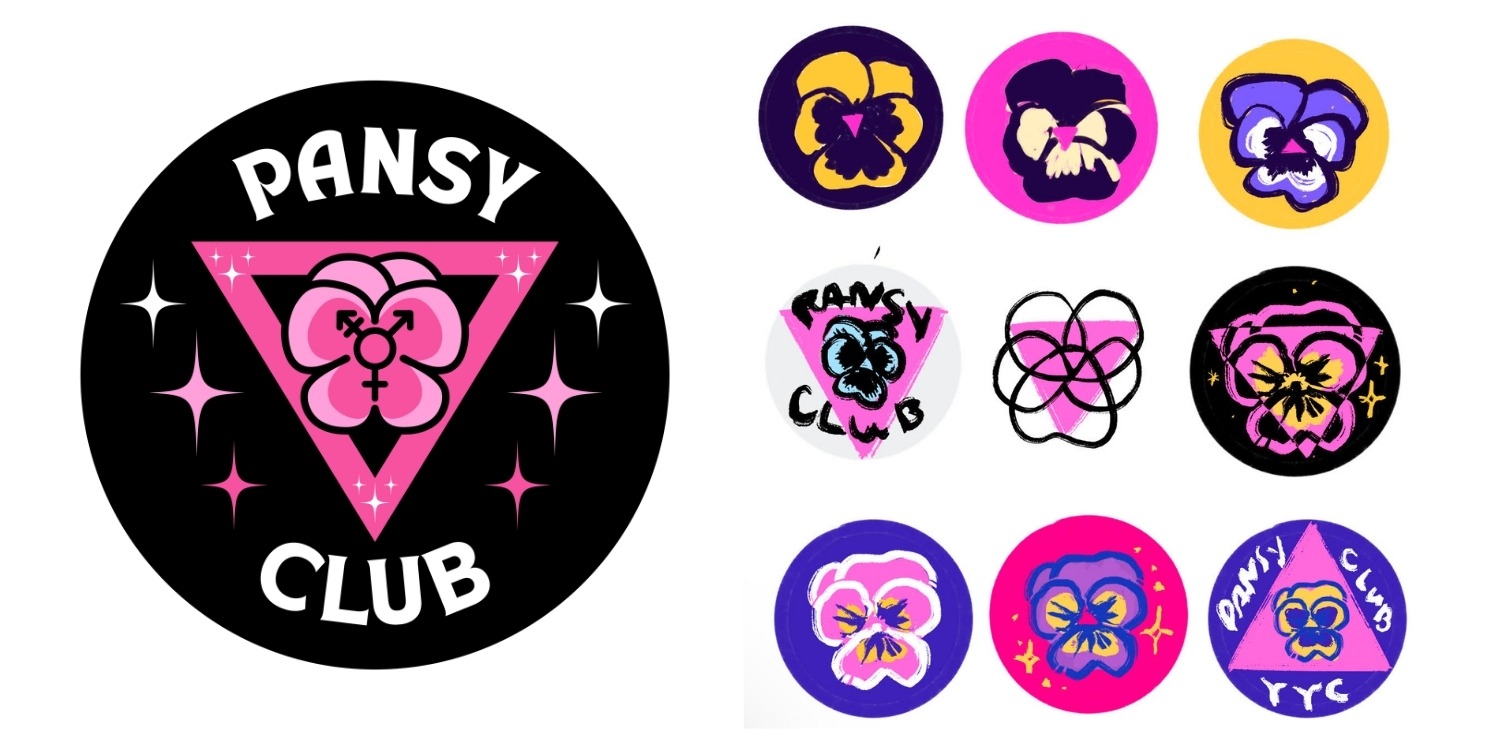
They even designed the logo for local queer events collective Pansy Club (whose namesake is the historic Calgary-based group).
Pansy Club’s logo, designed in 2024 by Mike Hooves, followed by Mike’s initial design ideas.
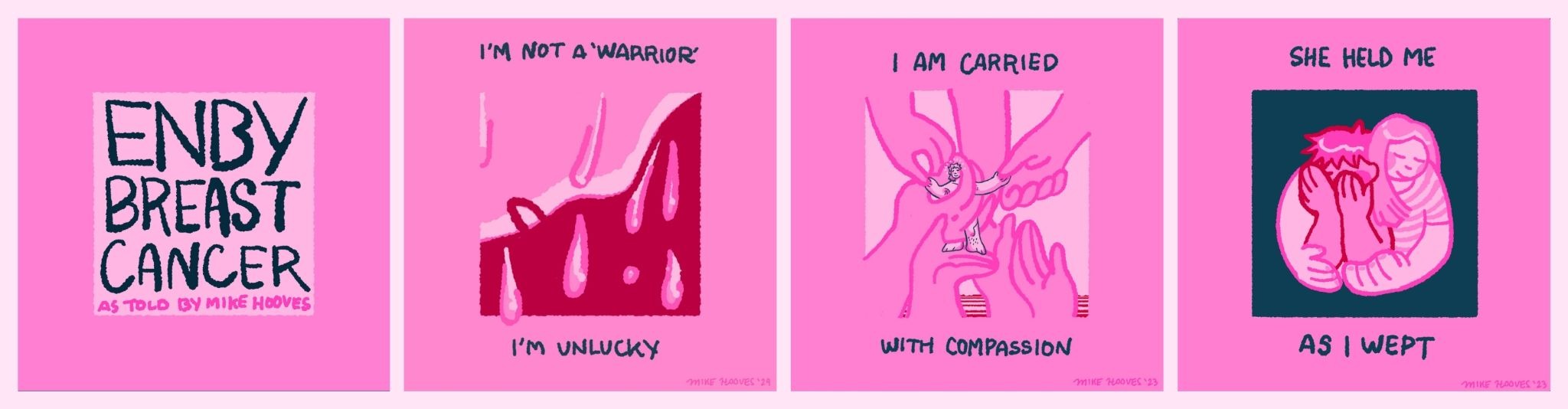
A few panels from Enby Breast Cancerby Mike Hooves. Read the whole webcomic here: www.mikehooves.ca/comic
Mike’s generous spirit manifested in many forms queer storytelling. Upon their initial cancer diagnosis in 2023, Mike began writing and illustrating the webcomic, Enby Breast Cancer, stemming from a desire to share their experience as a non-binary person with breast cancer, and to help other people feel less alone. Created throughout the process of their treatments, these pink panels describe the immensely difficult process of navigating the healthcare system, also touching on the complexities of surgery, physical nature of hair loss and tattoos, as well as the compassion and love they felt amidst this experience. While highly personal, this project has been a touchpoint of connection for other trans and non-binary people enduring cancer treatment.
Mike’s outspoken and kind nature deeply informed the work of organisations such as Queering Cancer and Wellspring Alberta. Both organisations who through research, events, and advocacy, worked to provide community and support for Mike, their loved ones, as well as other trans and non-binary people with cancer.
A large part of Mike’s artistic journey took place on stage, performing as their drag persona Mx. Jendr. Seeing Mike perform was always such a special experience. Combining leopard print, glitter, and swaths of red chest hair, with an artistry that honoured the likes of Sasha Velour and Divine, Mx. Jendr was sensual, earnest, bizarre, filthy, and completely wonderful. Bringing their unapologetic fierceness to the stage, Mike had an energy unlike anyone else’s.
Their passion for performing and love of this art form led to the creation of Drag Sings. Alongside collaborator Kenna Burima, these shows featured local artists melding live music with drag in a powerful celebration of queer and trans voices.
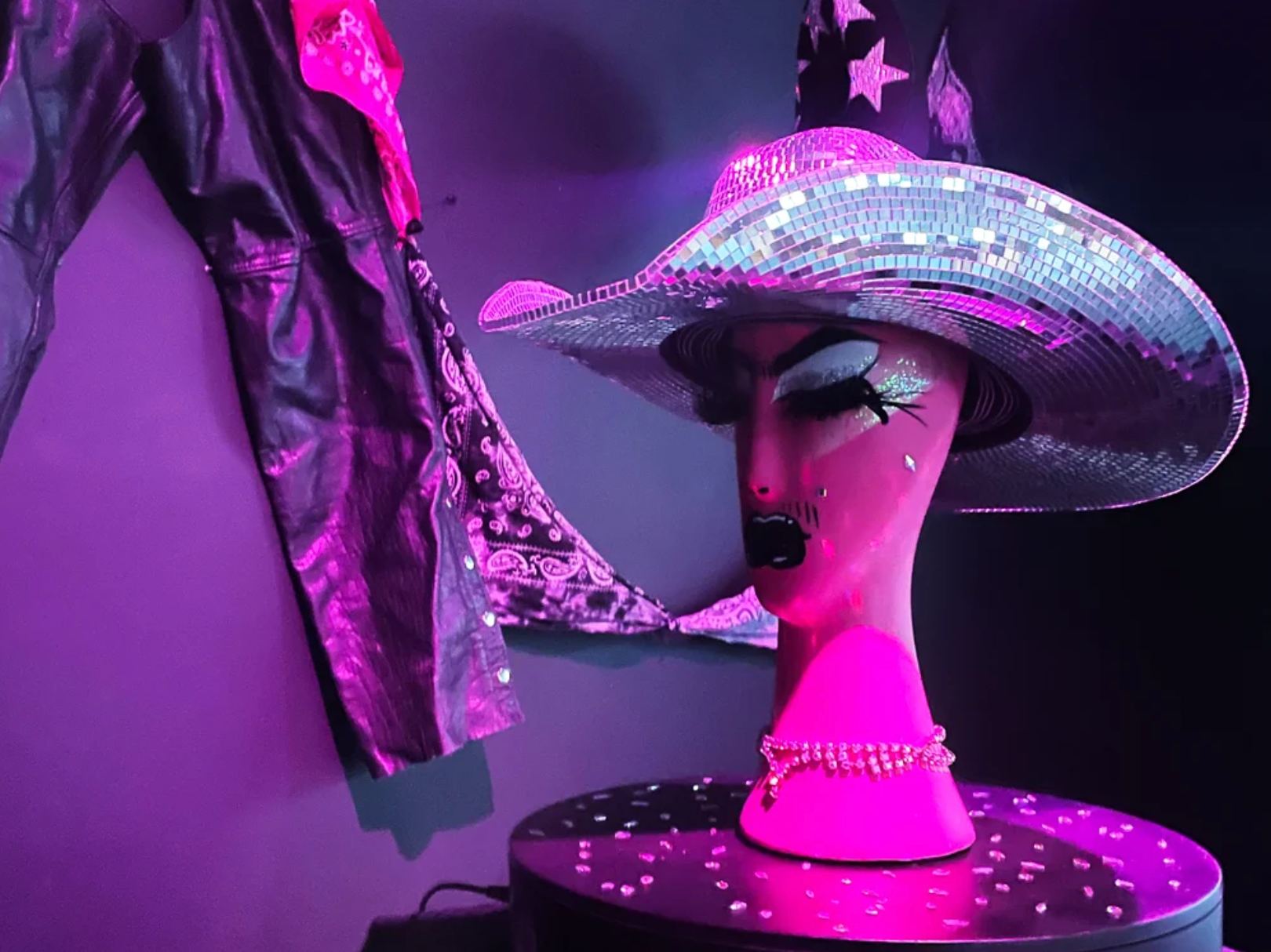
Photo of Rhinestone Cowfolx, by Mike Hooves & Bryce Maruk, via The Werklund Centre
Mike’s passion for drag and deep involvement in queer artistic culture inspired all kinds of their creative work. Their most recent exhibition Rhinestone Cowfolx, is an installation that encourages prairie queers from this “stampede city,” to step into the limelight. The show is one of several collaborations between Mike Hooves and local videographer and musician Bryce Maruk, Mike’s wife and partner of ten years.
Surrounded by prints, leather chaps, and bandanas that ‘flag” the trans pride colours, the central figure of the exhibition is a mannequin head donning drag makeup, and a rhinestone mirrored cowboy hat. Spinning slowly, the spotlight hits the brim, reflecting shimmering lights amidst a lingering magenta glow.
If you haven’t already had a chance to visit, this exhibition is being shown in The Werklund Centre’s +15 Galleries, alongside several local artists curated by the Calgary Queer Arts Society, through October 2026. A memorial table has been set up beside the show, where folks have left photos, notes, and flowers.
Mike was an incredible human being, and someone who I feel lucky to have known. Their artistry, confidence, humour, and kindness made them a deeply meaningful part of every community they touched. On a personal level, Mike is someone who comes to mind instantly when I think about how I want to show up as a performer, an artist, on the dance floor, and most importantly, as a friend.
In an announcement and written tribute to Mike, loved ones ask that “in Mike’s spirit of generosity, please consider donating to the organizations that Mike held dearest, including Young Adult Cancer Canada, Queering Cancer, Wellspring Alberta and Skipping Stone.”