Tag Archives: human-rights

10 Ways to Explore Calgary’s Queer History This Pride Season

Calgary’s queer history is closer than you might think. It lives in our parks and theatres, former nightclubs and community spaces—and in the stories of people who fought, organized, celebrated and created community here. This Pride season, go beyond the parade with these 10 ways to explore Calgary’s 2SLGBTQ+ history.

1. Test Your Knowledge at Queer History Trivia

Kick things off tonight at Lougheed House on August 27 with Trivia Night: The Queer History of Pride. This free, 18+ event explores queer history through the ages, with a special focus on Calgary.

Doors open at 6:30 p.m., and trivia begins at 7 p.m. No registration is required, but seating is limited and available on a first-come, first-served basis.

2. Stand Where Calgary’s First Pride Rally Happened

Visit Central Memorial Park, where approximately 140 people gathered for Calgary’s first political Pride rally in June 1990.

Some participants wore masks or paper bags over their heads because they feared being publicly identified as gay or lesbian. Standing there today reminds us how dramatically public 2SLGBTQ+ visibility in Calgary has changed.

3. Explore Transgender History at the CIH Pride Lecture

On September 2 at 7 p.m., historian Dr. Howard Chiang presents Decolonizing Transgender History: The View from the Asia Pacific as part of the Calgary Institute for the Humanities’ annual Queer History Lecture.

This free public event asks us to reconsider how transgender history is written. Drawing on examples from the Sinophone Pacific, Chiang explores gender diversity while questioning whether Western ideas about “transgender” always provide the best framework for understanding experiences in other cultures.

4. See Torch Song and Step Back into the 1970s

From October 1–10, Scorpio Theatre presents Harvey Fierstein’s Torch Song at Calgary’s Pumphouse Theatres.

Set between 1974 and 1980, the landmark play provides a window into gay life after Stonewall and before the AIDS crisis. Director Joey Sayer first directed the play in Calgary in 1990 at the old Forest Lawn Library theatre. For this production, historical material will help audiences better understand the queer world in which the story takes place.

5. Learn About Everett Klippert

Discover the remarkable—and troubling—story of Everett Klippert, a Calgary bus driver who became the last Canadian to be imprisoned for homosexuality.

Everett Klippert (top middle) and his brothers and father—”The Klippert Nine” baseball team.

Klippert was declared a “dangerous sexual offender” and given an indefinite prison sentence simply because he was gay. His case reached the Supreme Court of Canada and became part of the national debate that preceded the partial decriminalization of homosexuality in Canada in 1969.

Watch the award-winning short documentary Gross Indecency: The Everett Klippert Story, which follows Calgary Gay History Project historian Kevin Allen as he investigates Klippert’s life and legacy. The film won Best Alberta Short at the 2018 Calgary International Film Festival.

6. Visit Lois Szabo Commons

Visit Lois Szabo Commons in Calgary’s Beltline and discover the story of one of the city’s pioneering 2SLGBTQ+ community builders. Szabo was one of the founders of Club Carousel, the private social club established in 1970 that became an important gathering place for Calgary’s gay community at a time when openly queer spaces were rare.

Today, the park bearing her name puts that history directly into Calgary’s landscape.

7. Read Not So Normal

Sometimes the best way to understand history is through someone who lived it.

In Not So Normal: Memoirs of a Gay Boomer, Tom Symington recalls growing up gay in postwar Calgary and navigating a society where homosexuality carried stigma, discrimination and very real legal consequences.

His memoir provides a personal window into decades of enormous change in gay life and 2SLGBTQ+ rights—and reminds us how much can change within a single lifetime.

8. Listen to Late in ’88

Put on your headphones and experience Calgary queer history as oral history with Late in ’88, the podcast created by Bronwin Parks and Elinor Svoboda.

Season Two jumps ahead to 1998 and asks what had changed for queer youth during the previous decade—and what hadn’t. They interview many special guests, including Calgary-raised musicians Tegan Quin, Rae Spoon, and historian Kevin Allen. The podcast reminds us that queer history doesn’t just happen in legislatures and courtrooms. It happens in classrooms, social circles, and the memories people carry.

9. Explore A Queer Map of Calgary

Turn the city itself into a history lesson with A Queer Map: A Guide to the LGBTQ+ History of Calgary.

Created through the Calgary Atlas Project using research from the Calgary Gay History Project, the map identifies significant gathering places, organizations, bars and sites of activism and resistance.

Use it to create your own queer history walking tour and discover the stories hiding behind familiar Calgary streets and buildings.

10. Read Our Past Matters

Finally, if you want to understand how all these stories fit together, pick up Kevin Allen’s Our Past Matters: Stories of Gay Calgary.

The book brings together stories of the people, gathering places, organizations, scandals and political struggles that shaped gay life in Calgary. It’s an ideal starting point for anyone who wants to dig deeper into the city’s 2SLGBTQ+ past.
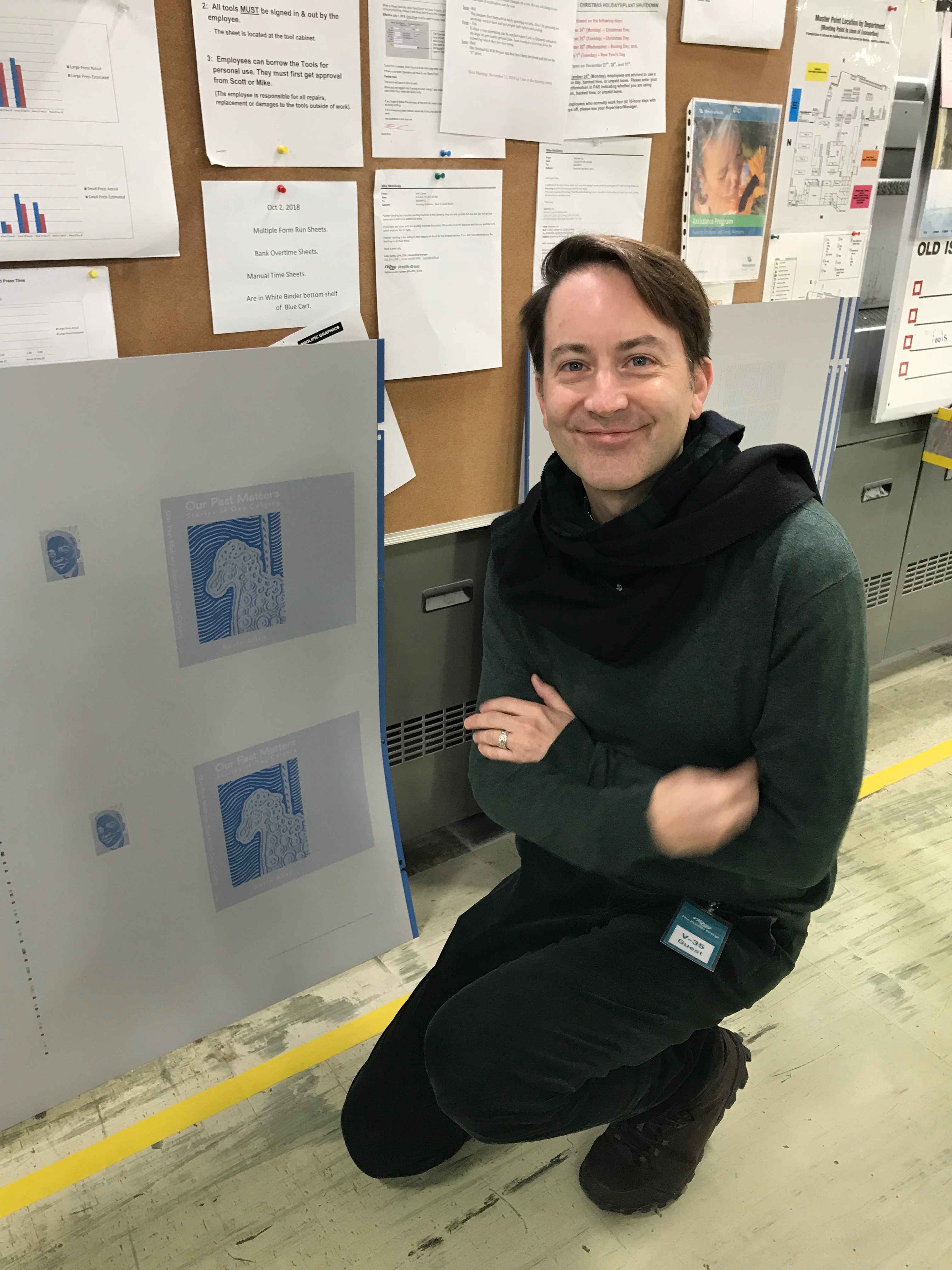
Author Kevin Allen with the print negatives of Our Past Matters in 2018

Calgary’s queer history isn’t just something to read about. It’s something you can walk through, listen to, watch onstage and experience for yourself. Love your City; Know your City. Happy Pride!

{KA}
Alberta Book Banning in 1997

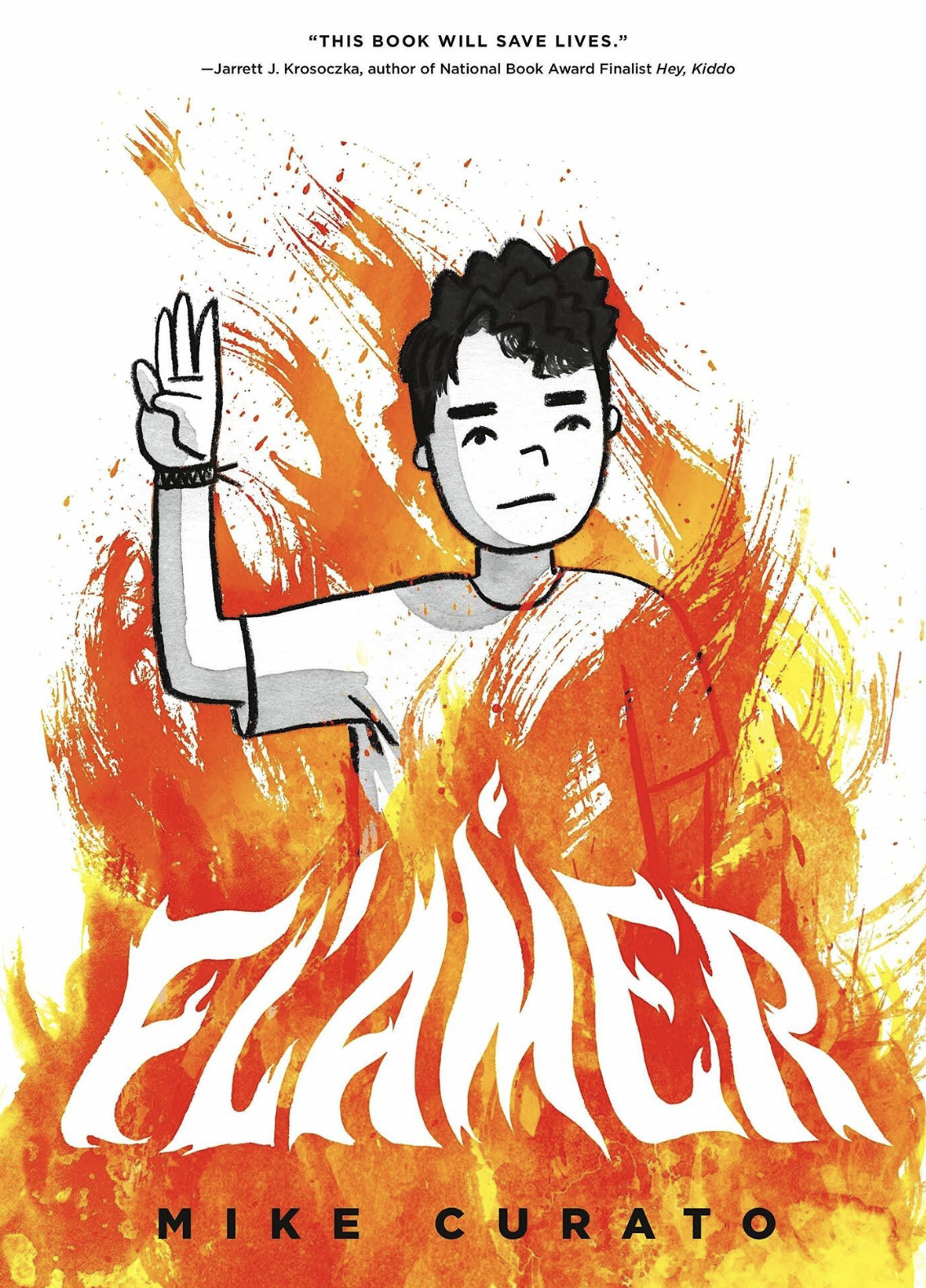
{Readers of the Calgary Gay History Project know we are dismayed by the Alberta Government’s banning of four graphic novels last Autumn, labelling them pornographic—which, if you read them, is easily contested. The ban is really about anti-gay and anti-trans sentiment, driven in part by the Alberta non-profit Parents for Choice in Education. Recently, our colleague William Bridel sent us an article from the Dec. 3, 1997 edition of Perceptions, a Saskatoon-based queer publication published by activist Gens Hellquist from 1983-2013. We are reprinting the article in its entirety, as the synchronicity is uncanny. -Kevin}

One of the four graphic novels banned in schools by the Alberta Government in Sept 2025—not pornographic, but gay.

Banning Books from Perceptions, December 3, 1997:

(Calgary) Once again an incident has occurred in Alberta that has many people wondering whether the province is becoming more redneck and falling further behind other parts of the country in providing protection against discrimination for minorities. The province has been taken to the Supreme Court over its refusal to provide protection from discrimination for lesbians and gay men, they have refused to allow lesbians and gays to be foster parents, and some MLAs called for the return of a grant which was to be used to document the history of the gay and lesbian community in Alberta.

Now the Calgary Public School Board has banned two books from its shelves after some parents complained about their “promotion of homosexuality.” Dr. Donna Michaels, the school board’s chief superintendent, admitted pulling the books off the shelves after meeting with a group called Parents’ Rights in Education (PRE). The group has been sounding an alarm about the school system allowing the “gay agenda’’ into the schools.

“In my professional judgment, I determined that the language was highly inappropriate,” Michaels said. However, she would not state publicly, or tell the school board, which books had been removed after pressure from PRE. She said the two offending books must first go before a committee set up to hear public complaints about books in the· school system, adding that the process could take a month. She said the language she objected to was pornographic and did not involve gay or lesbian themes.

Tom Crites, a spokesperson for PRE, claimed one of the banned books was the anthology Not the Only One: Lesbian and Gay Fiction for Teens edited by Tony Grima. He could not name the other book his group deemed offensive. He said he too found the swear words offensive but admitted that the real problem is that the book is about homosexuality. “It is really pro-gay,” he said. He was also concerned that many of the stories were about people’s personal coming out story, which his group finds offensive.

Crites indicated his group’s agenda of removing all reference to homosexuality from the school system is far from over. He said PRE is attempting to identify the school board employee who ordered the two offending books. “We do have our suspicions,” he said. “We’re still doing some checking around.” He also indicated that his group has identified 30 to 40 other books that address gay and lesbian issues.

Spokespeople from the gay and lesbian community said this latest move is part of an explosion in anti-gay attitudes in Alberta and a clear sign that Alberta is one of the least tolerant places in Canada. “When you sit around and chat in the community, people feel we’re behind the rest of the country,” said Roy Heale, publisher of the gay newspaper Outlooks. “As long as we continue doing this, we’re perpetuating our reputation of being redneck.”

Gail Allen, a spokesperson for PFLAG, said she could not agree with banning books from school libraries that deal with homosexuality. “I don’t think they should be pulling books from the shelves,” she said, adding that her son, who is gay, would have had a happier adolescence if he had access to books that explain the realities of being gay.

School board members also expressed concern about the removal of the books and the process that was used. “We feel that this is an important issue,” said trustee Jennifer Pollock. “It needs to be addressed.”

Dying Young

{This is our last post in 2025! We at the Calgary Gay History Project wish you a warm and festive holiday season – Kevin}

In the history of Calgary’s queer community, few figures loom as large—yet remain as quietly influential—as Doug Young. Born in 1950 near Taber, Alberta, and raised in both Taber and Medicine Hat, Young’s life was marked by a deep commitment to social justice and community building that helped shape the early gay rights movement in Calgary.

Young’s academic journey took him from Medicine Hat College to the University of Calgary, preparing him for a lifetime of advocacy and community service. Before his activism fully took hold, he worked with the Alberta Service Corps and Canada Customs—experiences that undoubtedly broadened his perspective on community needs.

But it was in the late 1970s and 1980s that Doug Young became one of Calgary’s most active voices for gay rights. At a time when queer communities were often hidden and marginalized, Young stepped forward into leadership roles that were both challenging and essential. He served as President of Gay Information and Resources Calgary (GIRC) from 1977 to 1979, and continued on its board through 1981. Under his stewardship, GIRC became a vital resource—offering support, outreach, peer counselling, and serving as one of the few community touchpoints for queer people in the city.

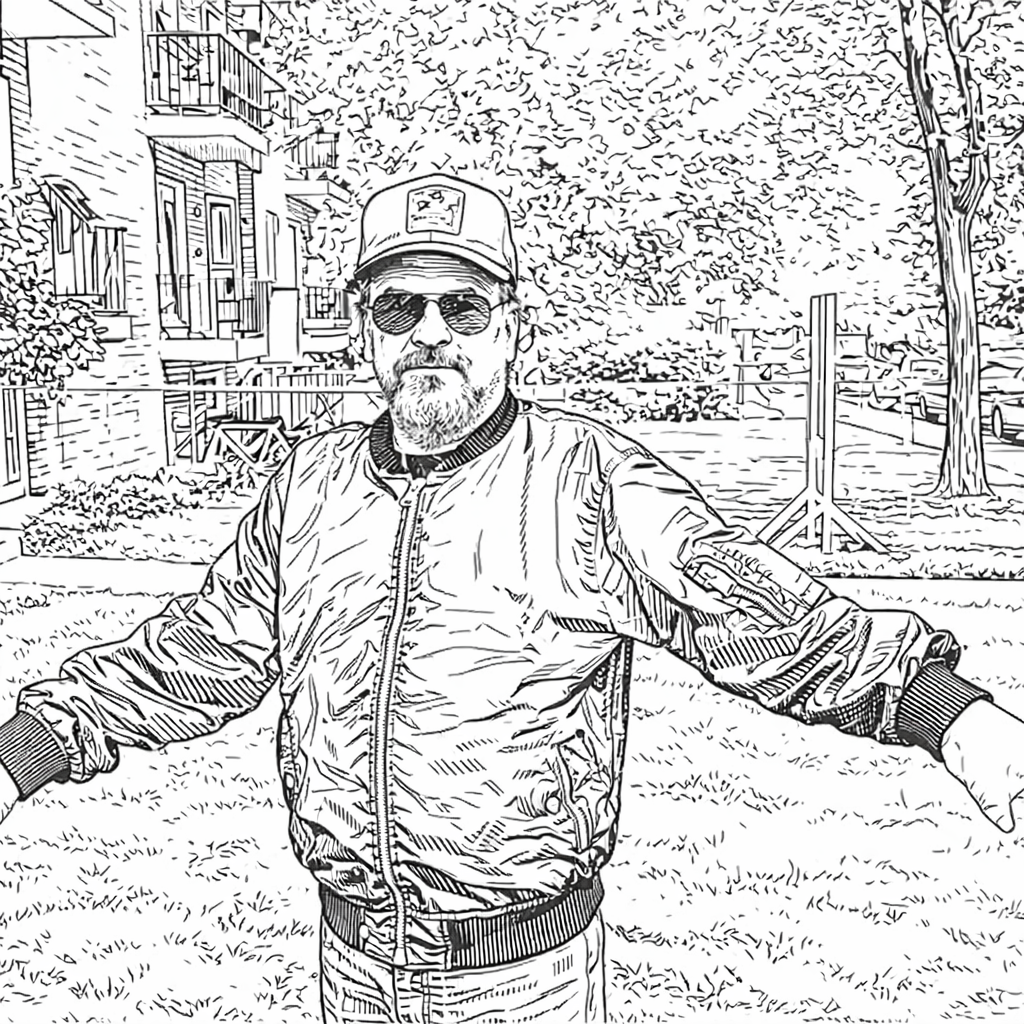
Line drawing of Doug Young derived from a photo in the Calgary Herald, June 14, 1994

Young didn’t limit his work to one organization. He was actively involved with the Alberta Lesbian and Gay Rights Association, AIDS Calgary, Gay and Lesbian Legal Advocates Calgary (GALLAC), the Right to Privacy Committee, and the Gay and Lesbian Community Police Liaison Committee—a network of groups focused on legal rights, health advocacy, safety, and community relations. This breadth of engagement speaks to both the urgency of the issues at the time and Young’s own drive to see real, sustained progress.

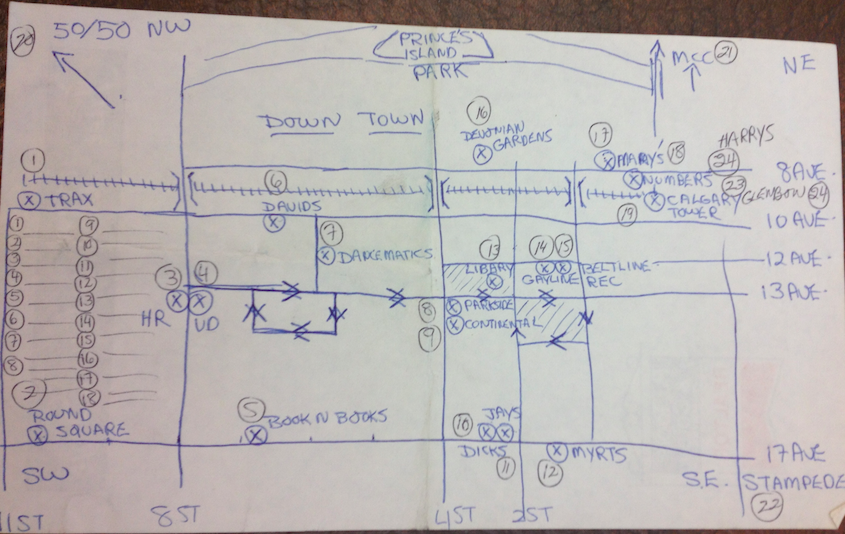
Young was an active spokesperson for the gay community and notably contributed to queer history through his extensive records. His personal papers were sorted and saved by Young’s friend John Cooper. They are now housed in the Glenbow Archives, which includes a remarkable hand-drawn map of gay spaces in the Beltline from the mid-1980s.

Doug Young personal papers, Glenbow Archives M-8397-1.

Perhaps most poignantly, Young’s leadership bridged the early gay rights era with the inevitable rise of the HIV/AIDS crisis. Community groups like AIDS Calgary grew out of activist networks in which Young was involved, helping mobilize volunteers, advocate, educate, and provide basic support during a time when fear and stigma often overshadowed empathy and action.

Doug Young passed away on April 15, 1994, from AIDS-related complications, a loss felt deeply across the community he helped nurture. While he did not live to see many of the legal protections and cultural shifts that came later, his efforts laid the necessary groundwork for Calgary’s queer organizations, public awareness efforts, and ongoing fights for equality.

At this dark time of year, I like to light candles to call back the light. I also light candles to remember those we’ve lost. Young would have been 75 in 2025 if he had lived, and I’m positive many other organizations would have benefited from his activism. The contributions of individuals like Doug Young are vital reminders of how far the community has come and how central grassroots leadership can make all the difference.

{KA}