Tag Archives: Amelia Newbert

Skipping Stone wins the Chinook Fund Hero Award

by Levin Ifko

A few weeks ago, I had the opportunity to attend the 2026 Chinook Fund Dinner as a guest of Kevin’s.

For readers who aren’t familiar, the Chinook Fund began in 2001, when a group of founders, including Gordon Sombrowski and Kevin Allen (prior to starting the Calgary Gay History Project), took note of how hard it was to find grants and other funding for organizations providing essential support and resources to 2SLGBTQ+ Calgarians. To bridge this gap, they invited their friends over for dinner, in exchange for donations that would go towards supporting these local groups. Twenty-five years later, this dinner still takes place annually!

In 2026, the Chinook Fund gave grants to Rainbow Elders Calgary, One Yellow Rabbit, SewProud YYC, Sharpe Foundation, and Skipping Stone Foundation, whose funded projects range from providing community resources and harm reduction services to arts programming and workshops.

The final award of the night, the 2026 Hero Award, was given to Skipping Stone Foundation.

Skipping Stone Foundation is approaching its tenth anniversary in 2027, which seems hard to believe, considering just how much they have done in under a decade. So-much-so that when I tell trans folks (those even younger than I am) that I came out before Skipping Stone, I’m met with quite a bit of surprise. Skipping Stone has become almost ubiquitous with transgender support services and healthcare in the city. Even in the province—where their advocacy has become even more essential in the wake of provincial anti-trans legislation.

Chinook Fund Committee’s Kevin Konynenbelt with Skipping Stone’s Amelia Newbert and Lindsay Peace: Photo Levin Ifko.

At this Chinook Fund Dinner, I had the chance to catch up with Amelia Newbert and Lindsay Peace, the co-founders of Skipping Stone, who I know through becoming involved with the organization early in its conception. We reminisced about Skipping Stone’s very first office—a tiny room on the top floor of the McHugh House. I still remember following Amelia up the stairs, when she excitedly showed me her shared desk and the room’s narrow closet that was used to store donated gender affirming gear. In their current office, this narrow closet has grown to fill an entire room, one of many in the space. When I visited this office last year, it felt like something I could have only imagined in my most hopeful moments.

Seeing the organization win this award felt special not only as a marker of their steadfast support of trans people over the last ten years, but also on a personal level. Years before Skipping Stone was even conceived, I met Lindsay Peace through the Camp fYrefly network. Through her experience as a parent to another trans youth, she became a support to my own family, making phone calls and sending information to help them navigate my own coming out and transition as a teenager.

At this time, resources and supports were emerging, but were part of a system that was largely word-of-mouth. Without a roadmap, or knowing any other out trans people, the healthcare system, and government documentation, was a highly confusing world to navigate. This community network became the basis for Skipping Stone itself, whose central mission was to help people navigate these convoluted pathways to accessing information and resources about transition and gender healthcare.

The news of this award came shortly after the grand opening of Skipping Stone’s housing program, which now provides low-barrier housing for twenty-one transgender people in the city, many of whom were experiencing homelessness or were in precarious living situations beforehand. This continues to accomplish something that queer and trans people have been doing for centuries, learning how to be there for one another on a consistent and ongoing basis.

As many 2SLGBTQIA+ organizations across the country report a loss of funding and support over the past couple of years, the Chinook Fund’s award is an important celebration of this work, and a reminder that it often comes down to queer and trans people to support one another.

{LI}
Transgender Day of Visibility in Calgary

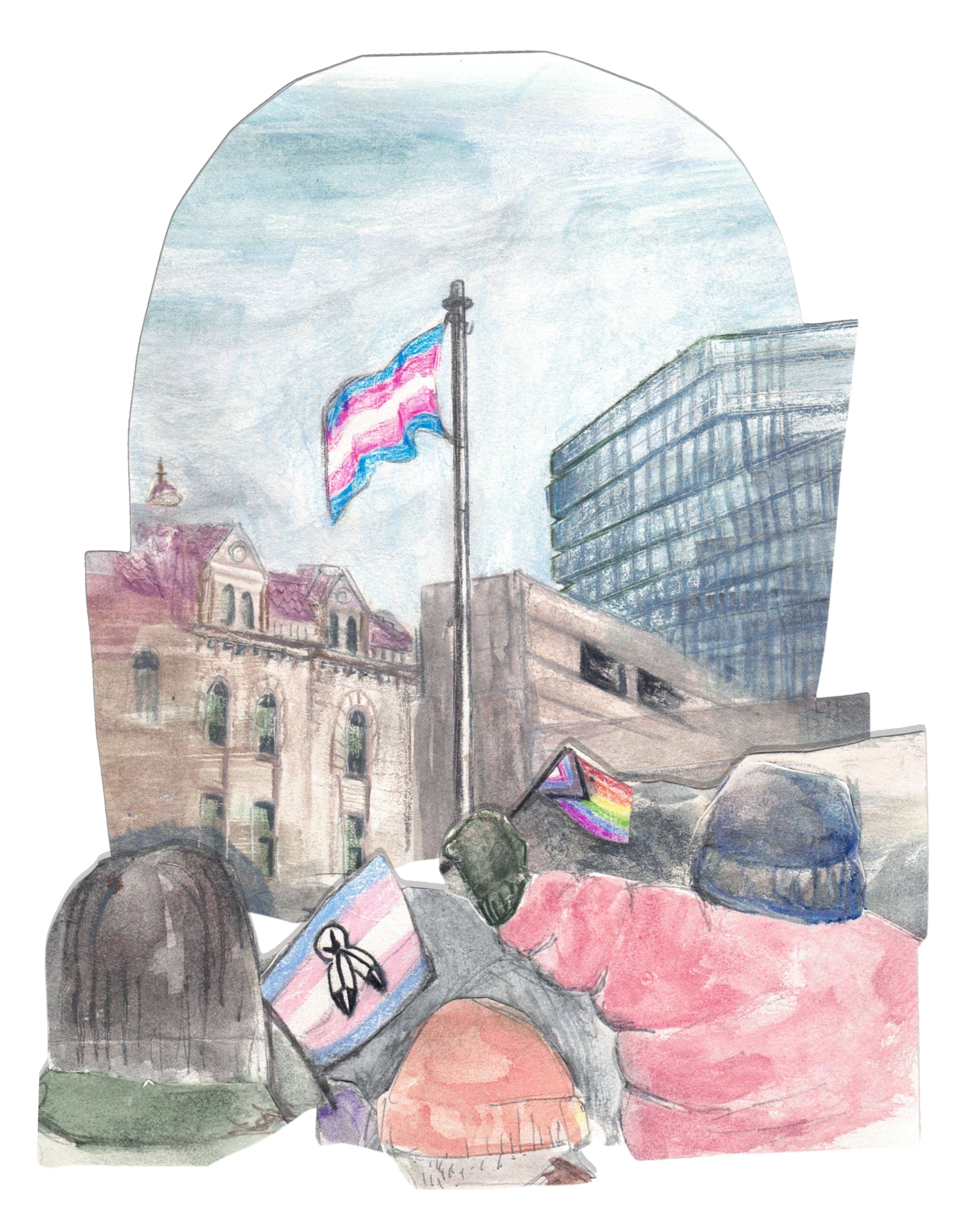
On March 31st 2026, I attended the annual flag raising for Transgender Day of Visibility (TDoV) at Calgary City Hall. I attend this flag raising almost every year, and while listening to this year’s speakers, I felt compelled to write about this event’s local history. 

Blog post author Levin Ifko’s artistic impression of TDOV 2026

Trans Day of Visibility was first conceptualized in 2009 by Michigan trans activist Rachel Crandall Crocker as a way to acknowledge and celebrate trans people. The creation of TDoV came about, in part, as a reaction to transgender people’s lack of recognition in LGBTQ+ culture and spaces. At the time, the only widely recognized day that centred trans people was Trans Day of Remembrance (TDoR), a day of mourning the loss of trans people due to violence. Deeming it necessary to have an occasion to celebrate, a handful of cities in the USA marked the first ever TDoV that same year, hosting community organised rallies, events, and flag raisings. 

As word spread about this day, events celebrating TDoV started popping up internationally. In 2013, Naheed Nenshi, as Calgary’s then-mayor, proclaimed March 31st as Trans Day of Visibility in the city. This came at the same time in Edmonton, where the mayor had proclaimed the day and subsequent days as Trans Awareness Week. This proclamation undoubtedly reflected ongoing discussions between local trans community members, as well as the work and resource sharing that the Trans Equality Society of Alberta (TESA) was doing at the time. 

One of the speakers at this year’s event was Amelia Newbert, Co-Founder and current Co-Executive Director of Skipping Stone Foundation. During this year’s event, Newbert recalled her experience being involved with the first large-scale Trans Day of Visibility event in the city, which took place “right across the street,” at the Jack Singer Concert Hall in 2016. 

When the 2016 event was covered in the Calgary Herald, Newbert expressed excitement about growing public support for LGBTQ+ rights in the province, particularly the guidelines introduced by the province in Bill 7 to “ensure respect for gender diversity in Alberta schools.” Ten years later, a different story is being told in the legislature. In the past few years, TDoV has continued to be celebrated by our community alongside our growing fears that the provincial government may implement legislation targeting trans youth. This has now become a reality. 

When I think of my own experience attempting to access gender-affirming care as a teenager living in Calgary in the same year as this first TDoV event, I recall just how meaningful and important it felt that these strides were being made provincially at the same time. It made the process of coming out less lonely – I talked openly to my teachers, friends, classmates, counsellors, and medical professionals about my concerns. At the time, it felt empowering and hopeful to know that there was growing support for trans people in the province at a provincial level. Now, I feel there’s a growing need to define empowerment and hope on our own terms. 

Reflecting on a speech she made during the 2016 TDoV event, Amelia Newbert remarked, “ten years ago, I said that our stories as trans people are triumphant. And if you’re not feeling particularly triumphant today, it’s just because our story isn’t over.” 

Just as our story isn’t over, it’s also worth noting that trans stories can not and should not be defined only by harm and suffering. In the spirit of TDoV, community organiser and director of TransAction Alberta, Dr. Victoria Bucholtz asked us to use our time and energy on March 31, 2026 to celebrate the trans people in our lives, instead of giving more attention to the provincial government’s violations of healthcare and attacks upon trans youth. (Of course, these remain issues that absolutely warrant our continued attention and action at other times.) 

As of 2026, TDoV celebrations in the city seem to grow larger each year. Speakers encouraged those at the flag raising to attend a drag show with an all-trans cast later that evening. The flag raising was attended by over one hundred community members, support organisations, union reps, and more. It was also attended by almost all city councillors, including Mayor Jeromy Farkas, who decided to break from their council meeting to be present. 

Speakers included trans elder and Lakota Two-Spirit knowledge keeper Karrie-Lynn, who candidly discussed stories from her childhood, and experiences which led her to coming out in 2021. She also expressed that being “comfortable, open and honest with not just the world, but ourselves” is what trans people are “truly fighting for and towards.” Other speakers included local drag artists, a parent of a trans child, Queer Momentum’s Executive Director Faye Johnstone, NDP member and local organiser Beau Shaw, alongside Mayor Farkas and MLA Court Ellington. 

The final speaker of the day was James Demers, who finished his words by listing the names and contributions from trans people across history. Including Wendy Carlos, Alan Hart, Lynn Conway, and the Wichowski sisters, among many others. 

I’d like to conclude this piece in the same way, by mentioning the names of people who have been pivotal to our local trans history. This includes Rupert Raj, a nationally recognized trans activist who started the Federation for the Advancement of Canadian Transsexuals (F.A.C.T.), and the publication Gender Review: A FACTual Journal, while living in Calgary in the late 1970s. 

This also includes Mardi Pieronik, who was born in Calgary in the 1960s. After living “stealth” for the majority of her adult life, Pieronik started talking publicly about what it was like to be trans in her teens and early twenties in Calgary and Vancouver. Now 64 years old, she tells these stories via social media and on her podcast A Life Lived Trans (which you can listen to and support here). 

As well as Anna Murphy, whose passionate political involvement and community activism I’ve looked up to since coming out in the 2010s. 

Prominent figures in Calgary’s trans history also include many of the speakers at the 2026 TDoV event, representing decades and years of experiences as organisers, artists, and activists that have shaped this city’s trans history and will continue to shape its trans futures.

{LI}

Queer History @ FairyTales27!

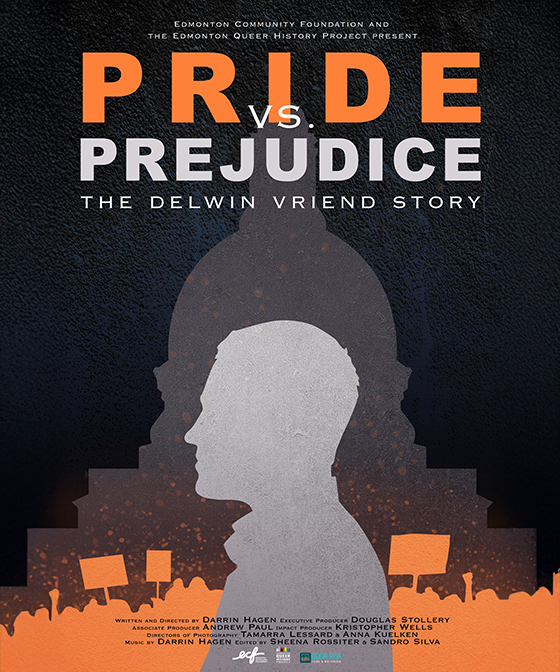
The 27th Annual Fairy Tales Queer Art & Film Festival launches this week and will run June 12-15 at Contemporary Calgary. The Festival opens with Pride vs. Prejudice: The Delwin Vriend Story, which revisits the landmark 1998 Supreme Court case that led Alberta to include sexual orientation in its human rights legislation.

Thursday, June 12th @ 7:00 PM.

The screening, followed by a “Then and Now” panel discussion, couldn’t be more timely as the province again finds itself at the center of national conversations about 2SLGBTQIA+ protections. The panel (featuring Brendan MacArthur Stevens – Blakes law firm; Amelia Newbert, trans advocate and founder of Skipping Stone Foundation; and Keith Purdy, 2SLGBTQIA+ advocate and representative of the Alberta Federation of Labour) will reflect on the legal and cultural impact of Vriend’s activism—and the ongoing work for 2SLGBTQIA+ rights in Canada.

The Fairy Tales Queer Art & Film Festival is one of the longest-running and most impactful queer film festivals in Western Canada. It features 21 film screenings, an Artist Market showcasing 17 local queer artists and makers, interactive workshops, and dynamic drag performances—all celebrating the diverse intersectionality, talent, and lived experiences of queer creators.

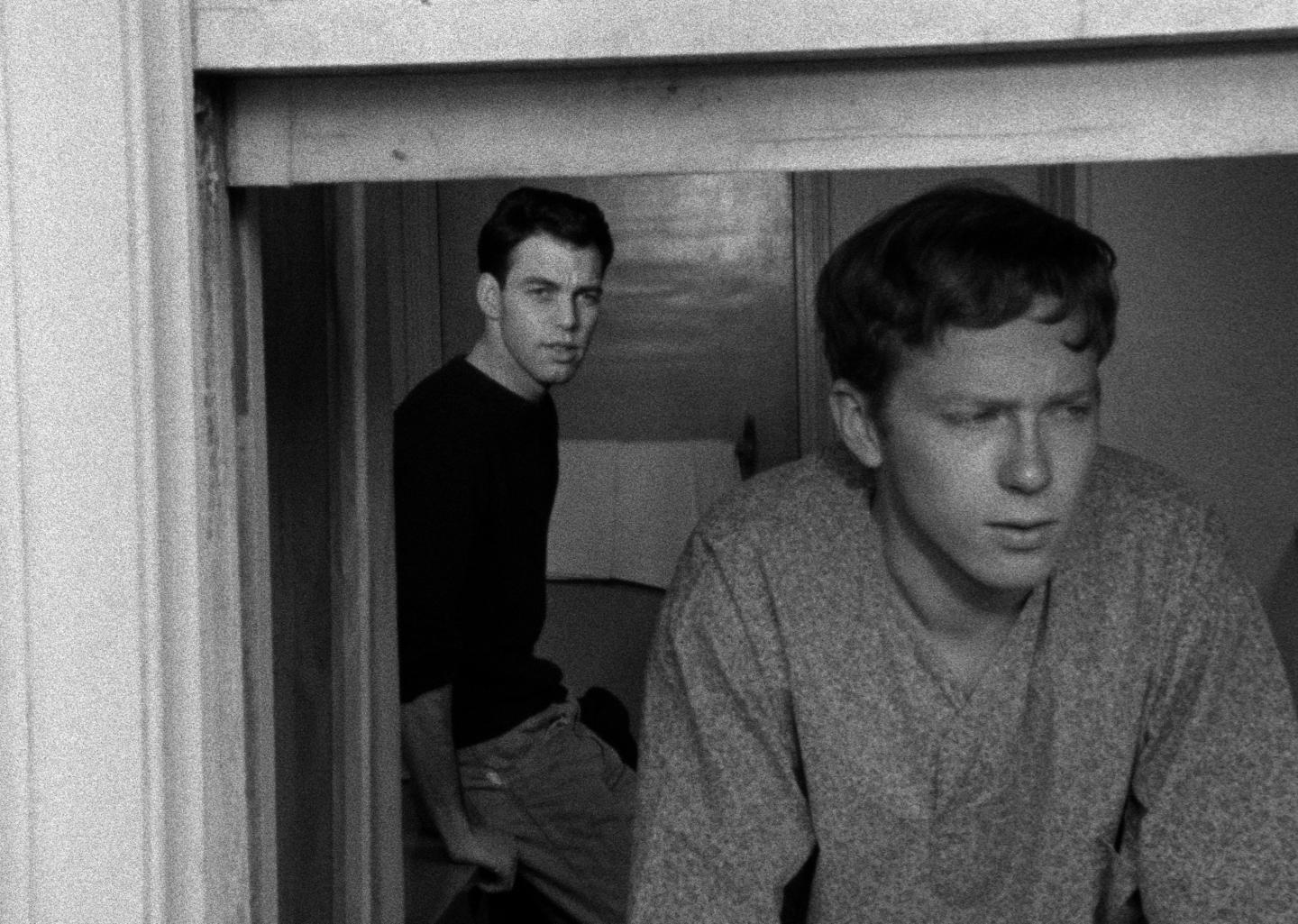
On the Festival’s final day, join the Calgary Gay History Project’s Kevin Allen for one of his favourite films, Winter Kept Us Warm. Experience the ground-breaking film that changed Canadian cinema forever: the first English Canadian gay film ever made! This beautifully shot black-and-white gem captivated audiences worldwide upon its 1965 release, boldly depicting queer desire at a time when homosexuality was still criminalized in Canada. Winter Kept Us Warm was remastered for its 60th anniversary—a time capsule of pre-liberation queer intimacy and a watershed moment in our nation’s film history. Kevin will host a talk-back session after the film. Kevin will host a talk-back session after the film.

Winter Kept Us Warm, Sunday, June 15th @ 4:30 PM.

Visit the festival website for the full schedule.

Tickets can be purchased through the Arts Commons Box Office: here.

See you at the Festival!

{KA}