Tag Archives: Lois Szabo

Calgary Pride & June—the History!

Many ask why Calgary’s Pride Festival is on the Labour Day weekend when internationally Pride Month is in June. In fact, Calgary Pride used to be a June festival but moved to September in 2009 to take advantage of drier weather and the potential for long-weekend tourism.

June is the month of Pride because it honours the Stonewall Riots in New York City, which began on June 28, 1969—a galvanizing event in the modern gay liberation movement.

Back in 1987, delegates from many of Calgary’s gay and lesbian organizations came together to form an umbrella organization called Project Pride Calgary. Inspired by the Stonewall Riots, they produced a Pride festival locally to celebrate community. Their first festival in June 1988 included a concert, workshops, a dance, and a family picnic – but no public rally or protest.

In June 1990, that changed. The Calgary Lesbian and Gay Political Action Guild (CLAGPAG), one of the Project Pride partners, organized the first political rally, which they internally described as a media stunt. One hundred and forty people mustered at the Old Y to pick up lone ranger masks and then gather at the Boer War Statue in Central Memorial Park.

And then, in June 1991, CLAGPAG more ambitiously, held its first Pride Parade. Four hundred people at City Hall cheered gay Member of Parliament Svend Robinson, who gave an inspiring speech despite gloomy weather and even gloomier protesters, three of whom were arrested.

Over the next 18 years, Pride Calgary remained a June event. It was entirely volunteer-run, and the parade and festival waxed and waned based on the enthusiasm of that year’s steering committee.

In 2008, the organization was in debt and nearly collapsed, with most of the committee abandoning ship. Sam Casselman stepped up at that autumn’s AGM as President but was shocked to learn that Pride Calgary was not an incorporated society—just a group of volunteers with a bank account. By March 2009, the new board was actively fundraising to retire its debt and incorporated a non-profit society.

They also decided to move the festival to September. The 2009 theme was “Your Rights, Our Rights, Human Rights.” There was pushback from the community, who said they were not adequately consulted about the date change, and a handful of gay businesses refused to participate. However, on Sunday, September 6, 2009, Pride had its best attendance ever.

Quirkily, I used to be a freelance reporter for Xtra.ca and reported about Pride that year.

I wrote: “The day began at noon with the Pride Parade travelling east on Calgary’s historic Stephen Ave Mall. The event was 25 percent larger than in 2008, with 40 parade entrants and 400 people participating, but there were some noticeable changes in the lineup: mainstays such as Priape Calgary and Twisted Element were absent. However, there was more participation from the Calgary community at large, including a local financial institution, a local daily newspaper and a handful of politicians.

By 1 pm the parade spilled into Olympic Plaza as people took in the Pride street gala, which included a dance stage, beer garden, food, vendors and kids zone. Speeches were kept to a minimum by organizers and community leaders, while people checked out the vendor booths where they could enter contests, buy rainbow and cowboy swag, or learn about local queer community groups. The beer garden lineup was long, there were dogs and kids everywhere, and the dance stage was packed. Tourists took photos of themselves in front of the throngs. There seemed to be more young people than ever before at Pride.

As the afternoon progressed, people retreated to the lawns surrounding the Plaza or moved on to community events and fundraisers that were happening throughout the city. The sun broke through by late afternoon, rewarding the hundreds who stayed to dance in the Plaza. By this time the Pride Calgary organizers looked pleased, albeit a little tired, as the day had been seemingly executed flawlessly.”

The decision to move to September proved decidedly successful. Calgary’s Pride Festival was the fastest-growing Pride in Canada for much of the 2010s, with attendance growing to 100,000+.

{KA}
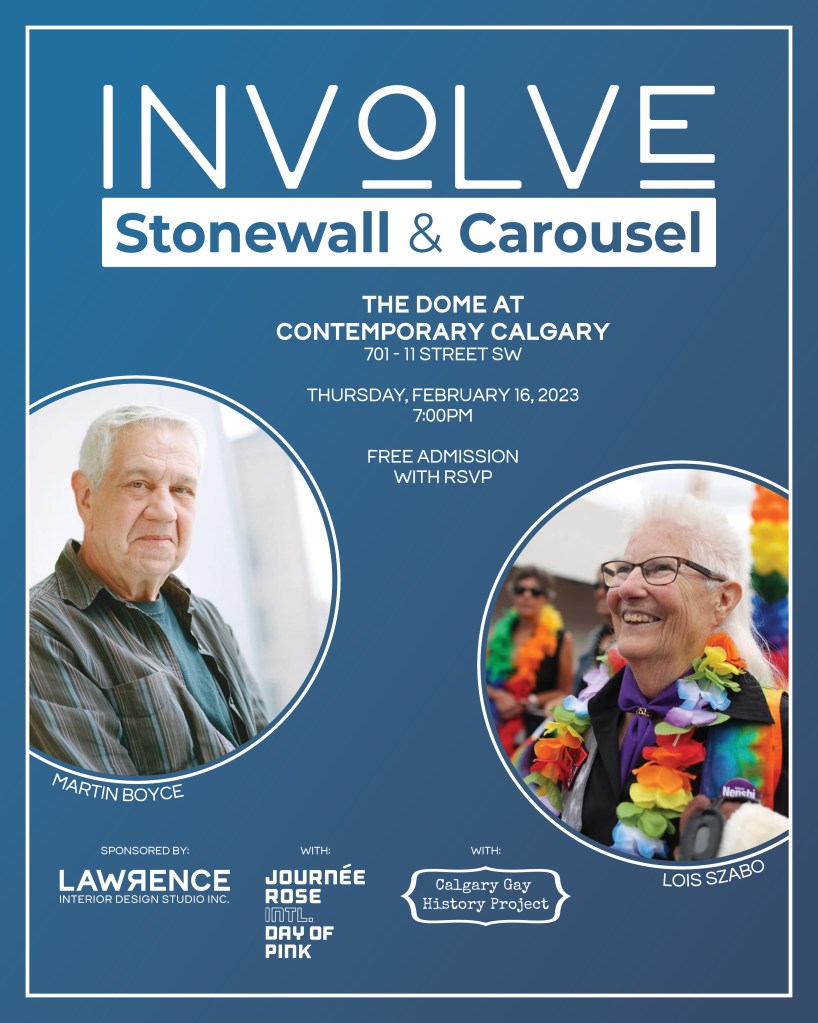
Involve: Stonewall & Carousel

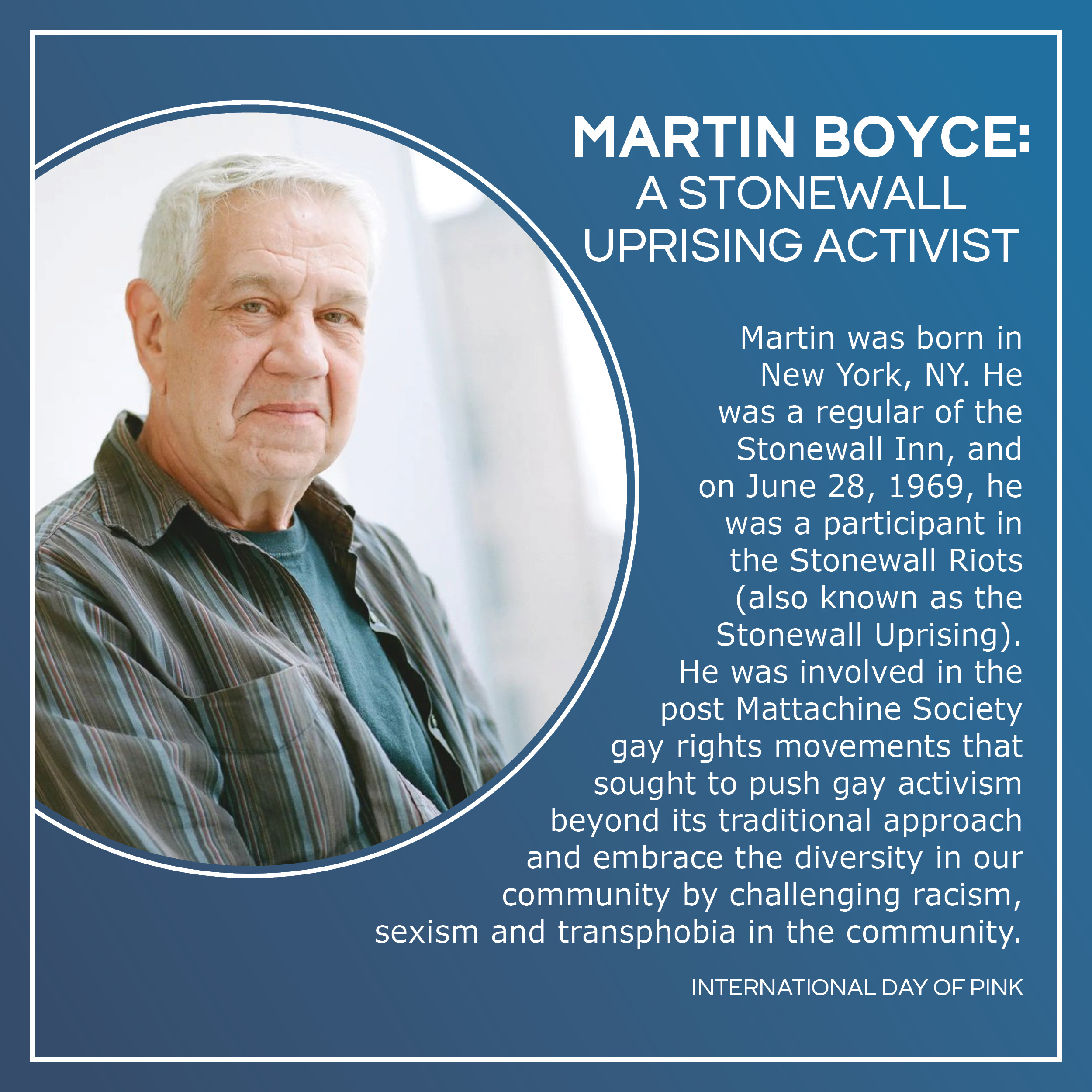
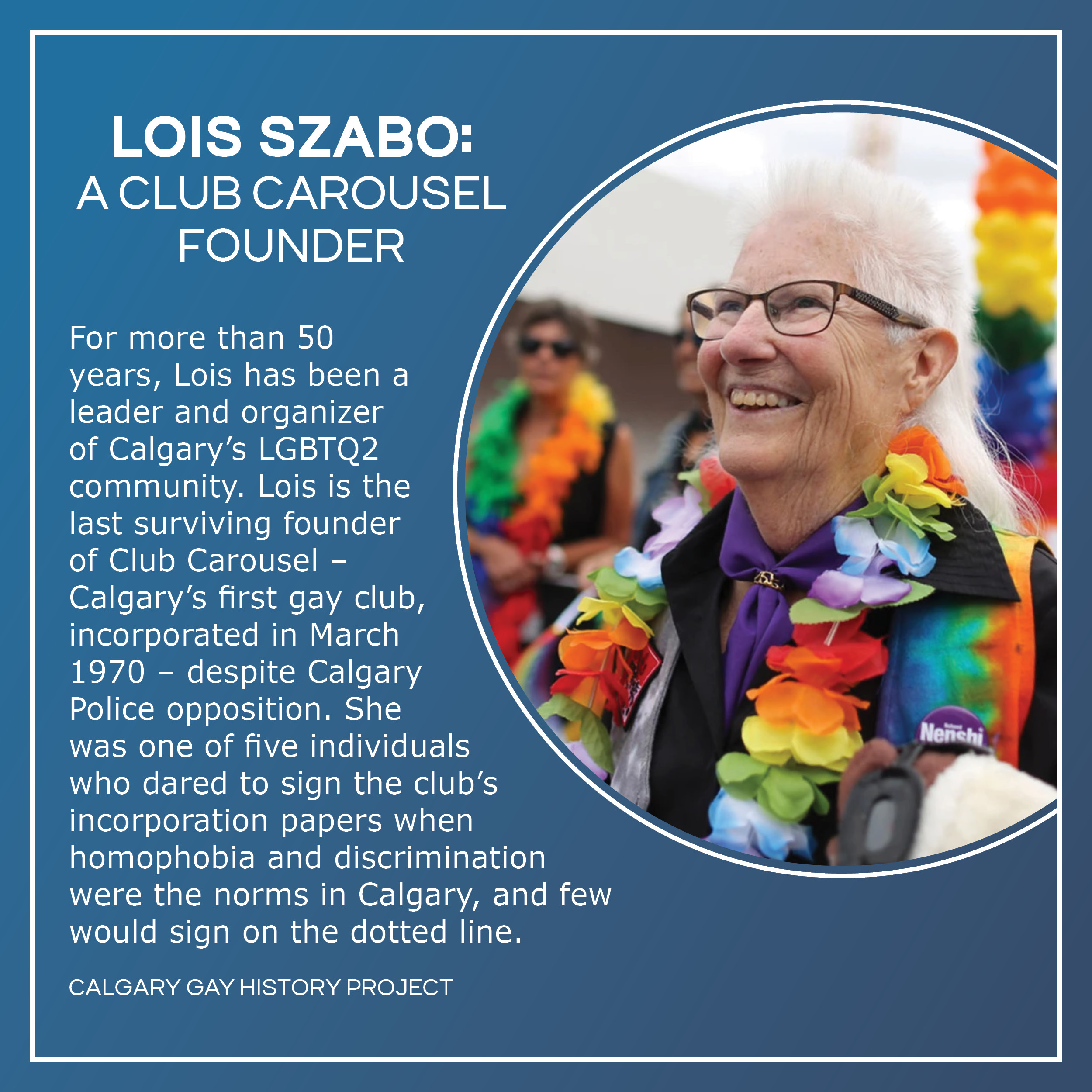
Mark your calendars on Thursday, February 16th, for a stimulating gay history evening at Contemporary Calgary called Involve. This evening of discussion will feature New York Stonewall Uprising Activist Martin Boyce and Calgary’s Club Carousel Founder Lois Szabo, sharing their perspectives and experience of the 2SLGBTQ+ human rights movement.

Free tickets can be found: here.

Sponsored by local interior design studio, Lawrence, we caught up with designer Mitchell Brooks about Involve.

Mitchell explains: “I heard Martin Boyce speak last spring in Calgary and found his personal stories and perspective on the equal rights movement and community deeply profound. When International Day of Pink announced Martin was going to be coming back to Calgary this winter and looking for speaking events, I saw it as a great opportunity to host Martin again and make a local connection to his story and experience. As much as we know some of the international history and movements, I believe Canada and Calgary has a rich queer history as well. We wanted to pair the Stonewall event with what was happening in Calgary around the same time and thought the connection with local Rainbow Elder, Lois Szabo, would enhance that dynamic conversation in a way we may not have all heard before. On top of that, as the principal of Lawrence Interior Design Studio, I pride myself in being a visible and open example of a queer business owner in Calgary.”

Inspire hopes to educate. The event is framed as a queer-led conversation about queer history with queer people, but all Calgarians are welcome.

Mitchell adds: “our past matters—to know how far we’ve come, but also how far we still must go, and the importance of maintaining our progress and place in society. Our history also matters in recognizing and celebrating the people who have led us here and continuing to share their experiences further. What’s so great about the Calgary Gay History Project’s work is that it shares and protects the local history that we closely identify with. In hosting this event, I hope to make a small contribution to support that work, celebrating the history we all represent.”

{KA}

Defending Lesbian Moms in YYC

{The Calgary Gay History Project is revisiting its most impactful blog posts—now numbering in the hundreds—since its inception nine years ago. Defending Lesbian Moms in YYC was initially published on August 25, 2017.}

For decades in Calgary, if you were out as a lesbian and had children, you would likely have them taken away. Therefore the stakes were high for gay women: being a mom was decidedly a good reason for keeping the closet door barricaded shut. Unofficial estimates claim up to 50% of lesbians in the 1960s and 1970s had children through previous heterosexual relationships or marriages. If they were outed, former husbands or even the state itself would intervene to ensure that these “unfit mothers” had their children removed.

Lois Szabo, recently honoured with a park named after her, is a lesbian and also a mother. She was able to work out a child rearing arrangement with her husband privately. Sadly, Lois knew of other lesbians in the 1960s who lost access to their children completely and became utterly broken. One lesbian she knew was institutionalized. Another killed herself slowly through alcoholism.

In fact, it was not until November 21, 1975, when an openly lesbian mother was awarded custody of her child in Canada. In the groundbreaking decision of K. vs. K., Justice D. W. Rowe of the Alberta Provincial Court reasoned that a child’s likelihood of becoming gay would not increase solely by being raised by a homosexual parent – contrary to the view widely held in Canadian society. Regrettably, this decision did not set a new legal standard as throughout the 1980s lesbian mothers continued to lose custody battles specifically due to their sexual orientation.

However, the 1975 decision fired up feminist activists to begin challenging the legal bias against lesbians in Canadian courts. In 1978, the first Lesbian Mothers’ Defence Fund (LMDF) was started in Toronto, initially through a grant from a local church group and then sustained through private donations.

In Calgary, Lynn Fraser was working at the Calgary Status of Women Action Committee, a job she described as “very low paid but very exciting.” Lynn was an unapologetic feminist and activist. She recalled, “I had a big button I always wore that said, ‘Lesbian Mother,’ which sometimes caused me trouble – but I never backed down.”

Lynn had organized Feminist Town Halls in Calgary which included both actions and public speakers. In 1982, the first “Women Reclaim the Night March” was staged in Calgary in conjunction with a talk by Andrea Dworkin, a well-known American anti-pornography activist. Another speaker in the Town Hall series was Francie Wyland, the coordinator at Toronto’s LMDF.

Screen Shot 2017-08-24 at 1.51.38 PM

Francie Wyland, Dustin Smith, and his mother, Lynn Fraser. Photo: Garth Pritchard, Calgary Herald July 2, 1981.

There was a loose collective interested in starting a LMDF chapter in Calgary after Francie Wyland spoke to the lesbian community in 1981. Lynn met Marilyn Atkinson and her partner Lou at that first gathering featuring Francie. Marilyn also became a key organizer in the collective. As a mother herself, Marilyn volunteered to provide peer support to lesbian mothers and women during any potential custody struggles. The collective was based out of Gay Information Resources Calgary (GIRC) initially.

Lavender Marilyn

Lou with Marilyn Atkinson featured in Calgary’s Lesbian Publication The Lavender Times on the occasion of their 25th Anniversary.

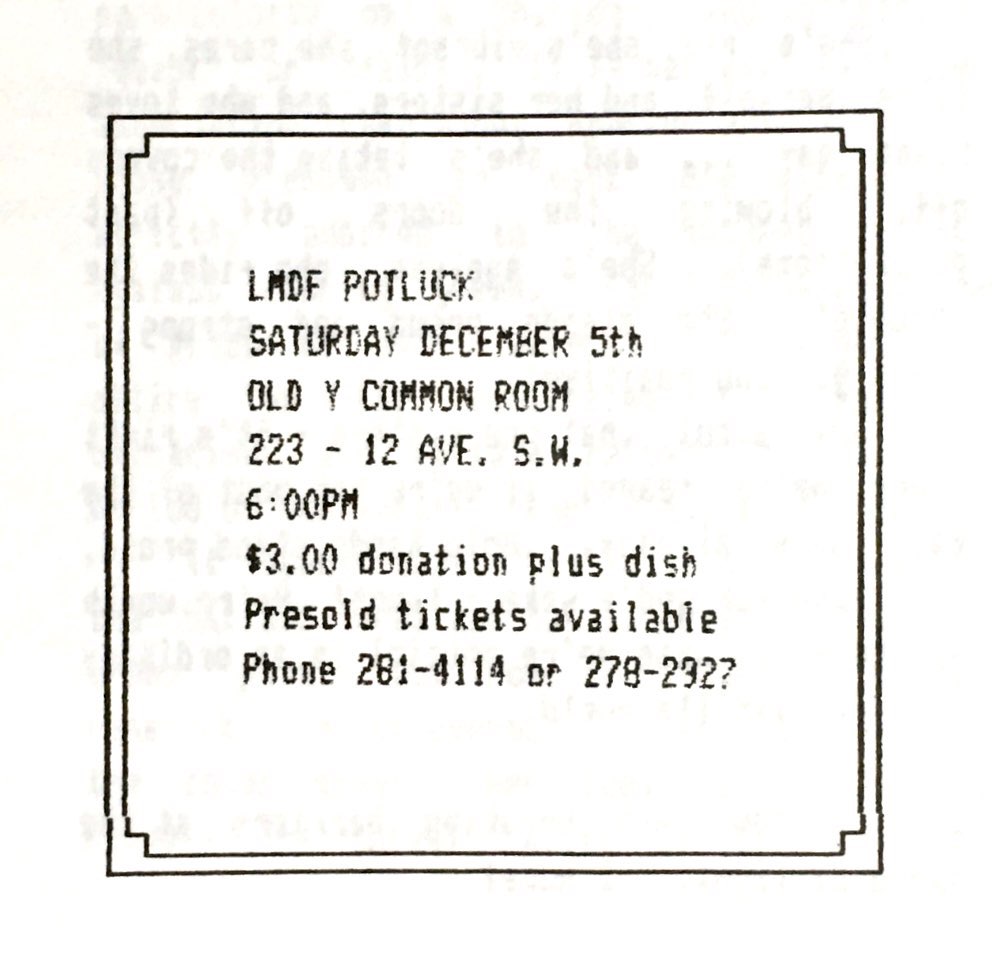
The LMDF was a low-budget, grass roots organization. Pot-luck suppers and community dances were its primary source of funding. In 1982, two Calgary lesbians took pledges to cycle across the county to raise money for the LMDF. It took them four months, but they made it to St. John’s that summer after starting in Vancouver.

In 1983, the father of Lynn’s son, Dustin, started making noises about challenging her for custody of their child. That mobilized Lynn to call Francie in Toronto for LMDF advice. Beltline lawyer, Neva Ramsay, volunteered to do the incorporation papers for the local chapter and on April 21st, 1983, the Lesbian Mothers Defence Fund Society of Alberta was born. Dustin’s father backed off.

There was a lively social scene with Calgary’s LMDF, which moved out of GIRC into their own office at the Old Y. The potlucks and dances would even attract lesbians without children! A bonus to the socializing was that their children got to play with other kids who had lesbian moms, making their family structures seem much more commonplace.

The Lavender Times, November 1987

The LMDF offered information, support, referrals to lawyers, and financial help to lesbian mothers struggling to keep or win custody of their children. The advice in child custody cases included: going to court is the last resort; do not leave your children behind; beware of ex-husbands kidnapping your kids. The LMDF also advocated for social change in the judicial system, proclaiming that the straight court system failed lesbians.

Lynn recalls: “It was an exciting time to get your voice out there and be heard. There was so much misinformation and so much fear—it seemed like almost everybody was in the closet.”

As the LMDF developed, Marilyn was hired to organize lesbian conferences which she remembered proved quite popular: “Women came from everywhere to attend.” The first conference in 1985, was funded by the local lesbian community itself. When the conferences began to attract public funding, protests were heard.

Maureen Buruill, a lobbyist with REAL Women of Canada in January 1987 wrote an editorial in the Calgary Herald complaining about her own organization’s lack of funding:

“Women’s groups across Canada receive funding from the Secretary of State’s Women’s Program. One example was a grant to the Calgary Lesbian Mothers Defence Fund to set up a “lesbian-gay” workshop collective. This organization also received a grant to arrange a lesbian conference. Why is our tax money given to these groups and refused to a group seeking to preserve family values?”

Despite the social conservative yowling, the legal system evolved to have less bias against lesbian mothers. Consequently, the LMDF’s activities morphed into helping lesbians get pregnant – initially by connecting donors to mothers but also by running sperm! It was not until 1992 that artificial insemination in hospitals became legally available to single and unmarried women, including lesbians in Calgary. The LMDF then began fundraising for artificial insemination in doctor’s offices and stopped running sperm themselves. Several babies were born from the LMDF’s sustained efforts.

In 1992, the society changed its name to the Lesbian Mothers Support Society to better reflect its efforts and developed a notable online presence. It also was active in advocating Provincially for adoption rights for the partners of lesbian mothers. The society wound down its operations in 2002. However, in its 21 years of history, the LMDF made a huge difference: defending lesbian mothers and moving social justice forward in Calgary.

{KA}