
{Welcome to the final installment in our Winter Olympic Series, written by William Bridel!}
You may have heard of a recent show that is—pardon the pun—burning up the internet. Heated Rivalry has quickly garnered critical acclaim as well as a massive viewing audience both within Canada and globally. Situated in the context of men’s ice hockey, the show, while not without its flaws, is nevertheless broaching important conversations about queer representation in sport. Representation matters. That’s one of the reasons I wanted to write this series of posts about queer Olympians from Calgary.
Sharing these stories has provided an opportunity to celebrate queer representation in sport and to highlight that we’ve always been here! While building on that theme, this post has a somewhat different focus: the 1988 Olympic Winter Games, which were held in Calgary.
While some infrastructure built for those Games is now defunct (think ski jumps and the sliding track at Canada Olympic Park) and others torn down (think Olympic Plaza downtown), throughout Calgary, there are reminders everywhere that this city hosted the world now nearly 40 years ago—the Olympic Oval, the Saddledome, Nakiska Station, the C-Train northwest expansion, to name just a few. During our interview, Lindsay Alcock talked about the lasting influence seeing Olympic events in Calgary had on her athletic career. Alcock, Anastasia Bucsis, John Fennell, and Eric Mitchell all trained in Olympic venues built for the ’88 Games. Brian Pockar, the figure skater featured in the first of this series, played a key role in the production of the Closing Ceremonies.
At the community level, a local bus driver, Mark Perry-Schaub, was accepted as a transportation volunteer for the Games but was forced to fight for that position when it was discovered he had AIDS, and the organizing committee told him he was no longer welcome to serve in that role. You can read more about Perry-Schaub’s story here.
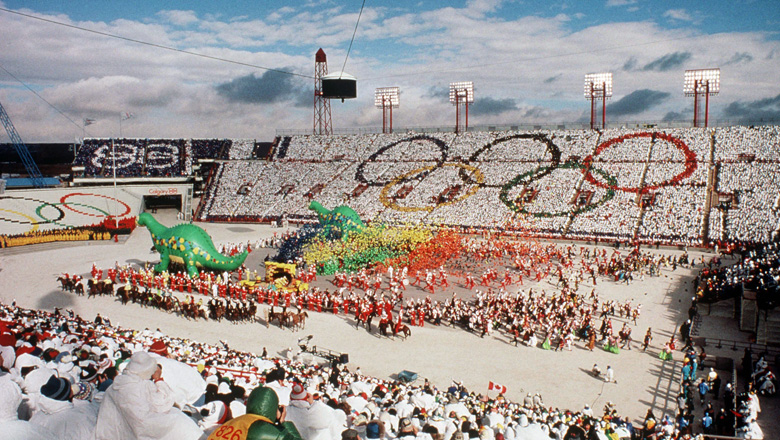
The 1988 Games also had an impact on queer fans of sport. One research participant, Fred, spoke about the impact of the Games on community at the time, including meeting at Off Centre, a queer bar that would eventually become Money-Pennies, to meet friends from the community, talk about events, and the general vibe in the city at the time. He also shared this memory:
“Tons of us went… when the Jamaican bobsled team was down on Stephen Ave selling their t-shirts and stuff to raise money to pay for their trip. The bar was stuffed. I’ve got pictures of us all wearing Jamaican bobsled t-shirts, because everybody from the bar had to own that. We all went down to Olympic Plaza and cheered on Eddy the Eagle for being the last and the worst ski jumper. But we were all together. Like you cheer on the underdog. I’ve got pictures of us going into the big Olympic pin swapping tents… I still have all my pins in a box somewhere.”
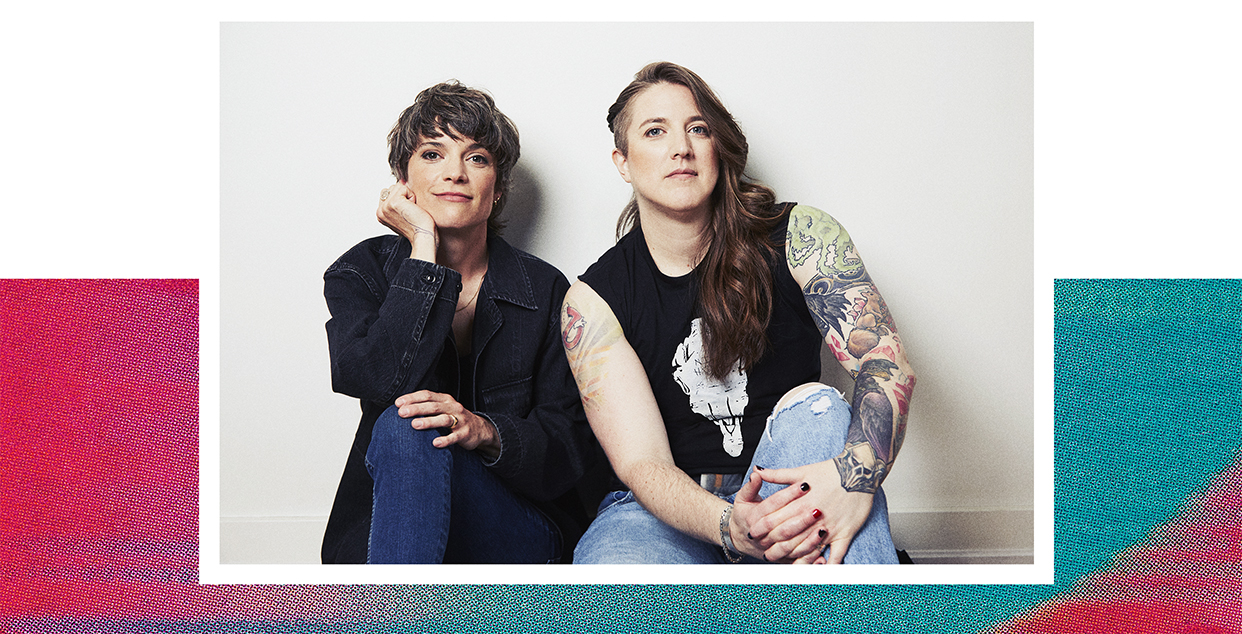
Queer podcasters Bronwin Parks and Elinor Svoboda of the Late in ’88 podcast reminisced about the 1988 Games in their second episode, “Hometown Olympic Fever.” In general, they commented that anyone in Calgary at the time was aware of the Games, with a noticeable change in the city leading up to and during the event, which they recognized even though they were quite young at the time. They also discussed with friends—and historian Kevin Allen—the impact various events had on them in relation to gender identity and sexuality. One friend commented on figure skater Brian Orser, specifically the celebration of his silver medal and the disconnect between Orser being applauded for that, whereas performances of non-traditional masculinity were viewed negatively in pretty much all other aspects of social life at the time. The whole podcast series is a great listen, but I recommend this one in particular as well as the bonus “Olympic Relics” episode.
While I didn’t live in Calgary at the time, as a 15-year-old figure skater, I was glued to the CBC for all the figure skating events. I cried when Tracy Wilson and Rob McCall won the bronze medal in ice dance—the first ever Olympic medal for a Canadian team in that event. I cried when Brian Orser finished second in the men’s event; an outstanding result without question, but one that I knew he was disappointed with at the time. And I lost my mind when Elizabeth Manley had the skate of her career, famously sporting that white cowboy hat as she exited the ice, earning the silver medal. I also ADORED Katarina Witt for her many achievements in the sport, her performance ability, and the DRAMA she brought to the ice (and off the ice as well)! I may have, in fact, performed along with her in my family room, the opening moves to her long program, choreographed to music from the opera Carmen. Only in recent years, however, have I begun to understand the impact Witt had on other queer folks. Comedian and actor Carolyn Taylor, for example, created a whole television series—I Have Nothing—around the indelible impact the Calgary Olympics had on her, including Witt’s talents and looks, leading to a sexual awakening for Taylor.
The Olympic Games and the International Olympic Committee are, of course, not without their many, many problems. Sport more generally remains a problematic space for queer folks, and a space from which trans and gender diverse folks are excluded through exclusionary practices, policies, and government legislation, such as Bill-29 in Alberta. It is imperative to recognize the work that remains to be done while at the same time finding and celebrating queer joy—be that through the recognition of queer athletes’ successes, their resiliency and bravery in breaking down barriers, or folks finding connection in and through sport, regardless of their role. I hope to have captured some of that joy in this series of posts about queer Calgarians at the Olympics and the Calgary Games. Thanks for reading along.
{WB}
Links to the Winter Olympic Series:
Part One: From the Calgary Winter Club to Olympic Ice
Part Two: Hurtling Headfirst Down Mountains and Into the History Books
Part Three: Faster, Higher, Stronger… Resist


 Calgary Gay History