
Former Alberta Premier Ralph Klein, had a high-profile disdain for gay rights: denouncing the advent of same-sex marriage in Canada as well as publicly disagreeing with the Supreme Court’s inclusion of sexual orientation as a protected human right in Canada. In both cases it was the Government of Alberta, under his leadership, who supplied an active legal resistance to both issues.
However at the beginning of his political career, he seemed a different person. Elected as Mayor of Calgary in October 1980, he touted himself a “people’s mayor.” And in the early months of his mayoralty that included gay people too.
On January 10, 1981, Mayor Klein stopped in at the 5th annual coronation ball of the Imperial Court of the Chinook Arch (now Imperial Sovereign Court of the Chinook Arch – which held its 40th coronation earlier this year). He was invited by Bruce May, then president of Gay Information and Resources Calgary (GIRC). Klein gave a 15-minute cameo appearance, where he made a speech praising the good work of GIRC and exclaimed that law-abiding gay people were welcome in the City of Calgary. The 500 people in attendance gave him a three-minute standing ovation. Consequently, Klein was one of the first mayors in Canada to have made such an address.
The Calgary Sun, one of the city’s newspaper dailies, took extreme umbrage that Klein appeared at a gay event and for days wrote damaging and hostile editorials and columns.
On January 12th, the Sun’s banner headline was, Klein backs gay rights. Mayor Klein and his Executive Assistant, Rod Love, went into full damage control, attempting to find a favourable spin for the story. Two days later, associate editor Michael Shapcott wrote a scathing editorial titled, Pink Herring – here is a quote:
Mayor Ralph Klein can backtrack all he likes, but he can’t undo the damage from his foolish decision to show up at a homosexual rally and speak approvingly of “gay rights.”
What the heck was the Mayor trying to prove? And what’s all this nonsense about “gay rights?”
[If] Mayor Klein’s talking about a homosexual’s privilege of doing any perverted act in private between consenting adults, no matter how repugnant it is to most of us, then he’s stating the obvious. As long as homosexuals, or people who practice any number of bizarre things, keep it to themselves, they can do practically anything their filthy minds conceive (just leave the kids alone, please).
Fact is, though, when homosexuals talk about “gay rights,” they really want society to pat them on their heads, coo a few encouraging words and tell them that they’re all nice and normal. And Mayor Klein should know that by attending their convention, and mouthing a few approving words, he’s playing right into their hands.”
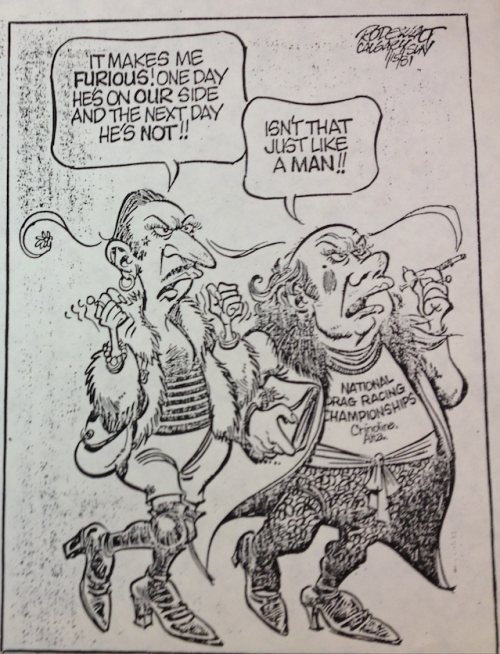
Calgary Sun Editorial Cartoon: January 14, 1981
On January 15th, the Sun wrote a column, Klein for gays, but…. In it, staff writer Peter Miller quoted Mayor Klein extensively as he awkwardly qualified his support for the gay community. He explained that gays should not ask for or expect any special rights or privileges, nor hold demonstrations or parades in Calgary because the protests would offend straight people. He also did not condone gay prostitution nor gays drawing young people into homosexual activity.
That would not be the last time that Klein changed tack politically. At one time a liberal supporter, he switched teams to become elected as a conservative MLA. However, the Calgary Sun’s sustained attack in 1981, appeared to give Klein a scare that would set the tone for his relationship to gay rights during the rest of his political career.
{KA}
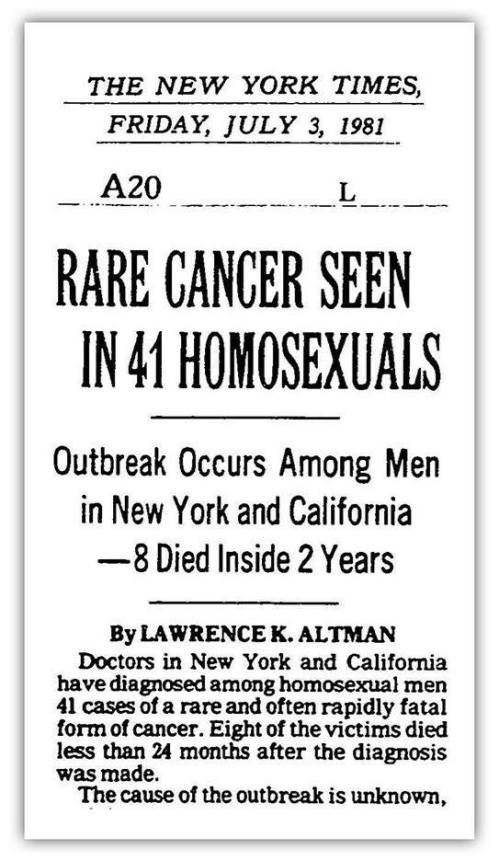 It did indeed wreck the mood for a generation and caused significant panic, fear and anxiety in those early years of the epidemic. According to epidemiologists, Canada saw a two-year time lag in the progression of the disease, “or epidemic curve” relative to the United States. As if on cue,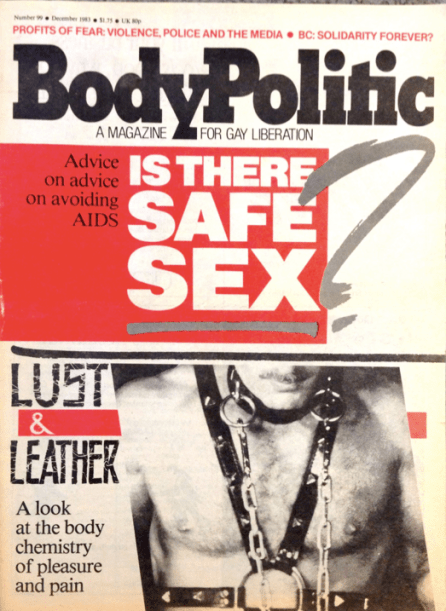


 Calgary Gay History