Tag Archives: Club Carousel

Club Carousel’s Birthdate Found

On the heels of the City of Calgary’s historic designation of Club Carousel, we discovered a remarkable NYC article written about the Club, six months after it opened.

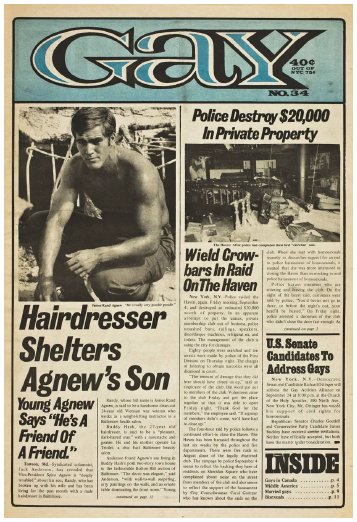
It was titled Liberation Canadian Style and published in GAY, New York City’s third post-Stonewall gay newspaper. Started in December 1969 by Jack Nichols and Lige Clarke, GAY’s varied content featured articles written by some of the era’s most significant LGBT rights activists. In September 1970, author John Scarth reported on his trip to Calgary and his experience at the fledgling Club Carousel.

Sept. 28, 1970 issue of GAY. Source: https://www.houstonlgbthistory.org/

Scarth summarized the history of Club Carousel and described its opening night as Friday, March 20, 1970. Previously, we had only determined that it opened in March 1970, but not the specific date.

Another intriguing fact—new to us—was that renowned American Gay Activist Frank Kameny came to Calgary in 1968 to speak at the University. “If there’s a gay bar in this town, it’s gotta be at the bottom of that,” Kameny quipped about the Calgary Tower.

Scarth’s article about 1970’s Calgary is a time capsule for gay liberation. We include the entire piece here.

Finding new sources is a delight for historians. Enjoy—and Happy Birthday Club Carousel!

{Thank you to historian Maya Bilbao for letting us know about this article.}

{KA}

Club Carousel now a YYC Heritage Site!

Last week, on the City of Calgary’s social media, their Throwback Thursday post was about Club Carousel and its inclusion on its official heritage site list. We couldn’t be more thrilled! The Calgary Gay History Project has written extensively about the Club and founder Lois Szabo, who had a City Park named after her.

The inventory of heritage sites is curated and maintained by Heritage Calgary. Their CEO, Josh Traptow, told us:

“Heritage Calgary is always looking for stories that tell the history of our city. Sites of historic significance aren’t always architectural masterpieces or iconic landmarks; we’re also looking for the untold stories. Club Carousel has a history of major importance to Calgary’s 2SLGBTQ+ community, which is why we recently researched and added Club Carousel to the Inventory of Evaluated Historic Resources. Club Carousel is also symbolic of the historic streetscapes established along Calgary’s downtown Beltline streetcar system in the pre-World War One era.”

Here is what the City of Calgary shared:

“{On Throwback Thursday}, we’re looking at a building that is symbolic for commercial development and activity along 1 Street SW as well as being significant to Calgary’s folk music scene and then to the 2SLGBTQ+ community – The Club Carousel building.

Built in 1905, The Club Carousel building was one of the earliest buildings constructed on the 1200 block and established 1 ST SW as a commercial main street south of the downtown commercial core.

The Depression Coffee House was founded by John Uren from Toronto in 1963 in the basement of the Club Carousel building. At that time, Calgary had a reputation of lacking culture, which inspired Uren’s vision to establish the Depression Coffee House for chess, poetry, folk music, and other performances by local musicians. The coffee house was the first one in Calgary and established the city’s folk music scene, launching Joni Mitchell’s music career in 1963. Joni Mitchell (Joni Anderson at that time), a young Calgary art student, was the club’s opening night act and, John Uren became known as the grandfather of folk music in Calgary through the coffee house’s success.

The Depression Coffee House era

In October 1969, the building supported the city’s first chartered private gay members club which represents an important milestone in Calgary’s 2SLGBTQ+ community history. After opening, challenges getting a business licence and the club’s original owner allowing non-members to attend resulted in members boycotting the basement club. An executive committee was formed, and donations were solicited to establish a non-profit charitable society, the Scarth Street Society (the historic name of 1 St SW), to mitigate police pressure and license challenges. The Society took over the lease of the basement space and in March 1970, the club’s executive committee, with a Theatre Calgary set designer, prepared the space to reopen as Club Carousel.

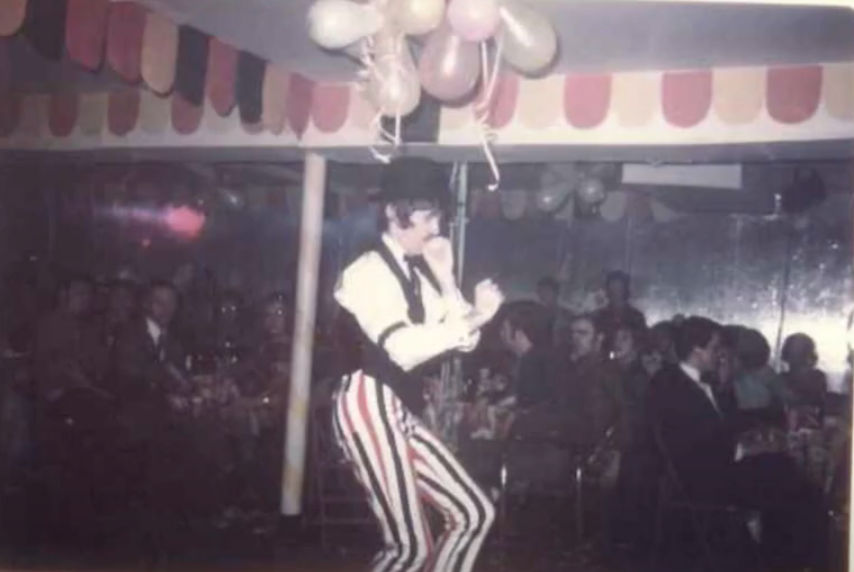
Roger Perkins performing at New Year’s Eve at the Club

The Club Carousel community donated surplus proceeds to charities and supported social activities outside the club. As an established non-profit club, the basement became too small and Club Carousel moved to the Sidorsky’s Furniture Store at 16 Avenue and Centre Street N in 1972. Due to declining membership and competition, the club closed its doors in March 1978.”

The building in the 1990s
The building in 2024: sports bar Home & Away

{KA}

Involve: Stonewall & Carousel

Mark your calendars on Thursday, February 16th, for a stimulating gay history evening at Contemporary Calgary called Involve. This evening of discussion will feature New York Stonewall Uprising Activist Martin Boyce and Calgary’s Club Carousel Founder Lois Szabo, sharing their perspectives and experience of the 2SLGBTQ+ human rights movement.

Free tickets can be found: here.

Sponsored by local interior design studio, Lawrence, we caught up with designer Mitchell Brooks about Involve.

Mitchell explains: “I heard Martin Boyce speak last spring in Calgary and found his personal stories and perspective on the equal rights movement and community deeply profound. When International Day of Pink announced Martin was going to be coming back to Calgary this winter and looking for speaking events, I saw it as a great opportunity to host Martin again and make a local connection to his story and experience. As much as we know some of the international history and movements, I believe Canada and Calgary has a rich queer history as well. We wanted to pair the Stonewall event with what was happening in Calgary around the same time and thought the connection with local Rainbow Elder, Lois Szabo, would enhance that dynamic conversation in a way we may not have all heard before. On top of that, as the principal of Lawrence Interior Design Studio, I pride myself in being a visible and open example of a queer business owner in Calgary.”

Inspire hopes to educate. The event is framed as a queer-led conversation about queer history with queer people, but all Calgarians are welcome.

Mitchell adds: “our past matters—to know how far we’ve come, but also how far we still must go, and the importance of maintaining our progress and place in society. Our history also matters in recognizing and celebrating the people who have led us here and continuing to share their experiences further. What’s so great about the Calgary Gay History Project’s work is that it shares and protects the local history that we closely identify with. In hosting this event, I hope to make a small contribution to support that work, celebrating the history we all represent.”

{KA}