
Last week, on the City of Calgary’s social media, their Throwback Thursday post was about Club Carousel and its inclusion on its official heritage site list. We couldn’t be more thrilled! The Calgary Gay History Project has written extensively about the Club and founder Lois Szabo, who had a City Park named after her.
The inventory of heritage sites is curated and maintained by Heritage Calgary. Their CEO, Josh Traptow, told us:
“Heritage Calgary is always looking for stories that tell the history of our city. Sites of historic significance aren’t always architectural masterpieces or iconic landmarks; we’re also looking for the untold stories. Club Carousel has a history of major importance to Calgary’s 2SLGBTQ+ community, which is why we recently researched and added Club Carousel to the Inventory of Evaluated Historic Resources. Club Carousel is also symbolic of the historic streetscapes established along Calgary’s downtown Beltline streetcar system in the pre-World War One era.”
Here is what the City of Calgary shared:
“{On Throwback Thursday}, we’re looking at a building that is symbolic for commercial development and activity along 1 Street SW as well as being significant to Calgary’s folk music scene and then to the 2SLGBTQ+ community – The Club Carousel building.
Built in 1905, The Club Carousel building was one of the earliest buildings constructed on the 1200 block and established 1 ST SW as a commercial main street south of the downtown commercial core.
The Depression Coffee House was founded by John Uren from Toronto in 1963 in the basement of the Club Carousel building. At that time, Calgary had a reputation of lacking culture, which inspired Uren’s vision to establish the Depression Coffee House for chess, poetry, folk music, and other performances by local musicians. The coffee house was the first one in Calgary and established the city’s folk music scene, launching Joni Mitchell’s music career in 1963. Joni Mitchell (Joni Anderson at that time), a young Calgary art student, was the club’s opening night act and, John Uren became known as the grandfather of folk music in Calgary through the coffee house’s success.

In October 1969, the building supported the city’s first chartered private gay members club which represents an important milestone in Calgary’s 2SLGBTQ+ community history. After opening, challenges getting a business licence and the club’s original owner allowing non-members to attend resulted in members boycotting the basement club. An executive committee was formed, and donations were solicited to establish a non-profit charitable society, the Scarth Street Society (the historic name of 1 St SW), to mitigate police pressure and license challenges. The Society took over the lease of the basement space and in March 1970, the club’s executive committee, with a Theatre Calgary set designer, prepared the space to reopen as Club Carousel.
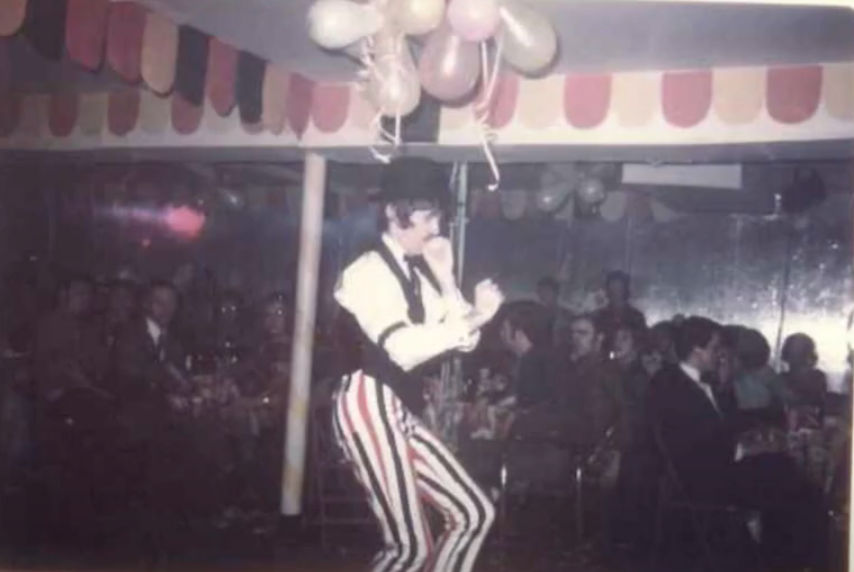
The Club Carousel community donated surplus proceeds to charities and supported social activities outside the club. As an established non-profit club, the basement became too small and Club Carousel moved to the Sidorsky’s Furniture Store at 16 Avenue and Centre Street N in 1972. Due to declining membership and competition, the club closed its doors in March 1978.”


{KA}



 Calgary Gay History