Join the Conversation: Community Ties with The ArQuives

{The Calgary Gay History Project is pleased to promote the ArQuives’ Community Ties: Our Future Together conversation in Calgary on Thursday, March 6th!}

The ArQuives: Canada’s LGBTQ2+ Archives is gearing up for an exciting new chapter and we want you to be part of it! We are starting a national conversation about how The ArQuives can best serve communities across Canada over the next 50 years. In February and March, we are hosting intimate, in-person gatherings in 12 cities: Calgary, Edmonton, Fredericton, Halifax, Montreal, Ottawa, Saskatoon, St. John’s, Vancouver, Whitehorse, Winnipeg, and Yellowknife. Bilingual facilitators will conduct sessions in Ottawa, Montreal, and Fredericton to serve Francophone participants in those cities. If you prefer a one-on-one conversation in French, please let us know and we will arrange that with you directly.

In each city, we’re gathering 15 LGBTQ2+ community members to share challenges, hopes and dreams related to how we Keep Our Stories Alive. There will be a short presentation and friendly facilitation by The ArQuives, and there will be an opportunity to participate in collaborating to make a zine that captures what makes your community great! Snacks and drinks will be provided.

While we’re in your city, we especially want to reach out to and meet:

  1. LGBTQ2+ community members who already are or might be interested in our programming;
  2. researchers, academics, and media who already or might use The ArQuives’ collections in their work; and
  3. partner organizations, including libraries, archives, museums, arts and heritage organizations, cultural institutions, and other LGBTQ2+ organizations.

We have developed an RSVP form for potential participants with a brief questionnaire designed to help us prepare for each session. Please share this link with others in your community, especially those from historically marginalized communities.

The ArQuives values diversity and is committed to addressing historical inequities within our organization. We would love to hear from LGBTQ2+ communities that have been systematically marginalized, including those who are Indigenous, women, trans, nonbinary, gender non-conforming, Black, people of colour, newcomers, and persons with disabilities. We’re hoping to have a wide range of conversations, including young adults and older members of our communities.

There is limited space, and honoraria are available for community members for whom attending is not part of their professional duties. If you cannot attend in person, there will be other ways to participate, including a national survey.

Thanks for your assistance and collaboration! Your insights will be crucial in building a stronger, more connected future for The ArQuives and the communities we serve.

If you have any questions or want to chat more about the project, please reach out to Nico Mara-McKay at projectcoordinator@arquives.ca.

{KA}

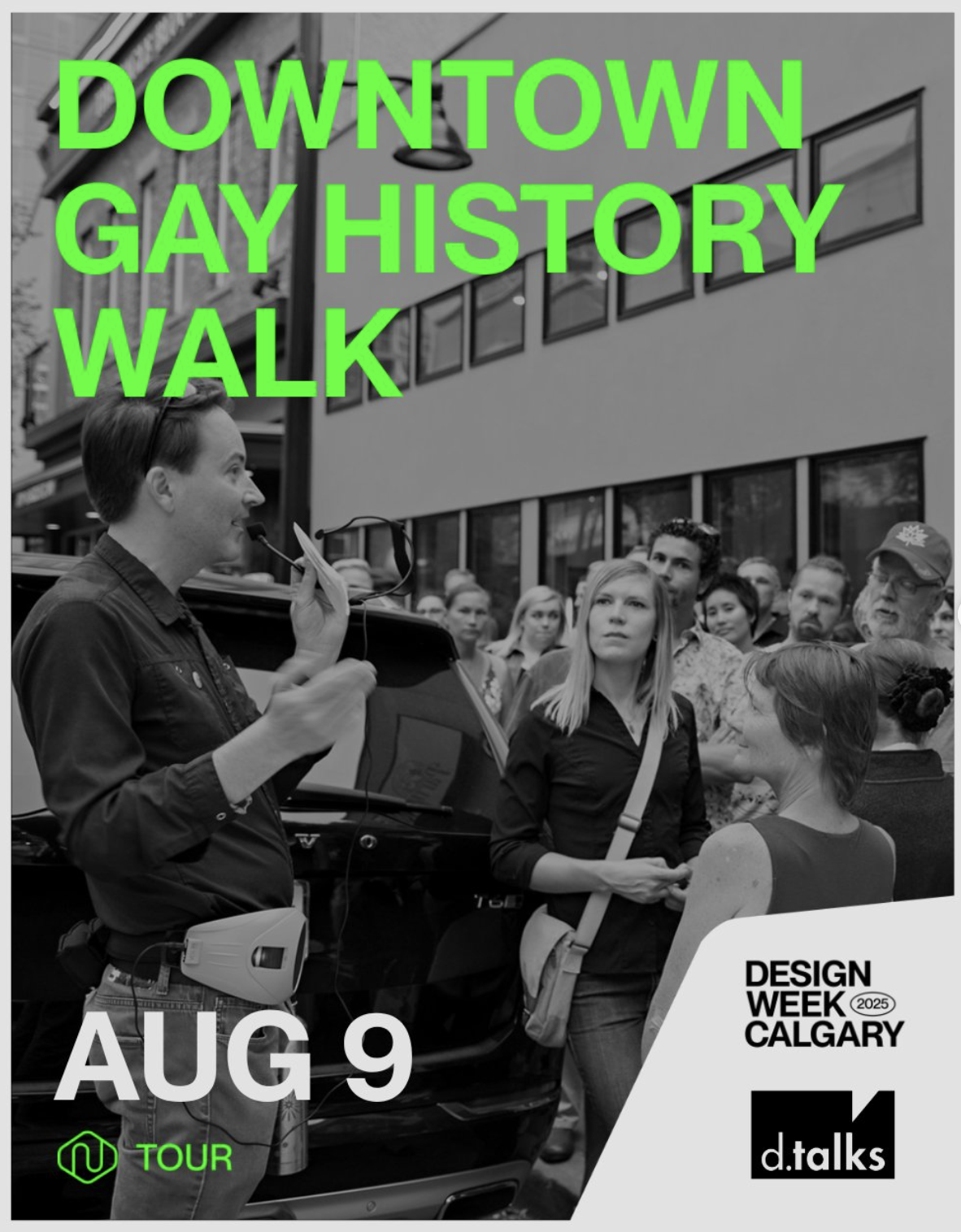
Our Past Matters @ Heritage Park

Mark your calendars for a free Calgary Gay History Project lecture on March 12th. Heritage Park invited research lead Kevin Allen as part of its Culturally Speaking lecture series. {Note: the amazing Suzette Mayr is booked for Feb 26th: Uncovering the Lives of Sleeping Car Porters.}

Speaker: Kevin Allen

Lectures begin at 7 PM: people are asked to RSVP online: here.

Kevin will present an eye-opening look at the social and political moments that have shaped Calgary’s 2SLGBTQ+ community. Through fascinating stories and local history, you’re guaranteed to learn something new {There is even queer history—recently discovered—related to Heritage Park itself. Please join us!}

{KA}

Gay Bar: Why We Went Out

So, in December, I entreated people to read queer history for the holidays on this blog. I took my own good advice and picked up a copy of Gay Bar: Why We Went Out at the library by Jeremy Atherton Lin.

Gay Bar comes complete with testimonials and was named one of the best books of the year (2021) by the New York Times, NPR, and Vogue. I stumbled upon it only last fall and finally curled up with it for the darkest days of winter—it proved illuminating.

The book’s blurb states: “In Gay Bar, the author embarks upon a transatlantic tour of the hangouts that marked his life, with each club, pub, and dive revealing itself to be a palimpsest of queer history. In prose as exuberant as a hit of poppers and dazzling as a disco ball, he time-travels from Hollywood nights in the 1970s to a warren of cruising tunnels built beneath London in the 1770s; from chichi bars in the aftermath of AIDS to today’s fluid queer spaces; through glory holes, into Crisco-slicked dungeons and down San Francisco alleys. He charts police raids and riots, posing and passing out—and a chance encounter one restless night that would change his life forever.”

Very few non-fiction books delighted me as this one did. Not only is it fiercely intelligent, but it ranges from the personal to the historical and back again in a lovely way. There are hot takes on queer history, the evolving role of the gay bar over time, and Atherton Lin’s candid recollections of what he did in the bars and what they meant to him. In turn, readers—particularly gay men—reflect on what gay bars mean to them. Why we went out becomes why did I go out and how did it form me?

Jeremy Atherton Lin, like myself, is Generation X. Last weekend, Jeff Gordinier opined in The Globe and Mail: “At a time when apocalyptic fires and floods threaten to obliterate entire cities, it is encouraging to see Gen Xers stepping into the role of griot, determined to keep songs and stories alive.” As a griot (or storyteller), Atherton Lin fulfills this mission, even making the reader a complimentary soundtrack to accompany Gay Bar—virtually every song mentioned in the book.

I took note of historical references that I want to follow up on, like Robert Duncan’s 1944 essay “The Homosexual in Society” and the confident 1950s lesbian and gay bar Mary’s First and Last Chance in Oakland, California.

Gay Bar delightfully defies genre. Autobiography becomes historical treatise becomes social commentary, and the patois of our community—even the word “community”—gets scrutinized in Atherton Lin’s perceptive musings. His gaze on the gays transcends time zones and decades; it’s as if he is haunting the gay bar of our collective dreams, a club where we have all been and the place we wish to go back to.

{KA}