Category Archives: Press Release

Mapping History Exhibition Launch

The launch of Mapping History: The Calgary Atlas Project at Lougheed House is more than a conventional exhibition opening; it is a layered reimagining of how cities remember themselves. Running from April 2 to May 17, 2026, the exhibit transforms historical maps into immersive artworks, inviting visitors to explore Calgary through stories that are often overlooked or erased.
The Lougheed House Exhibition runs April 2 – May 17 at 707 13 Ave SW.

The Calgary Institute for the Humanities (CIH) founded the Calgary Atlas Project ten years ago. The idea was to create maps that recover crucial stories about Calgary’s past and present, stories that illuminate, in surprising ways, the character and diversity of the city. Overlooked stories from Calgary’s history are mapped onto the city’s geography, highlighting significant sites, events, and people. This is cartography as a cultural practice, an evolving atlas of human experience.

We were delighted to be involved with the Calgary Atlas Project at its inception. A Queer Map: A Guide to the LGBTQ+ History of Calgary was notably the first map produced in the series. The queer map documents community spaces, activism, and everyday life, tracing a history that has often been underrepresented in official records. By mapping sites of resistance and belonging—from nightlife venues to organizing hubs—the project demonstrates how queer communities have shaped the city in both visible and hidden ways.
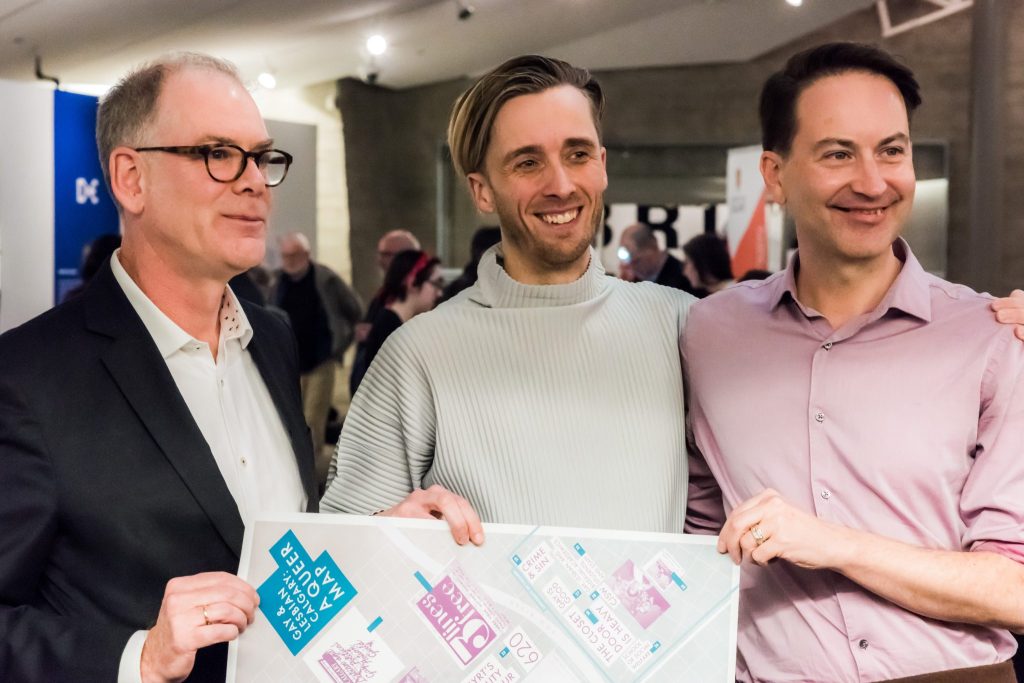
The Queer Map Launch on November 21, 2019, with the CIH’s Jim Ellis, artist Mark Clintberg and historian Kevin Allen // Photo by Hesam Rezaei, The Gauntlet.

The Lougheed House itself has queer history, as the site of the Fruit Loop. With that in mind, Mapping History has programmed special events such as August Klintberg’s Queer History Artist Workshop, which invites participants to engage directly with 2SLGBTQIA+ histories through creative practice, drawing on archival research and artistic interpretation.

Guided walks, like the Beltline Gay History Walk, take participants into the urban landscape itself, connecting archival knowledge to physical space. These experiences underscore a key idea: that history is not confined to museums but embedded in streets, buildings, and everyday environments.

For anyone interested in art, history, or community storytelling, this is an exhibition worth experiencing firsthand. Mapping History offers not just something to look at, but an opportunity to see Calgary differently and to understand how its stories have been shaped. Whether you attend a workshop, join a guided walk, or simply spend time with the maps themselves, the exhibition invites you to become part of the conversation.

{KA}
Casey and Diana at ATP: Theatre & Queer History

Casey and Diana, currently on stage until March 15th at Alberta Theatre Projects, revisits a specific historical moment during the AIDS crisis: Princess Diana’s 1991 visit to Casey House, Canada’s first free-standing AIDS hospice in Toronto. Set against a backdrop of fear, stigma, and widespread misinformation about HIV/AIDS, the play focuses on the residents and caregivers of Casey House as they prepare for a visit that would later be seen as culturally significant.

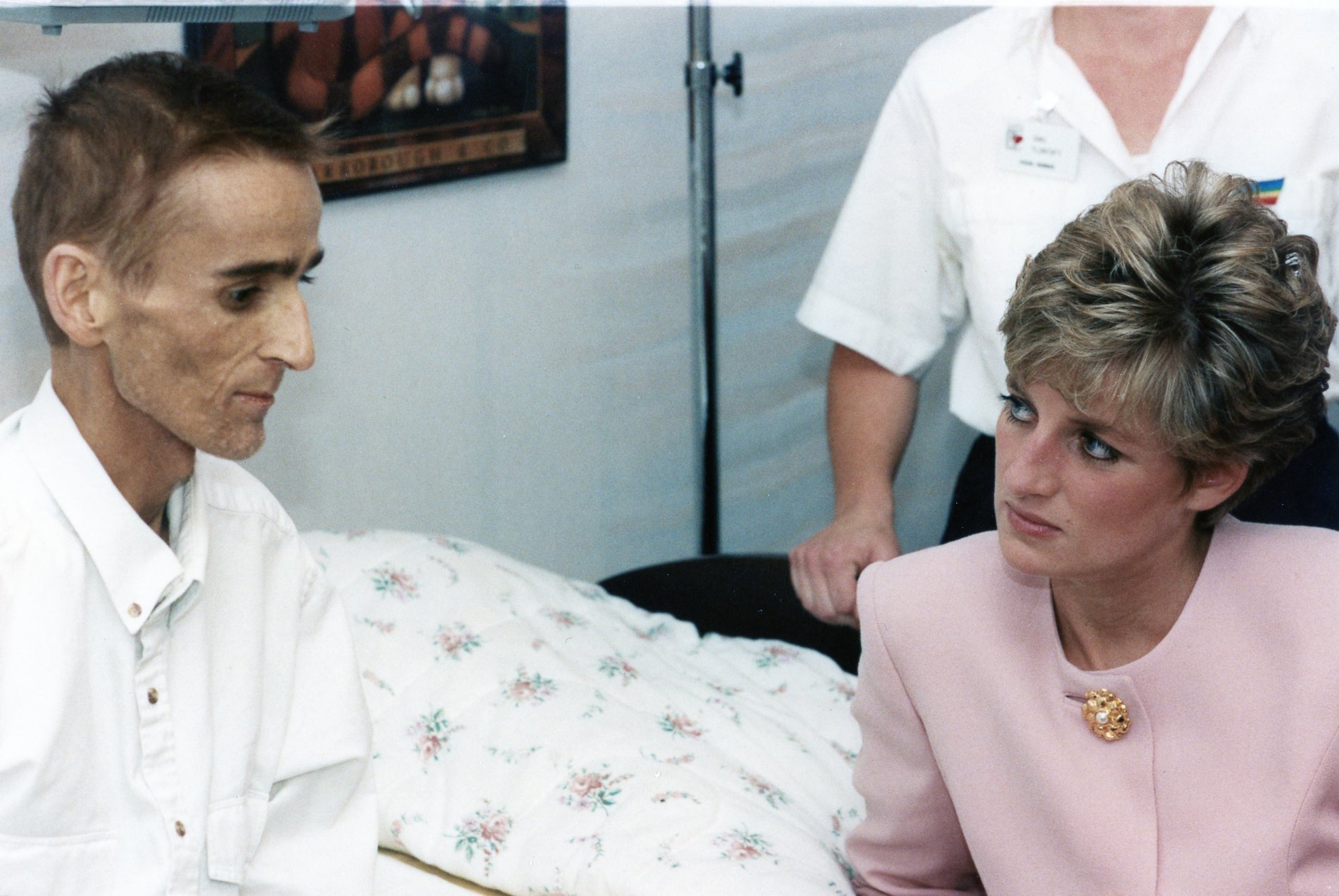
Diana, Princess of Wales with a resident of Casey House in 1991

Princess Diana helped shift public perception by challenging the myth that people living with AIDS were untouchable. But the play’s real power lies in its focus on the residents and caregivers — queer people and allies navigating love, humour, grief, and survival amid a crisis that decimated communities while governments largely looked away.

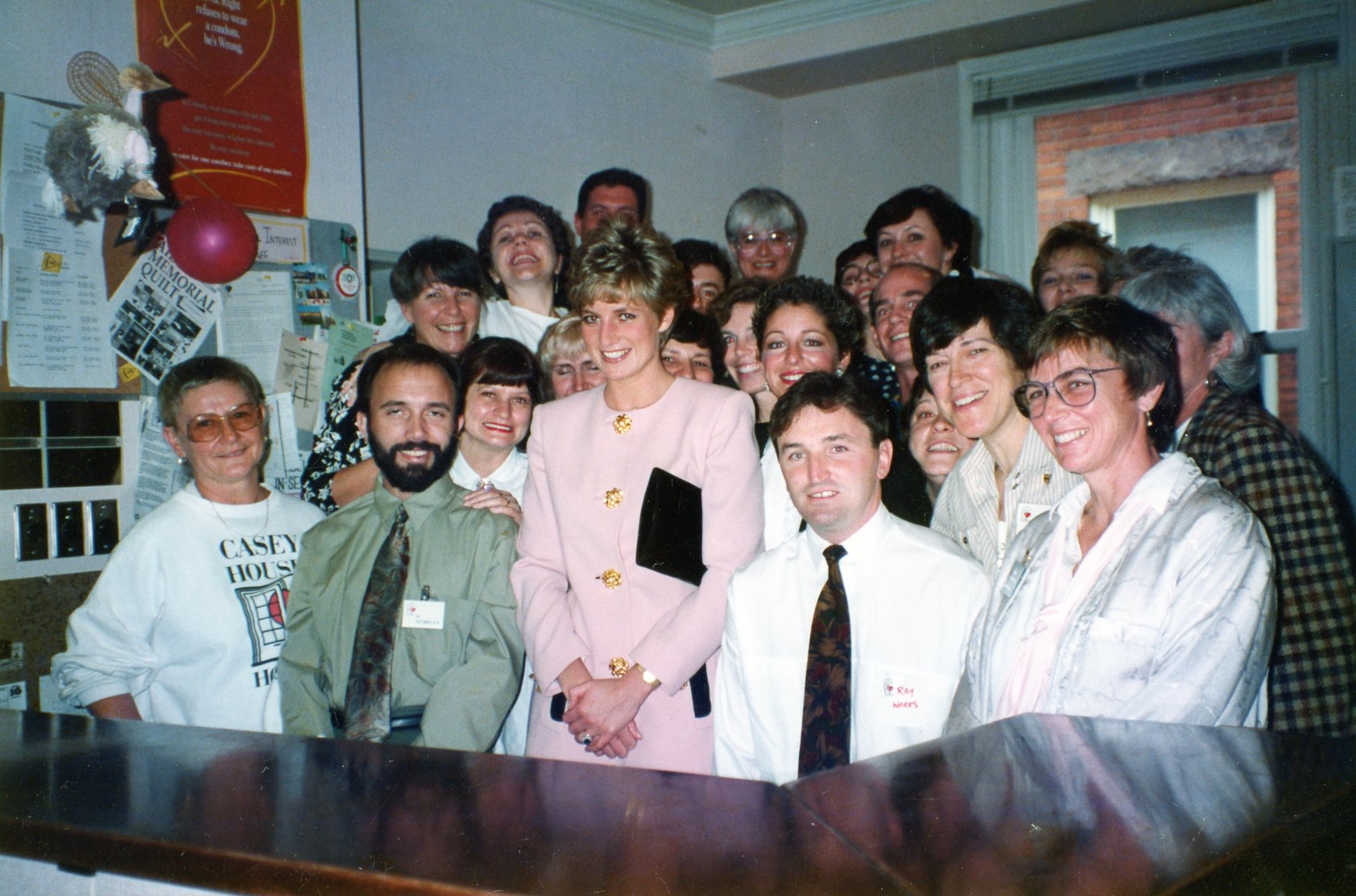
Diana with staff and volunteers of Casey House, 1991

ATP extends this historical framing beyond the stage through its lobby installations and community partnerships. As Raegan Frenette, from the company, notes:

Part of coming to Alberta Theatre Projects is being in the lobby and engaging with activations that make theatre more than just a show, but a full experience. For Casey and Diana, we wanted the lobby to feel like an extension of the story of Casey House, offering more context for how the AIDS crisis impacted our community here in Calgary.

To do this, we reached out to HIV-related organizations that have, and continue to, support our community through education, treatment, and prevention. We also included LGBTQ+ organizations that help build and sustain queer community across generations. Alongside these partnerships, we incorporated historical elements like the Queer Map of Calgary, Section 7 of the Canadian AIDS Memorial Quilt, and anecdotes in our program from real Calgarian experiences.

A very special shoutout to Safelink Alberta, SHARP Foundation, Calgary Pride, Rainbow Elders Society, Grandmothers to Grandmothers, the Afro-Care Support Network, Canadian AIDS Society, and the Calgary Gay History Project for engaging in the arts with us. We are so grateful for their participation and the amazing work they do in the community.

Image
ATP’s Casey & Dianaclick image for showtimes & tickets!

By connecting Casey and Diana to Calgary’s own queer and HIV history, ATP makes it clear that the AIDS crisis was not something that only happened elsewhere. It affected people here, and its impact is still felt today. The production invites audiences to reflect on how community care, advocacy, and remembrance have shaped queer life in Calgary, and why those histories continue to matter.

{KA}

Klippert Case Officially Recognized as Historic Event in Canada

We are happy to report that our application to the National Program of Historical Commemoration was rewarded. The Klippert Case recently got an official nod from the Government of Canada. It is now designated a historic event of national significance. Parks Canada, which administers the program, has an intensive screening and deliberation process—they conducted extensive research before reaching their decision.

Parks Canada wrote a detailed backgrounder on the designation, explaining, “The Klippert Case of 1967 was a pivotal moment in the fight for 2SLGBTQI+ rights in Canada.”

One of the goals of the Calgary Gay History Project is to make our history more visible in the City. With this designation, we will get a bronze plaque in Calgary (in a public location) to finalize the commemoration.

Learn more about the Klippert Case—watch our award-winning short film, directed by Laura O’Grady!

We would like to sincerely thank Mount Royal University history professor Joe Anderson for informing us about the application process to the National Program of Historical Commemoration.

Anyone can submit a nomination to this program!

We believe that there was no queer history represented in the Directory of Federal Heritage Designations before this, but we changed that! Now we need more…

{KA}