Category Archives: Gay history

Pride Week Calgary Queer History Events

Pride Week is beginning, running August 23rd – September 2 (every year Pride gets a bit longer it seems).  We do not have to wear masks anymore, politicians and high-profile Calgarians like to be associated with it; this being a municipal election year, I am curious as to how many civic aldermanic candidates we will see out.

This also marks the one year anniversary since we have launched the project.  We would like to thank all of the readers, fans, and supporters who have helped along the way.  We would also like to thank our elders who have taken the time to sit for interviews and share their stories of Calgary in the 50s and 60s.

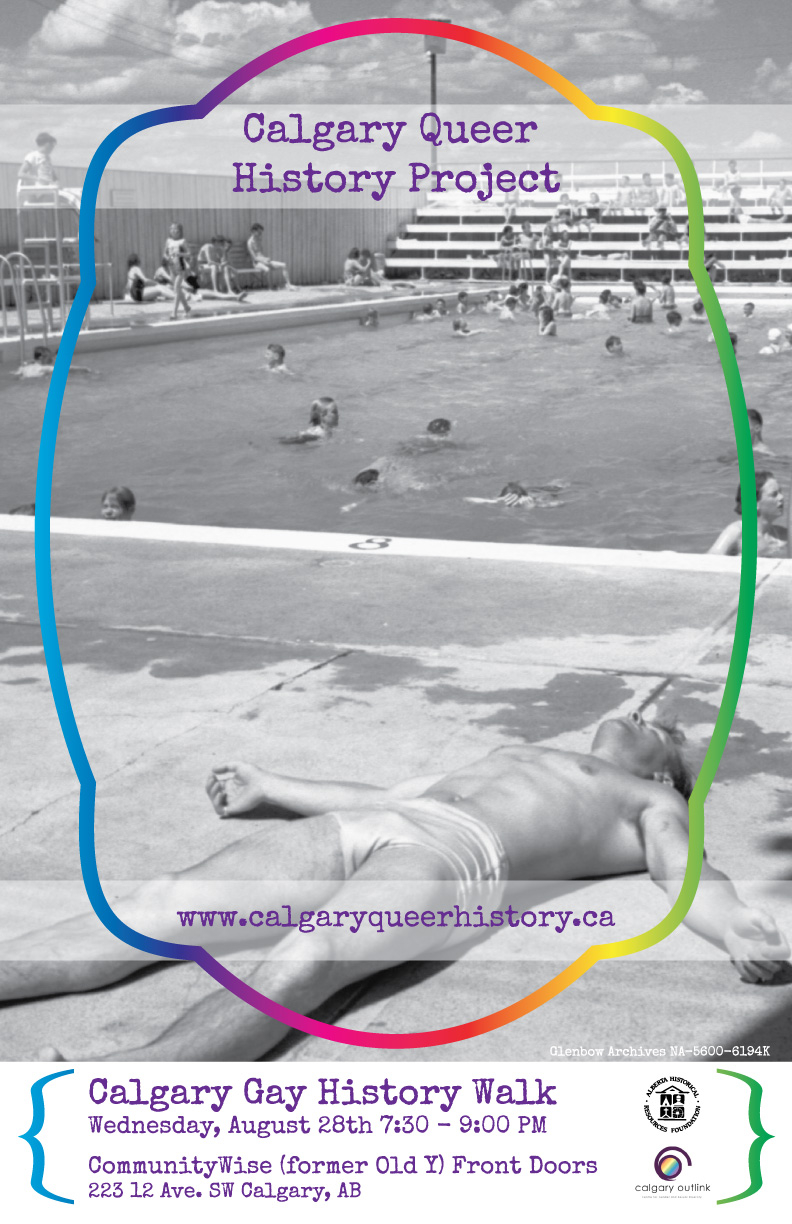
You can find the Calgary Queer History crew at events throughout the week, but specifically, you are welcome to join us for the Beltline Gay History Walk on Wednesday, August 28th beginning at 7:30 (see poster below), as well we will be staffing a project info booth at the Pride Street Festival on September 1st – please come say, “hi.”  Happy Pride!

qhp_poster0813

[KA]

Placard-Waving Homosexuals Picket City Hall

The City of Calgary for the longest time did not like Pride Parades.  One of the earliest confrontations between City Hall and the gay community happened in 1980.  Gay Information & Resources Calgary (GIRC) was hosting a national gay rights conference at the University of Calgary.  These conferences in the 70s and 80s moved around the country as the gay rights movement gathered a critical collective mass.  Calgary’s conference was the 8th annual event: at each conference, the organizers would stage a human rights parade.

However, City of Calgary Police Chief, Brian Sawyer, refused the permit for the parade citing that “confrontation was a possibility.”  Organizers decided to march anyway.

Screen shot 2013-08-15 at 7.06.56 PM

Photo: Calgary Herald, June 30, 1980

40 of the conference delegates, marched silently for half an hour, ending at City Hall with their placards of protest.  Bob Harris, a member of the GIRC collective, and conference chair, spoke at the protest.  He said, “We do know how to conduct ourselves – we’re not running through the streets screaming and yelling.”

The delegates later moved to a rally in Centenary Park on St. George’s Island.  One of the speakers at the rally was Alberta Federation of Labor representative Ken Neal who expressed his disappointment that the parade permit was denied.  “Gays are constantly harassed,” he said, “we object to such unfair and discriminatory treatment.”

Protests, rallies and marches were springing up all over North America in this period and became an important platform for the gay rights movement, creating visibility for a relatively unknown community.  GIRC was located in the Old Y Centre for Community Organizations; Calgary Outlink today is a direct descendent of that 70’s incorporated non-profit society.

[KA]

Lesbians, Softball and the Cecil Hotel

Sports, and specifically softball, provided an important outlet for the development of lesbian subculture and identity in North America.  Sally Munt writes in Heroic Desire: Lesbian Identity and Cultural Space, “any sample of publicly identifiable US lesbians from the period 1960-1968 would have likely been corralled from the local softball team.”  Calgary was part of this trend and in the 60s had a couple of women’s teams that were predominantly lesbian in their make-up.

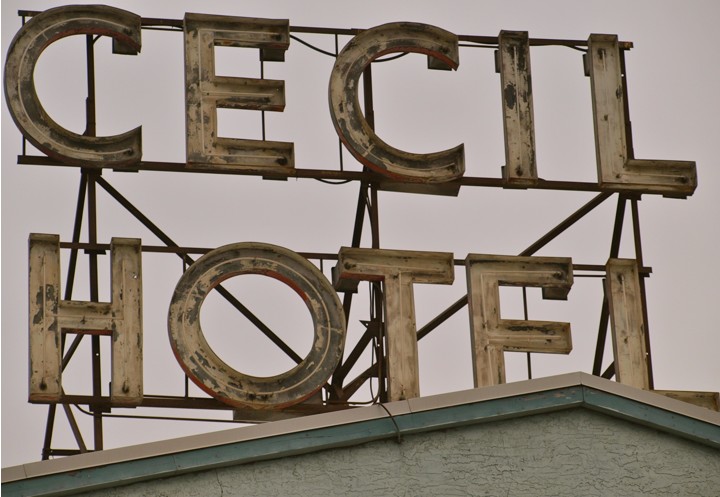
After a game, teammates would go to their favourite watering holes, which for many was the backroom of the Cecil Hotel.  Lois Szabo remembers being really excited when she discovered the Cecil.  “We stumbled upon it by accident – all these women – it was like finding mecca,” she remembers.

Cecil 1

Photo Credit: Del Rath

Carolyn Anderson’s 2001 Lesbian Oral History Thesis (available from the University of Calgary: here), contains more conversations about softball.  She recounts one story,

“I wanted to be involved with all these women but I didn’t particularly want to play softball. I actually thought it was a pretty boring game so I became the team doctor. It seemed to suit everybody just fine. I would always take something to read like my medical books or whatever lesbian stuff I was getting in the mail and I could just be around all the neat dykes. The coach still remembers me and how she would look up into the stands and there was this woman reading through this whole game. After the games, some of the women tended to frequent the bars.”

The Cecil Hotel had a notorious past as a saloon and boarding house, and was always described as a blue collar bar.  Built in 1912, the building became a locus for prostitution, drugs, murder in modern times.  The City eventually revoked its business licence in 2009; police were called to the Cecil 1,700 times in its final year of operation.

Jen Gerson, in the National Post quotes Leo Silberman one of the Cecil Hotel’s owners.  “When I bought the place [in 1968], the women were worse than the men,” he told the Calgary Herald before he passed away in 2007. “They fight like heck every day. Very, very rough.”

Lois concurs, “I remember that some of the women would get into fights, particularly the butch women if someone looked at their femme in the wrong way.”

However tough, softball and the hotel bar provided much needed gathering places for Calgary’s lesbian community in the 60s.  Another quote from the oral history thesis explains, “With the ball teams, you had your north side gang and your south side gang. We were the south side gang and we all went to the Cecil [hotel]. We liked the Cecil because there was a nice private backroom there. It was marked for Ladies and Escorts and we’d laugh because we didn’t know which we were! God, we used to have a lot of fun there. They used to cater to us because we were the best part of their business.”

[KA]