This spring, the Calgary Underground Film Festivalreturns to Calgary from April 16–26, 2026, bringing some of the most daring and unforgettable independent cinema to the big screen. The Calgary Gay History Project is proud to sponsor one of its standout selections: Jaripeo in its Canadian Premiere on Sunday, April 26, 2026, at 3:30 PM at the Globe Cinema.
A still from Jaripeo at CUFF 2026
Set against the electrifying backdrop of traditional Mexican rodeos, Jaripeo pulls viewers into a world of adrenaline, spectacle, and raw physicality. But this is no ordinary documentary. Beneath the dust and danger lies a powerful, deeply human story about identity, vulnerability, and the hidden complexities of masculinity. Directed by Efraín Mojica and Rebecca Zweig, the film offers a rare and intimate glimpse into lives that challenge expectations. In a setting often defined by toughness and bravado, Jaripeo uncovers moments of tenderness, longing, and quiet resistance.
“Dreamlike and frank, Efraín Mojica and Rebecca Zweig’s JARIPEO is a clear-eyed survey of the queer culture that exists within Michoacán’s hypermasculine rodeos.” —RogerEbert.com
What makes Jaripeo so exciting is its ability to reveal queerness in a place many wouldn’t think to look. It expands the boundaries of queer storytelling, reminding us that 2SLGBTQ+ experiences exist everywhere—including in traditions often seen as rigid or exclusionary.
Expand your understanding of where queer histories live. Join us at CUFF and experience Jaripeo on the big screen!
The launch of Mapping History: The Calgary Atlas Project at Lougheed House is more than a conventional exhibition opening; it is a layered reimagining of how cities remember themselves. Running from April 2 to May 17, 2026, the exhibit transforms historical maps into immersive artworks, inviting visitors to explore Calgary through stories that are often overlooked or erased.
The Lougheed House Exhibition runs April 2 – May 17 at 707 13 Ave SW.
The Calgary Institute for the Humanities (CIH) founded the Calgary Atlas Project ten years ago. The idea was to create maps that recover crucial stories about Calgary’s past and present, stories that illuminate, in surprising ways, the character and diversity of the city. Overlooked stories from Calgary’s history are mapped onto the city’s geography, highlighting significant sites, events, and people. This is cartography as a cultural practice, an evolving atlas of human experience.
We were delighted to be involved with the Calgary Atlas Project at its inception. A Queer Map: A Guide to the LGBTQ+ History of Calgary was notably the first map produced in the series. The queer map documents community spaces, activism, and everyday life, tracing a history that has often been underrepresented in official records. By mapping sites of resistance and belonging—from nightlife venues to organizing hubs—the project demonstrates how queer communities have shaped the city in both visible and hidden ways.
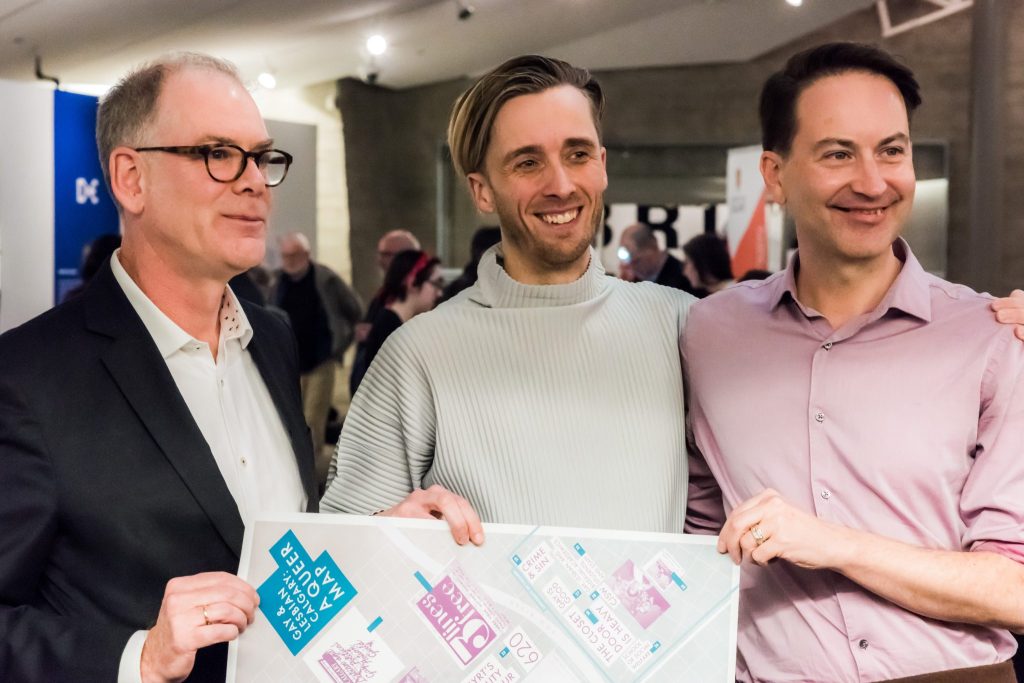
The Queer Map Launch on November 21, 2019, with the CIH’s Jim Ellis, artist Mark Clintberg and historian Kevin Allen // Photo by Hesam Rezaei, The Gauntlet.
The Lougheed House itself has queer history, as the site of the Fruit Loop. With that in mind, Mapping History has programmed special events such as August Klintberg’s Queer History Artist Workshop, which invites participants to engage directly with 2SLGBTQIA+ histories through creative practice, drawing on archival research and artistic interpretation.
Guided walks, like the Beltline Gay History Walk, take participants into the urban landscape itself, connecting archival knowledge to physical space. These experiences underscore a key idea: that history is not confined to museums but embedded in streets, buildings, and everyday environments.
For anyone interested in art, history, or community storytelling, this is an exhibition worth experiencing firsthand. Mapping History offers not just something to look at, but an opportunity to see Calgary differently and to understand how its stories have been shaped. Whether you attend a workshop, join a guided walk, or simply spend time with the maps themselves, the exhibition invites you to become part of the conversation.
In an era where book bans are returning to North America, the Calgary Public Library’s “Freedom to Read” initiative stands as a powerful reminder that access to ideas matters. Rooted in the principle of intellectual freedom, the initiative highlights not only the importance of freedom of expression but also the growing challenges faced by 2SLGBTQ+ literature.
Each year, the library participates in Canada’s national Freedom to Read Week, a campaign that pushes back against censorship. Through curated displays, events, and outreach, the library encourages readers to engage with ideas that may challenge or expand their worldview. As CEO, Sarah Meilleur noted in a press release, libraries exist to provide access and not to filter viewpoints, because meaningful dialogue depends on exposure to difference.
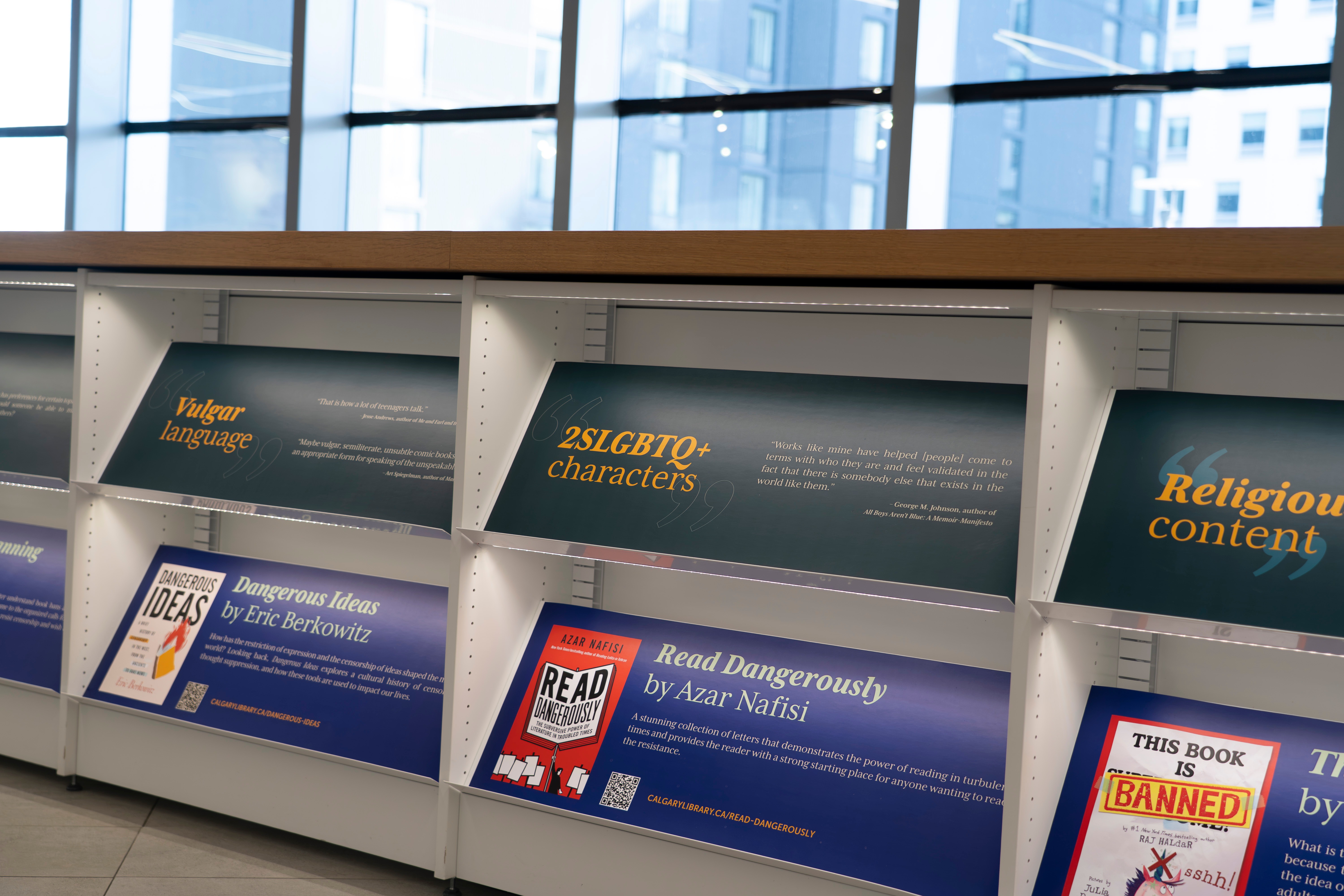
One of the most compelling initiatives is the Central Library’s “Book Sanctuary,” which showcases titles that have been challenged or banned. The display is meant not only to inform, but to spark reflection. As the Library’s Leanne Hooper explains, “The Book Sanctuary is designed to raise awareness around the freedom to read and to share more about your right to access books that have been challenged or banned.” That mission feels especially urgent as censorship debates increasingly target books by and about 2SLGBTQ+ people.
A display at the Central Library’s Book Sanctuary. Photo: Calgary Public Library
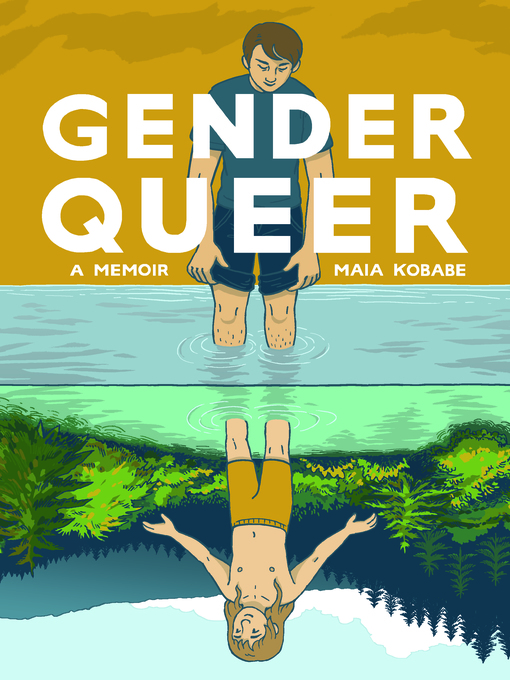
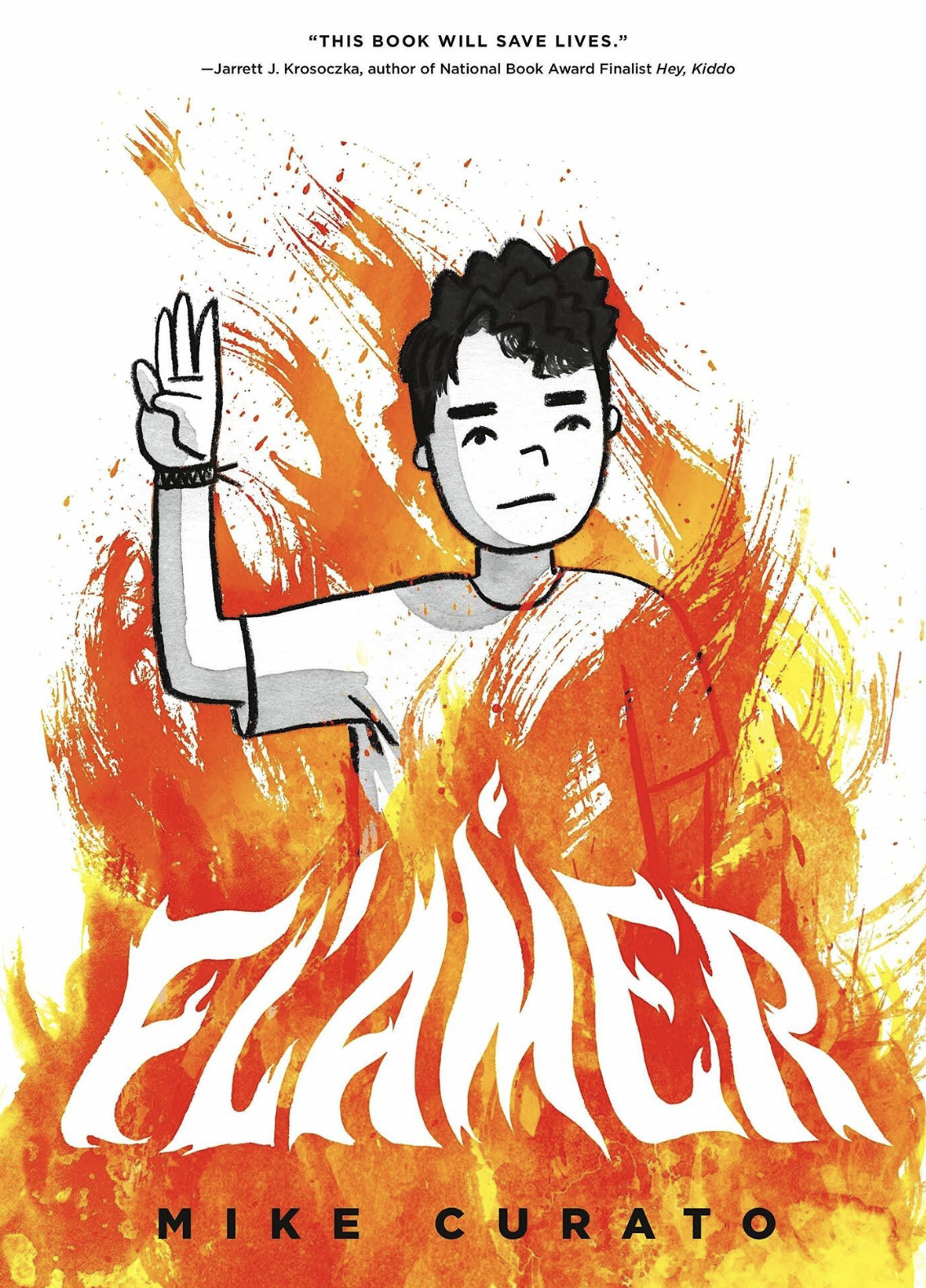
In that vein, the Alberta Government has specifically targeted graphic novels such as Gender Queer by Maia Kobabe, Fun Home by Alison Bechdel, and Flamer by Mike Curato, which explore identity, belonging, and coming-of-age experiences. Ironically, it is these same qualities that make them targets of social conservatives, with critics labelling them inappropriate and pornographic despite their literary and social value.
Efforts to remove “sexually explicit” material from the Alberta school libraries have disproportionately affected books with 2SLGBTQ+ themes, raising concerns among educators and limiting the diversity of stories available to young readers. And of course, when one reads the graphic novels listed above, the claim that they are pornographic is laughable {they were not on our radar before the ban, but we read them and found them incredibly tame—and excellent}.
Against this backdrop, Calgary Public Library’s stance is clear: banning books does not protect communities—it limits them. Intellectual freedom means ensuring access to a wide range of ideas, even those that may be controversial or challenging. These stories foster empathy, critical thinking, and a deeper understanding of one another.
Ultimately, the “Freedom to Read” initiative is about more than books. It is about protecting the right to explore identity, to question norms, and to hear voices that historically have been marginalized. By championing banned 2SLGBTQ+ literature, Calgary’s libraries are not just preserving stories—they are defending the idea that everyone deserves to be seen, heard, and read.
{KA}
p.s. Here is a recent CBC video featuring Elamin Abdelmahmoud interviewing author Ira Wells, explaining why book banning initiative is ‘an affront to democracy.’





 Calgary Gay History