Tag Archives: Calgary

Borderland: Gay Iranian Fringe Show comes to Calgary

Izad Etemadi, a 23-year old Iranian-Canadian, will be featured at this year’s Calgary Fringe Festival with his one-man play, Borderland, August 3 – 10th.

Borderland Image

Contemporary Iran is a dangerous place for queer people.  It is one of a handful of countries currently with the death penalty for being a convicted homosexual, and has conducted widely condemned public executions in recent history.  Not surprisingly, homosexuality is driven deeply underground in Iran, and many flee the country to seek refugee status in the West.

Although Izad grew up in Canada, he grew curious about how his life might have been in Iran.  “My parents often remind me how lucky I am to live in Canada, not only being gay but even working as an artist would not have been possible,” he explains.

Borderland tells the story of Navid, a gay Iranian man running from himself and his home. He arrives at Borderland – a secret hiding place – in search of acceptance. There he meets Leila and Zia (also played by Izad) and the drama unfolds.  Borderland has received critical acclaim, described as a Tour De Force in its current run at the Hamilton Fringe Festival.

“Many audience members have been quite moved by the play, at least the ones I have talked to.  When I started researching the play online, I found people living like me in Iran had really horrifying lives.  Yet many people do not realize how scary and dangerous it is over there,” Izad remarks.

Although Canadian audiences might feel relief that they do not suffer these indignities, similar threats, incarceration and legalized discrimination of homosexuals is part of our collective past as late as the 1960s.  Similarly there were executions of gay men in the British common law system, which included the Dominion of Canada until the death penalty was removed in 1861.

Izad remains hopeful that progressive social change can spread, noting the changes that are occurring in the United States.  He also wants to sensitize his audiences to the fact that Canada is playing an important role in the resettling of those who are fleeing Iran.

A Toronto-based charity, the Iranian Railroad for Queer Refugees (IRQR), exists to support Iranian queers around the world.   The organization supports Iranian queer refugees from when they decide to leave Iran until they resettle in a safe country, and have affected the outcomes of hundreds of lives.  IRQR’s name is inspired by the underground railroad: an informal network of secret routes and safe houses used by 19th century black slaves in the United States to escape to Canada with the aid of abolitionists who were sympathetic to their cause.

Izad says, “One of my biggest fears was the response to my play from the Iranian-Canadian community, but I have been overwhelmed by their support and their pride in my work.  One day, I would love to go to Iran myself, but currently it is not possible: I would have to do three years military service and if [the government] Googled me they probably would not like what they’d see.”

He concludes, “This has been my first time writing anything, and I have produced and put together the whole play myself.  It has been the biggest growing experience for me as a person – and one of the coolest summers I have had.”

[KA]

A summer of Queer Calgary History

We at Calgary Gay History took the month of June mostly off, due to both work and high waters!  Our hearts go out to our colleagues who were affected by the flooding in Southern Alberta – I lost a storage office myself, which drowned in a basement near the river.  Fortunately no archival materials were lost!

If you would specifically like to help the arts community get back on its feet – you can make a donation to the Alberta Arts Flood Rebuild fund.  The Suncor Energy Foundation is currently matching the first $50,000 of public donations.

Now it’s July, and we will have a new post coming to you every Thursday up to and including Pride Week in Calgary, August 24 – September 2, 2013!

In the mail recently, I received my own personal copy of Homosexuality: An Annotated Bibliography, published in 1972.  This is a treasure trove summarizing early research about the gay community.

Homosexuality - An Annotated Biography

Authored by the Kinsey Institute’s, Martin S. Weinberg and Alan P. Bell, this tome surveys non-fiction literature on homosexuality published in English between 1940 and 1968.  They cite 1265 different books and articles, providing brief and pertinent descriptions of them.  The content of course, is very dated, but gives one an illuminating historical context on how homosexuality was viewed and understood in the 40s, 50s and 60s.

I first came across the book at the Canadian Lesbian and Gay Archives in Toronto, but could not digest it all in one go.  This book will be part of my (not-so-light) summer reading plan.

Thus, check back here every Thursday this summer for new content as well as Calgary Gay History project developments, and we wish you a restful season.

[KA]

The Changer and the Changed in Calgary

Calgaryqueerhistory.ca had the good fortune to interview pioneering lesbian singer/songwriter Cris Williamson this week.   She will be performing in Calgary, June 8th at the Scarboro United Church (concert info: here).  The concert will also be a launch of Cris’ 31st album, Pray Tell: Songs of the Soul: 24 original songs released in a 2-CD set.

“I love coming to Calgary,” Cris says, “I grew up in Wyoming and went to school in Denver, so I am a prairie kid ultimately and feel so comfortable at the foot of the Rockies.”

Cris was one of the instigators of the Women’s Music movement which was a major touchstone for lesbian feminist culture in the 70s.  She inspired the creation of Olivia Records, a recording collective of lesbian women who worked outside the music industry.  Olivia Records was a social marketing machine before the internet and recruited women across the continent to function as its distribution network and concert production team.

“Young women now, especially in music, can run right down that road we made, as if that road has been there forever, but we women stood shoulder to shoulder to make that road, and we did it for the next generations – but some of them have no idea that that road had to be made,” Cris remarks.

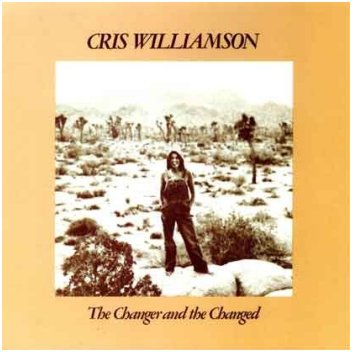
In 1975, Olivia Records released Cris’ The Changer and the Changed, which became one of the best selling independent releases of all time.

williamson-the_changer350

Cris reflects, “the music industry eventually gave us a grudging respect.  We sold records at shows, they didn’t – they sold them in stores; but we couldn’t get into stores!  Eventually we created women’s bookstores and music stores and entirely made a new game.  You know, I would go to music companies and ask about having more women recording artists and they would reply that they already had one woman in their roster of 40 or so artists – they did not notice the disparity.  What we were doing was absolutely revolutionary.”

The success of The Changer and the Changed thrust Cris into the spotlight, and she became something of a lesbian icon.  Cris explains, “it was kind of a double-edged sword, because you had a lot of responsibility.  Women would raise you to iconic stature yet at the same time [the movement] did not want icons, they wanted equality, and they would try to make sure you were not too high on your horse.  So there was a lot of criticism as well as applause and joy – but mostly joy.”

CrisGuitar

Cris recalls, “by word of mouth we were able to fill halls of 1000 – 2000 women who were hungry – really starving – for something that spoke to their lives.  I was amazed.  Women really wanted my work: I was like some dusty jewel at the side of the road that nobody had been interested in before, and then these women, these lesbians, took a huge, fierce interest in my work – I am really grateful.”

Women’s music was an important aspect of the construction of Lesbian Nation, a conscious movement to create safe spaces for women, and women-only spaces and institutions.  “I thought women-only concerts were the thing to do for a while, but I also thought that the eventual goal should be to become part of the world.  And I think it is closer to that now.  But out of that movement came women’s bookstores, women’s clinics, women’s helplines, rape crisis centres – many, many things came out of that focus on ourselves,” Cris explains.

CrisWilliamson

Cris concludes, “over the years, some women have come up to me and said ‘your music saved my life,’  or ‘I thought I was the only one who felt these things’ – which is so powerful.  But music, because of its shape is a kind of liquid, its portable and can be shared – I feel music raises us up.”  [KA]