Tag Archives: Calgary

Just us, and not only them

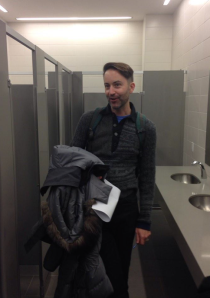
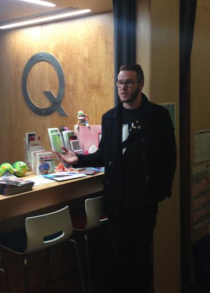
Last Friday, we piloted a new gay history tour of the University of Calgary campus.  Thanks to Professor Nancy Janovicek, who invited us to do the tour for her History Studies 300 class (and posted the below photos to Twitter).  Although we salaciously began the tour in the infamous men’s cruising washroom from campus’ early days, we ended the tour in the newly designed Q Centre, a resource hub for the University’s LGBTQA population.
Screen Shot 2014-12-04 at 3.44.35 PM

Kevin Allen in the infamous bathroom
Screen Shot 2014-12-04 at 3.42.20 PM

Nolan Hill at the Q Centre

Nolan Hill, a U of C History student, who volunteers for the Calgary Gay History Project, concluded the walk with a Q Centre orientation.  In addition, he is preparing for his own queer history presentation next week about CJSW.

Here is his pitch:

“CJSW 90.9 FM has been a beacon of alternative, independent and radical voices on Calgary airwaves for over 40 years. In the past 20 or so years, you might have heard the classic “First Dyke on Dynasty”, segments on lesbian life, features on butt plugs, and an hour of “Just us, and not always them”. Do you remember these?

Whether you do or you don’t, come to the Q Centre at the University of Calgary (MacEwan Student Centre 210) on Tuesday December 9th from 12-1 for a lunch and learn presentation. The presentation will be all about the history of LGBTQ programming at CJSW, led by Nolan Hill. Nolan will be giving an overview of some of his research on the topic. Be sure to check it out, and learn more about gay history on the airwaves of Calgary.”

{KA & NH}

Calgary Gay History Project at Mount Royal

The Pride Centre of the Students’ Association of Mount Royal University is in the midst of their campus Pride Week and contacted the Calgary Gay History Project inviting us to speak – which we are delighted to do.

Please join us, tomorrow, (Friday October 17th) from Noon – 2: 00 PM, in the Gallery on the 2nd floor of Wyckham House.  Tereasa Maillie from the Calgary Gay History Project will be representing.

Her lecture will explore the hidden social-cultural past of LGBTQ people in Calgary’s post-war period.  In the 1950s and 60s, queers were widely deemed to be mentally ill and often treated as criminals by society.  She will also explain how a growing social and political community with support from key institutions such as post-secondary institutions played a strategic role in queer emancipation.  The discussion will center on the role of university campuses in advancing LGBTQ causes and supporting the queer community.

{KA}

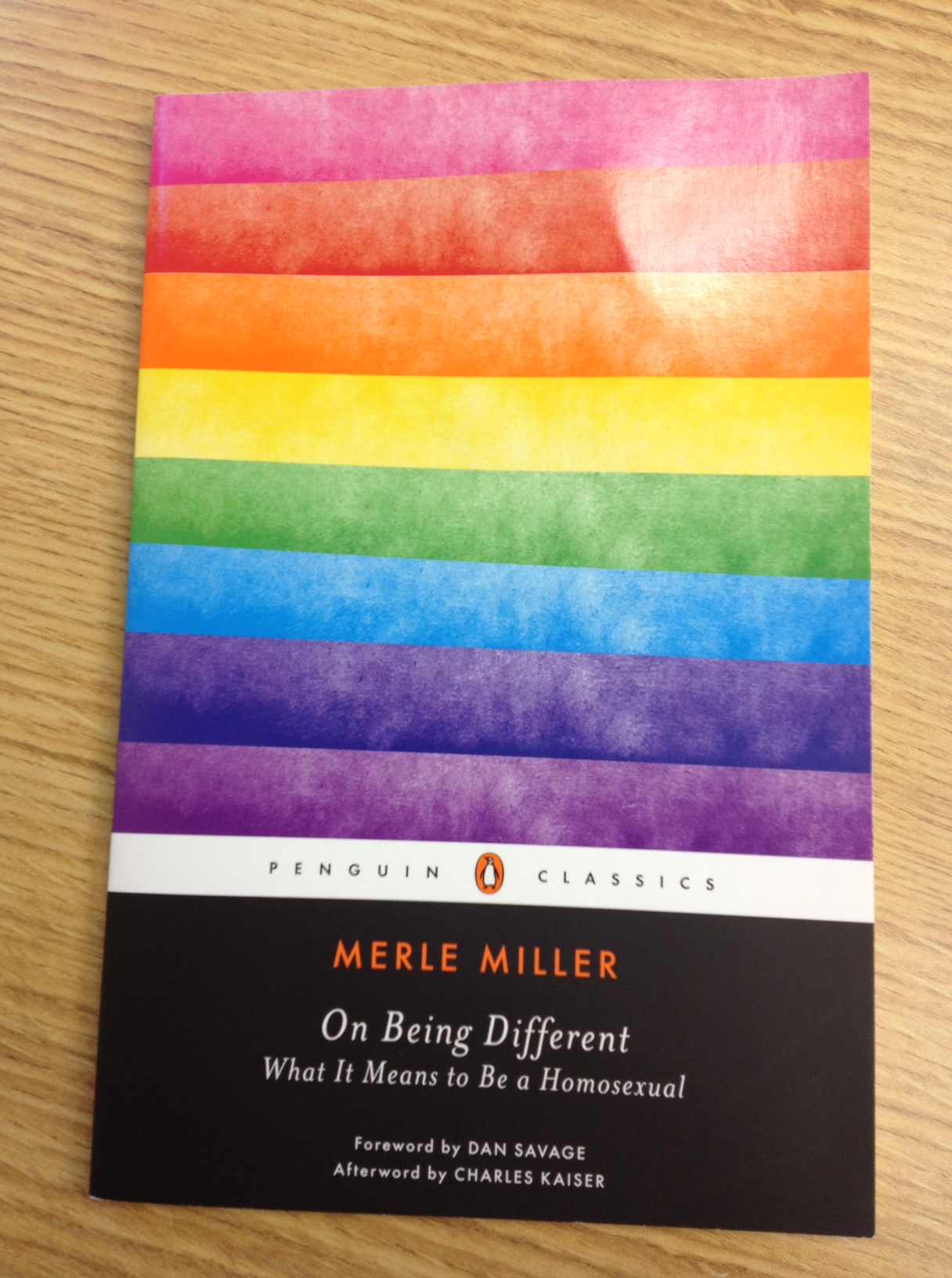
On Being Different

The Kickstarter Campaign was not only a fundraiser for the book project but also an awareness raiser for the work the Calgary Gay History Project is doing.  We have been contacted a number of times in the last couple of weeks, to invite us to create public gay history presentations and/or propose opportunities to collaborate.  At the moment we are pursuing all of them – stay tuned.

However, after a quieter week reflecting on the past month, my husband and I found ourselves in our local independent bookstore, Shelf Life.  Sitting on a shelf at eye-level a book popped out at me.  It was a slim reprinted Penguin Classics edition of Merle Miller’s, On Being Different: What it Means to Be Homosexual.

On Being Different

The article, “What It Means to Be a Homosexual” was published in the the New York Times on January 17th, 1971 – just a few weeks after I was born – and quickly became a watershed essay for the decade.  The New York Times received more than 2,000 letters in response to the article (more than ever received by that newspaper).   The article, with extra material written by Miller, was published later that year as a book.  Miller became a spokesman for the gay rights movement and it also sensitized the nascent gay liberation movement about the important, political nature of coming out.

Miller reflecting on the article wrote, “…There it was, out at last, and if it seems like nothing very much, I can only say that it took a long time to say it, to be able to say it, and none of the journey was easy…”

In the last month I have been saying thank you a lot.  I have one more.  Thank you, Merle.

{KA}