Tag Archives: Calgary

Queer History Halloween!

{A spooky treat—a guest article from Jarett Henderson, a former Calgarian and historian of Canada, gender and sexuality, and the British Empire – K.}

Today, many queer folks celebrate Halloween as a topsy-turvy Gay Christmas of sorts: an opportunity to live loudly and proudly as one’s authentic self. For sixteen-year-old Walter McHugh in 1901, his Halloween night could not have been more different. That night Walter confessed to his rancher father that he had been having sex (for some time) with the Calgary lawyer J. B. Smith. 

Walter’s Halloween night assertion set into motion a three-month-long ordeal that culminated in February 1902. After a series of appearances before the Supreme Court of North West Territories that paradoxically archived unspeakable sexual encounters, Smith was proclaimed “not guilty” of gross indecency: the federal crime that regulated sex between men in Canada and its territories since 1892. Walter was removed to Ontario, where he was enrolled in Ottawa College before returning to Calgary, where he lived and worked for the rest of his life. Walter and his headstone remain at rest atop the Calgary skyline in the Catholic Cemetery. 

Walter McHugh’s grave in Calgary’s St. Mary’s Pioneer Cemetery

While much remains unknown about the nature of the relationship between Walter and Smith, in what follows, I offer some observations about how efforts to regulate sex between men can shed light on how queer carnal acts were perceived as threats to male settlers, their bodies, and the state’s efforts to reproduce heterosexual settler colonialism in early-Calgary.

Original citation for full text: Jarett Henderson, “Rex v. J. B. Smith (Calgary, 1902): Queer Carnal Acts and Heterosexual Settler Colonialism in Canada’s Prairie Empire,” Prairie History: The Journal of the West, 5 (Summer 2021): Click here for full article. 

The McHugh Family at the start of the twentieth century. Walter is standing directly behind his father who reported him to authorities: University of Calgary, Glenbow Digital Photo Collection, NA-217-6

{JH}

Protecting Queer History Places

The National Trust for Canada is holding its annual conference in Toronto. It starts today, and its title is: The Heritage Reset: Making Critical Choices.

The conference is asking this question: “as the urgency increases to advance decolonization and anti-racism, take bold climate action, and redress economic and social inequity, are heritage principles and heritage places in step, or stuck in the past?” 

Specifically relevant to queer history, they are exploring the idea of a social-cultural reset. How can the heritage community embrace a fuller story and confront exclusion?

It’s a good question. Locally, has Calgary’s heritage community done enough to protect queer historic places and spaces in the city? The answer of course, from our perspective, is “no.”

To be fair, the City of Calgary created Lois Szabo Commons last year, and the Lougheed House did queer history programming in 2019. But where are our protected buildings, heritage plaques and interpretations of queer history sites? How do we make our relatively invisible queer history visible?

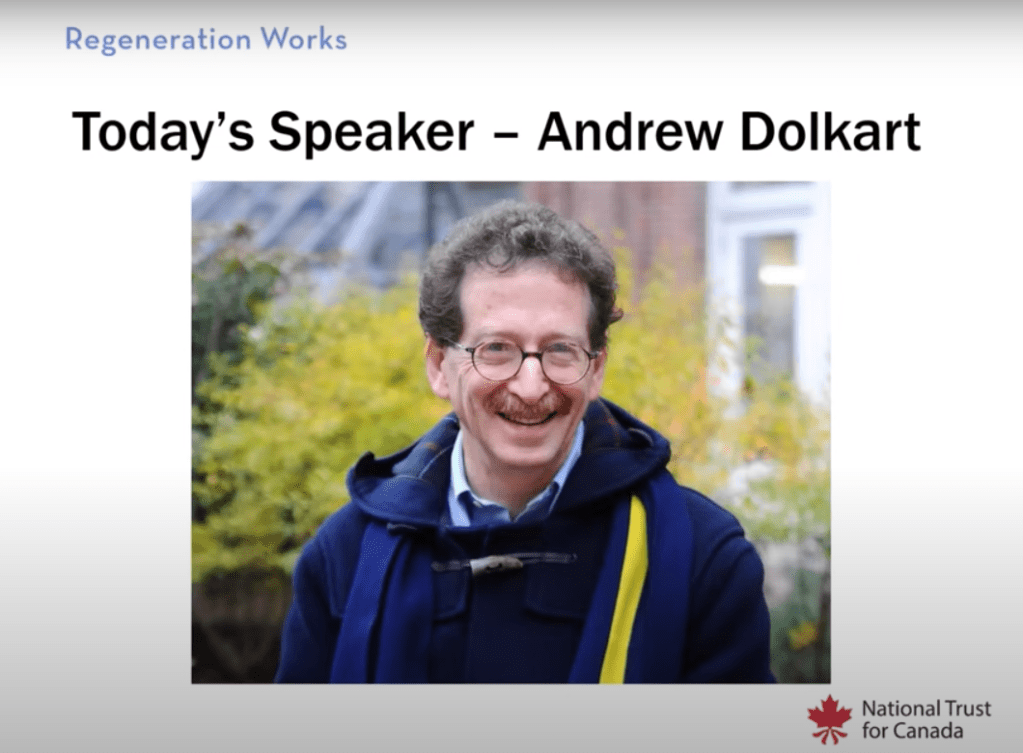
Earlier this year, the National Trust hosted a webinar on this very subject with Andrew Dolkart from the inspiring NYC LGBT Historic Sites Project. We encourage you to watch it.

In the next year, this will be a thrust of the Calgary Gay History Project. To date, we have been active in building the Calgary queer landscape through mapping projects and walking tours. It is time to agitate for queer inclusion in Calgary’s built heritage inventory.

{KA}

Bucking Conservatism Wins Award

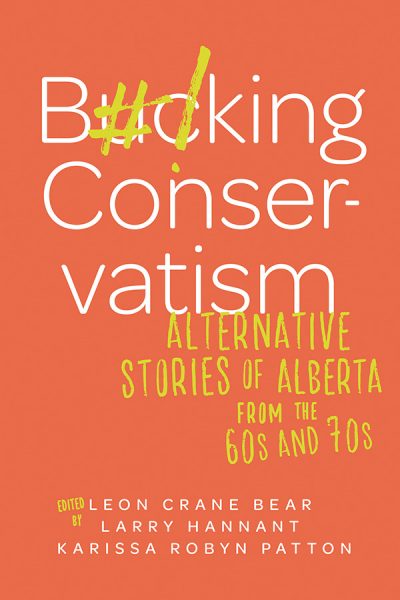
At this month’s Alberta Book Publishing gala, Bucking Conservatism: Alternative Stories of Alberta from the 1960s and 1970s was awarded the Regional Book of the Year prize. Calgary Gay History Project researchers Nevena Ivanović and Kevin Allen contributed a chapter to the book with editor Larry Hannant called, “Gay Liberation in Conservative Calgary.”

About the Editors

Leon Crane Bear is Siksika and a treaty Indian, as well as a graduate of the University of Lethbridge. Larry Hannant is a Canadian historian specializing in twentieth-century political dissent. Karissa Robyn Patton is a historian of gender, sexuality, health, and activism, and is a Canada Research Chair postdoctoral fellow at Vancouver Island University.

Reviews

[A] beautiful mosaic of activist history for many reasons. It’s an intersectional collection that takes for granted the links between social justice struggles. It’s well-written, well-organized and insightful. [. . .] Groups embarking on future projects will benefit from the robust list of references that marks each piece. [. . .] Bucking Conservatism offers a blueprint, a model, for others who want to continue this work, in whatever time period.

—Joe Kadi, Alberta Views

With such a breadth of subjects, there really is something for every reader in the book. This is a book I can imagine picking up off the shelf again and again and looking at for ideas and inspiration.

—Belinda Crowson, Canadian Journal of History

Congratulations, Leon, Larry and Karissa! We’re very pleased for you. Thank you for the invitation to participate.

{KA}