Tag Archives: books

From the Calgary Winter Club to Olympic Ice

{This is part one in our Winter Olympic Series, written by William Bridel. Enjoy!}

Brian James Pockar was born in Calgary on October 27, 1959. He began skating as a young boy at the Calgary Winter Club. According to Skate Guard, a figure skating history blog, in his early days on Winter Club ice, a coach, Winnie Silverthorne, approached Pockar’s parents after noticing his “daredevil-ness” and natural athleticism. While initially interested in ice hockey, Pockar chose to focus on figure skating and quickly rose through the competitive ranks within Canada.

At the age of 12, Pockar competed at his first national championships. Four years later, he won bronze at the 1976 World Junior Figure Skating Championships, and two years after that, became the national men’s champion of Canada for the first time. At the completion of his amateur competitive career, Pockar was a three-time national champion. He had also won several international medals, most notably the bronze at the 1982 World Figure Skating Championships. Pockar’s third-place finish in 1982 launched a 14-year medal-winning streak by Canadians in the men’s event at the global competition.

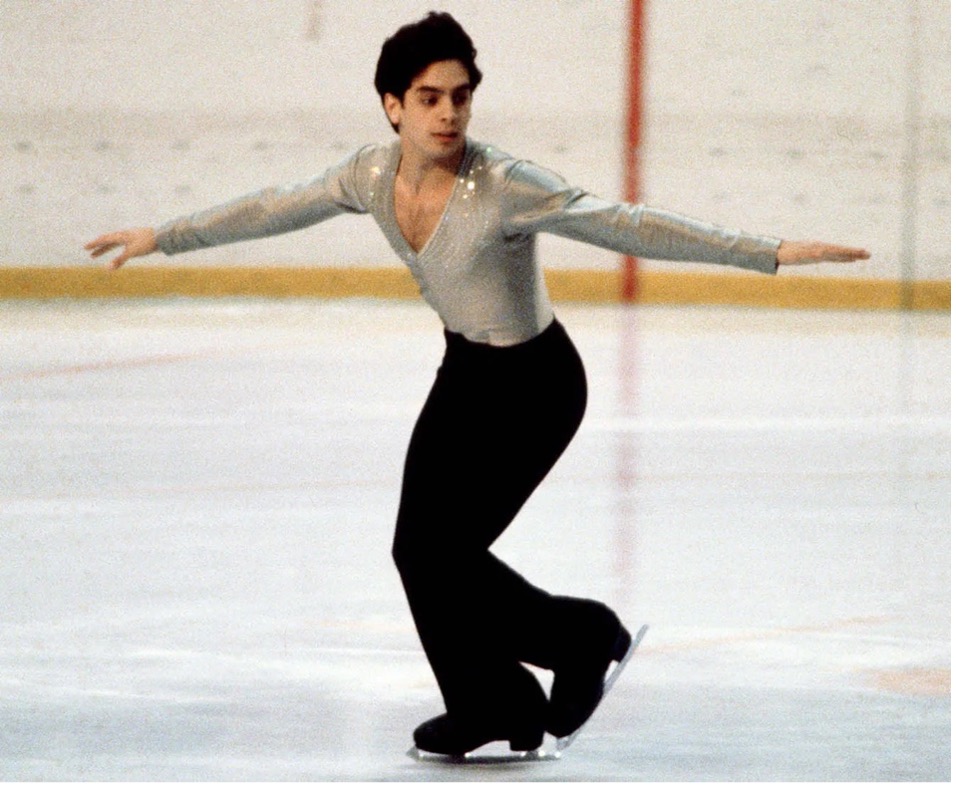
Pockar competing at the 1980 Olympic Winter Games. Photo retrieved from the Canadian Olympic Committee’s website.

Pockar was the lone Canadian entry in the men’s event at the 1980 Olympic Winter Games in Lake Placid, New York, a place he earned having won his third national title earlier that year. He finished 12th in all portions of the Olympic competition, an event won by the incomparable Robin Cousins of Great Britain. Pockar remains the last male from Calgary to compete in the Olympic Winter Games in figure skating. Pockar was also involved in the 1988 Calgary Olympics, credited as the artistic director of figure skating performances in the Closing Ceremonies.

As a young boy in the sport at the time of Pockar’s greatest successes, Brian was my idol. I marvelled at his technical abilities, but even more so, I loved his musicality, his style, his flair. I was nine when he finished third at the 1982 World Championships. I could execute his entire medal-winning performance in the basement of my family home in my sock-feet. The many triples he completed in his program? Well, those were only imagined in my rendition…but I knew the order of elements by memory and believed I “was” Brian Pockar in those moments. I also most certainly had a crush on him. He was a beautiful man. As Ryan Stevens of Skate Guard described him, he was “like the romantic lead in a silent movie.”

Frequently described as a private person, Pockar never declared his sexuality publicly, which was not unusual in the 1970s and ‘80s in sport generally, and in figure skating specifically. Only Great Britain’s John Curry, the 1976 Olympic champion in the men’s event, had discussed his sexuality in mainstream media at the time. According to sociologist and historian Dr. Mary Louise Adams, the first time Pockar’s sexuality was likely specifically mentioned publicly was in a media story published in 1998 about Brian Orser, another great Canadian figure skater. Orser was quoted as saying he was concerned about his own sexuality impacting professional opportunities in and outside of skating and used Pockar as an example. According to Orser, Pockar was fired from his broadcasting position with CTV—a role he held for several years after he retired from amateur competition—when network executives learned he was gay.

Pockar died of AIDS-related illness in Calgary on April 28, 1992. He was 32 years old. According to a statement issued by a family friend at the time of his passing, “Brian wanted to be remembered for his accomplishments in life and not for the cause of his death” (Maki & Toneguzzi, 1992, p. D1). Honouring that statement here, in addition to his many achievements in the sport noted above, Pockar is also credited with landing the first-ever one-foot triple Salchow/double flip combination in international competition—which is wildly difficult! He was inducted into the Alberta Sport Hall of Fame in 1989 and posthumously into the Skate Canada Hall of Fame in 2012. Per one of Pockar’s final wishes, a bursary was established in his name to help support young male figure skaters in the province—a bursary still given out annually.

Brian Pockar: Olympian. World medalist. Choreographer. Broadcaster. Calgarian.

{WB}

Sources

Adams, M. L. (2011). Artistic impressions: Figure skating, masculinity, and the limits of sport. University of Toronto Press.

Skate Alberta/Northwest Territories/Nunavut. (n.d.). About: Athlete Awards. https://skateabnwtnun.ca/about/awards-2/athlete-awards-athlete-funding/

Maki, A., & Toneguzzi, M. (1992, April 30). Friends mourn death of Pockar. Calgary Herald, D1.

Stevens, R. (n.d.) Brian Pockar. Skate Guard: Figure Skating History Blog. https://www.skateguardblog.com/p/brian-pockar.html?m=0

Alberta Book Banning in 1997

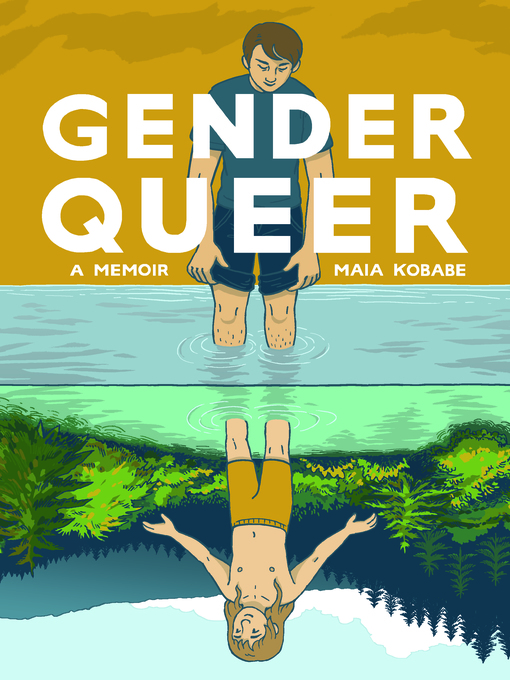
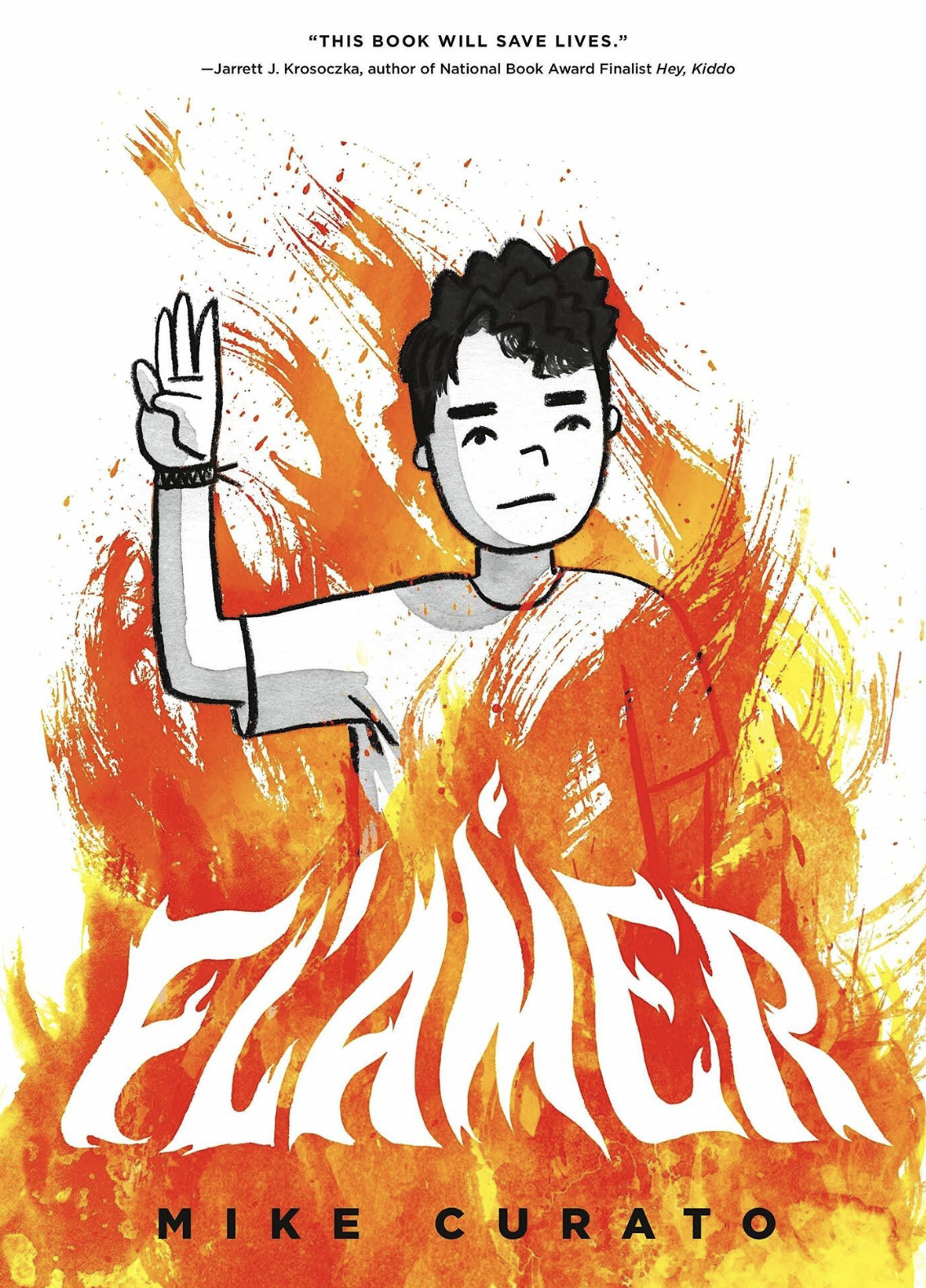
{Readers of the Calgary Gay History Project know we are dismayed by the Alberta Government’s banning of four graphic novels last Autumn, labelling them pornographic—which, if you read them, is easily contested. The ban is really about anti-gay and anti-trans sentiment, driven in part by the Alberta non-profit Parents for Choice in Education. Recently, our colleague William Bridel sent us an article from the Dec. 3, 1997 edition of Perceptions, a Saskatoon-based queer publication published by activist Gens Hellquist from 1983-2013. We are reprinting the article in its entirety, as the synchronicity is uncanny. -Kevin}

One of the four graphic novels banned in schools by the Alberta Government in Sept 2025—not pornographic, but gay.

Banning Books from Perceptions, December 3, 1997:

(Calgary) Once again an incident has occurred in Alberta that has many people wondering whether the province is becoming more redneck and falling further behind other parts of the country in providing protection against discrimination for minorities. The province has been taken to the Supreme Court over its refusal to provide protection from discrimination for lesbians and gay men, they have refused to allow lesbians and gays to be foster parents, and some MLAs called for the return of a grant which was to be used to document the history of the gay and lesbian community in Alberta.

Now the Calgary Public School Board has banned two books from its shelves after some parents complained about their “promotion of homosexuality.” Dr. Donna Michaels, the school board’s chief superintendent, admitted pulling the books off the shelves after meeting with a group called Parents’ Rights in Education (PRE). The group has been sounding an alarm about the school system allowing the “gay agenda’’ into the schools.

“In my professional judgment, I determined that the language was highly inappropriate,” Michaels said. However, she would not state publicly, or tell the school board, which books had been removed after pressure from PRE. She said the two offending books must first go before a committee set up to hear public complaints about books in the· school system, adding that the process could take a month. She said the language she objected to was pornographic and did not involve gay or lesbian themes.

Tom Crites, a spokesperson for PRE, claimed one of the banned books was the anthology Not the Only One: Lesbian and Gay Fiction for Teens edited by Tony Grima. He could not name the other book his group deemed offensive. He said he too found the swear words offensive but admitted that the real problem is that the book is about homosexuality. “It is really pro-gay,” he said. He was also concerned that many of the stories were about people’s personal coming out story, which his group finds offensive.

Crites indicated his group’s agenda of removing all reference to homosexuality from the school system is far from over. He said PRE is attempting to identify the school board employee who ordered the two offending books. “We do have our suspicions,” he said. “We’re still doing some checking around.” He also indicated that his group has identified 30 to 40 other books that address gay and lesbian issues.

Spokespeople from the gay and lesbian community said this latest move is part of an explosion in anti-gay attitudes in Alberta and a clear sign that Alberta is one of the least tolerant places in Canada. “When you sit around and chat in the community, people feel we’re behind the rest of the country,” said Roy Heale, publisher of the gay newspaper Outlooks. “As long as we continue doing this, we’re perpetuating our reputation of being redneck.”

Gail Allen, a spokesperson for PFLAG, said she could not agree with banning books from school libraries that deal with homosexuality. “I don’t think they should be pulling books from the shelves,” she said, adding that her son, who is gay, would have had a happier adolescence if he had access to books that explain the realities of being gay.

School board members also expressed concern about the removal of the books and the process that was used. “We feel that this is an important issue,” said trustee Jennifer Pollock. “It needs to be addressed.”

Winter Kept Us Warm @ 60

“Winter Kept Us Warm” comes from a line from T. S. Elliot’s poem The Wasteland, but it is also the title of a groundbreaking Canadian Film. 2025 is the 60th anniversary of the release of Winter Kept Us Warm by University of Toronto student David Secter. Cited as the first gay English-Canadian film, it received international acclaim, premiering in Cardiff, Wales, at the Commonwealth Film Festival in September 1965 (a first for a student-produced feature film). In 1966, the film was Canada’s first English language feature to be invited to the Cannes Film Festival.

Last year, a new 4K restoration of Winter Kept Us Warm was created, through Telefilm’s Reignited program, which funds the digital restoration of seminal Canadian films in collaboration with Canadian International Pictures, the avant-garde Blu-ray label resurrecting “vital, distinctive and overlooked triumphs of Canadian cinema.” Currently, the restored film is playing again in arthouse cinemas internationally. In addition, McGill University Press’s Queer Film Classics series recently launched a book by Chris Dupuis exploring the history of Secter’s movie and its cultural impact.

A still from the 1965 film Winter Kept Us Warm

Winter Kept Us Warm was inspired by Orson Welles’ Citizen Kane, which was made when the director was 24. Consequently, Secter ignored his fourth year of studies to focus on his own masterpiece. At 21, he put an ad in the student newspaper, The Varsity, asking, “Will the Great Canadian Film be produced at U of T?” and invited all interested students to join him in the venture.

With seed money from the Students’ Council of $750, he was able to shoot 12 minutes of the movie. After sorting through the footage, and with some impressed letters of support from more senior filmmakers, Secter hoped for financial support from the National Film Board (NFB), the Canada Council or the Ontario Arts Council.  However, they all gave it a pass. In the end, he was able to find the rest of the $8,000 budget himself through friends and his own personal donations.

(Ironically, it would be the NFB in May 1966, which would sponsor his showcase at  Cannes.)

The film’s gay subtext was deliberately staged by Secter, who wrote the film based on his own experience of falling in love with a male fellow student. He wrote that the film’s theme “is that friendship, like snow, is brilliant but ephemeral.” He had his volunteer crew on 24-hour notice for 5 weeks to capture the winter quadrangle romp scene he envisioned, waiting for the perfect weather conditions.

At a time when homosexuality was still criminalized in Canada, Winter Kept Us Warm proved to be pioneering; film critics in both the Toronto Star and Globe and Mail noted the film’s homosexual content.  Filmmaker David Cronenberg cites Winter Kept Us Warm as the most influential film in his life as well as to his discovery of cinema.

The film premiered in Canada at the Royal Ontario Museum in December 1965. It turned out to be a commercial success, playing in limited release across the country and on many University campuses. Secter was able to pay off his debts and attract $50,000 in seed money for his next film.

{KA}