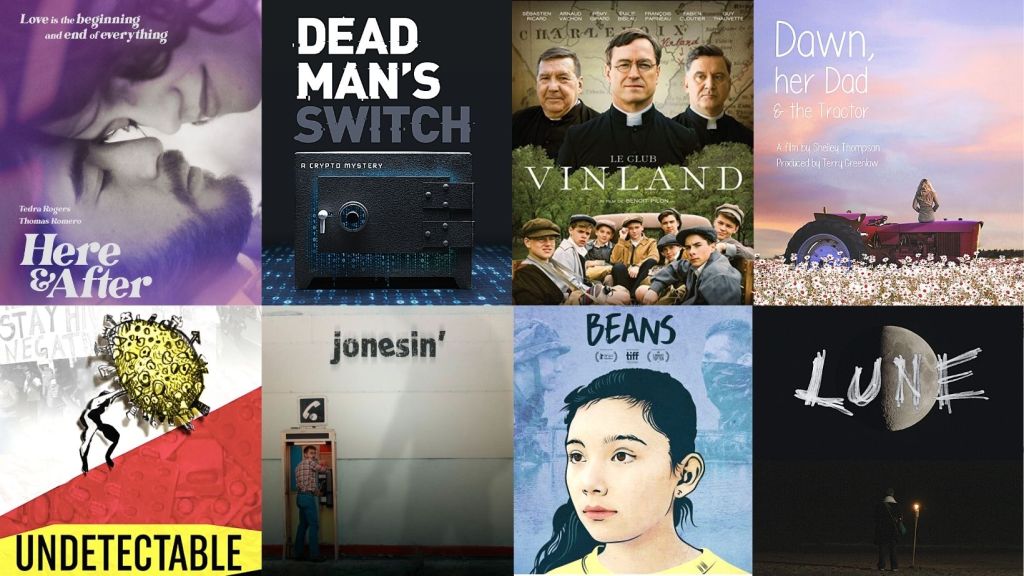
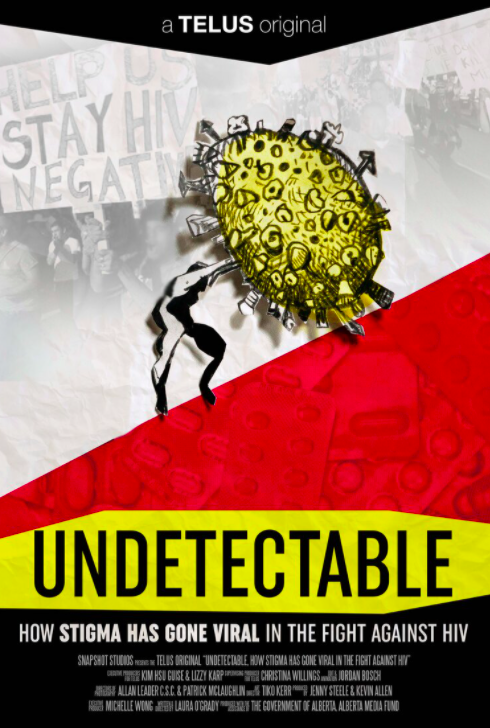
Yesterday marked the 33rd World Aids Day. And our new film, Undetectable, about HIV/AIDS launched.
Canada has the solution to end HIV infections and stop the world-wide AIDS epidemic. So why are people still dying of AIDS? The TELUS Original documentary Undetectable looks at the history, breaks down the roadblocks, and exposes the gatekeepers that have stopped the world from becoming HIV/AIDS free.
The film is free to watch on Facebook and YouTube. Please watch and share widely. The film is a call to action. AIDS is a pandemic we can defeat—so let’s get it done!
Undetectable was produced by Snapshot Studios with the assistance of the Government of Alberta, Alberta Media Fund and Calgary Arts Development, in collaboration with the Calgary Gay History Project.
UNDETECTABLE has its Calgary premiere on Sunday, September 26th, 4PM at the Calgary International Film Festival (CIFF). UNDETECTABLE is a deep dive into the hysteria, misinformation, stigma and prejudice that has surrounded the HIV/AIDS epidemic since the early ’80s. Through the eyes of current front-line workers and tireless activists, the film exposes how early societal prejudice is directly linked to today’s rising infection rates.
This is the second collaboration between Calgary filmmaker Laura O’Grady and historian Kevin Allen, whose first project together GROSS INDECENCY: THE EVERETT KLIPPERT STORY was a CIFF award-winner in 2018.
UNDETECTABLE was featured earlier this month at the LGBT Toronto Film Festival where it won the audience award for best short film.
UNDETECTABLE is a TELUS Original documentary and was produced with the assistance of the Government of Alberta, the Alberta Media Fund and Calgary Arts Development, in collaboration with the Calgary Gay History Project.
The Calgary Gay History Project recently presented the history of Calgary’s first LGBTQ2 chorus, the Rocky Mountain Singers (RMS). This is the second blog post exploring the history we uncovered as part of this commissioned research project (thanks to One Voice Chorus).
1990 proved to be a pivotal year for Calgary’s LGBT community. AIDS was in the ascendant, and the community was beginning to find its political voice—confronting the casual homophobia that was pervasive in the city. RMS had been practicing for less than a year but had scheduled their first big concert on June 22nd as part of Calgary’s growing Pride Week festivities.
A few days before the concert, RMS participated in a Pride Rally in Central Memorial Park. The Calgary Lesbian and Gay Political Action Guild (CLAGPAG) organized the rally to agitate for LGBT human rights. In fact, this rally on Monday, June 18th, 1990, is considered Calgary Pride’s origin event. CLAGPAG handed out free lone ranger masks at the Old Y, and directed participants to gather at the Boer War Memorial for speeches and songs.
For some, the masks were a media stunt, but others worried about having their LGBT identity revealed. This concern was a reality RMS had to negotiate in the choir’s early years. Members had differing levels of comfort in being out, which affected their ability to perform in public or even have their name listed in the program.
The First RMS Concert Poster: made on a dot matrix printer by chorister Patrick O’Brien!
However, the concert went bravely ahead. Luke Shwart remembers: “Pride 1990 felt like our very first concert. It was set up cabaret-style and sold out. It went very well, but backstage the level of anticipation was through the roof! People were terrified about walking out there and performing—there was a great sense of exhilaration, accomplishment and relief afterward.”
The concert was a hit. Karen Whyte in Modern Pink Magazine wrote, “a special highlight of [Pride] week was the outstanding performance by Rocky Mountain Singers. Over 200 people attended the concert, and everyone loved it!”
Later that summer, 15 RMS choristers flew to Vancouver for the Gay Games. They participated in the Festival Chorus: a choir for anyone who wanted to sing and was coming to the Games. The Gay Choral movement had been spreading across North America, and hundreds came to sing.
The Festival Chorus was directed by choral conductor Carol White from Denver, Colorado. The Calgarians in attendance found the experience electrifying—the sheer volume of that many voices was profound.
Patrick O’Brien remembers: “We had to learn about 14 songs. One of the songs was called Living With AIDS. It had a hymn-like quality. Carol directed it professionally—cutting it into bits for us to practice. At one point, she paused and said, ‘If there is anybody who is comfortable standing up who is currently living with AIDS—can we as a group collectively acknowledge your strength?’ RMS member Karl Siegfried stood up, and then and men started standing up everywhere in their sections. It was an amazing, powerful moment. I think the women from our chorus looked around and thought: what do you know….”
Part of the Vancouver Festival Chorus in Rehearsal
Carol White conducting the Festival Chorus at the Gay Games Closing Ceremonies. Source: communitystories.ca
The Festival Chorus rehearsed every morning for a week. They performed at the Gay Games opening ceremonies on August 4th, marched in the Pride Parade on August 6th, gave an evening concert on August 10th and delivered a final performance at the closing ceremonies on August 11th.
The Gay Games ended withCarnaval! A fantasy parade. Fantastical creatures and people in extravagant costumes led the audience, choristers and athletes, out of the stadium and towards the Plaza of Nations for one last party together. The exhilarated Rocky Mountain Singers had found joy in a larger community and new energy and purpose for their fledgling Calgary chorus.