Tag Archives: AIDS Calgary

Dying Young

{This is our last post in 2025! We at the Calgary Gay History Project wish you a warm and festive holiday season – Kevin}

In the history of Calgary’s queer community, few figures loom as large—yet remain as quietly influential—as Doug Young. Born in 1950 near Taber, Alberta, and raised in both Taber and Medicine Hat, Young’s life was marked by a deep commitment to social justice and community building that helped shape the early gay rights movement in Calgary.

Young’s academic journey took him from Medicine Hat College to the University of Calgary, preparing him for a lifetime of advocacy and community service. Before his activism fully took hold, he worked with the Alberta Service Corps and Canada Customs—experiences that undoubtedly broadened his perspective on community needs.

But it was in the late 1970s and 1980s that Doug Young became one of Calgary’s most active voices for gay rights. At a time when queer communities were often hidden and marginalized, Young stepped forward into leadership roles that were both challenging and essential. He served as President of Gay Information and Resources Calgary (GIRC) from 1977 to 1979, and continued on its board through 1981. Under his stewardship, GIRC became a vital resource—offering support, outreach, peer counselling, and serving as one of the few community touchpoints for queer people in the city.
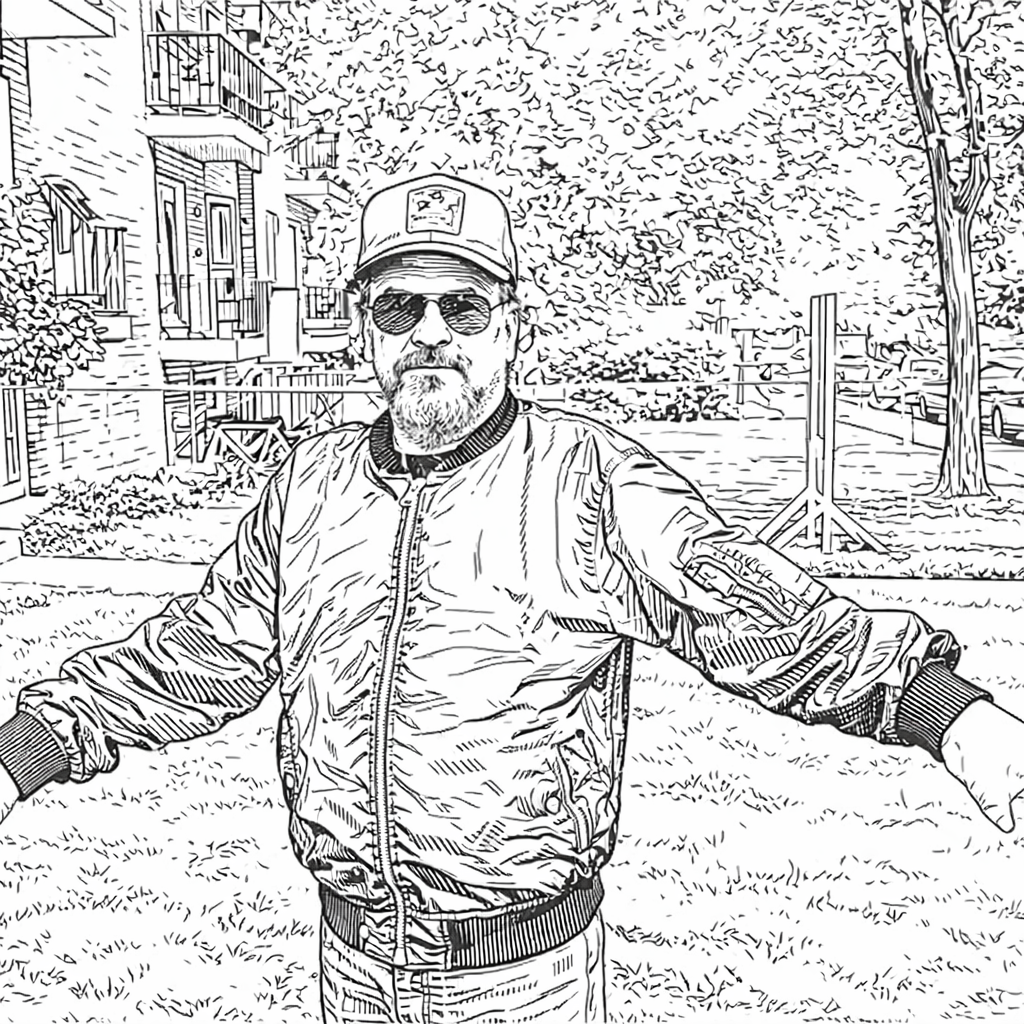
Line drawing of Doug Young derived from a photo in the Calgary Herald, June 14, 1994

Young didn’t limit his work to one organization. He was actively involved with the Alberta Lesbian and Gay Rights Association, AIDS Calgary, Gay and Lesbian Legal Advocates Calgary (GALLAC), the Right to Privacy Committee, and the Gay and Lesbian Community Police Liaison Committee—a network of groups focused on legal rights, health advocacy, safety, and community relations. This breadth of engagement speaks to both the urgency of the issues at the time and Young’s own drive to see real, sustained progress.

Young was an active spokesperson for the gay community and notably contributed to queer history through his extensive records. His personal papers were sorted and saved by Young’s friend John Cooper. They are now housed in the Glenbow Archives, which includes a remarkable hand-drawn map of gay spaces in the Beltline from the mid-1980s.
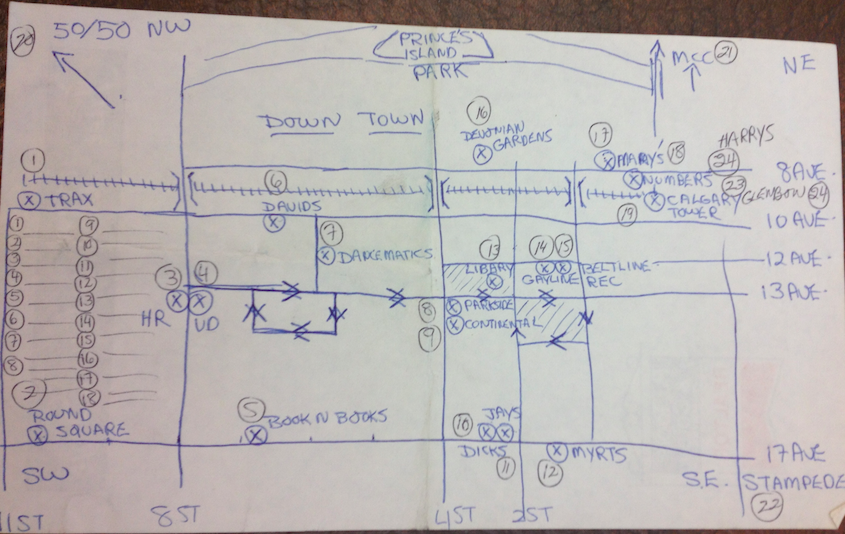
Doug Young personal papers, Glenbow Archives M-8397-1.

Perhaps most poignantly, Young’s leadership bridged the early gay rights era with the inevitable rise of the HIV/AIDS crisis. Community groups like AIDS Calgary grew out of activist networks in which Young was involved, helping mobilize volunteers, advocate, educate, and provide basic support during a time when fear and stigma often overshadowed empathy and action.

Doug Young passed away on April 15, 1994, from AIDS-related complications, a loss felt deeply across the community he helped nurture. While he did not live to see many of the legal protections and cultural shifts that came later, his efforts laid the necessary groundwork for Calgary’s queer organizations, public awareness efforts, and ongoing fights for equality.

At this dark time of year, I like to light candles to call back the light. I also light candles to remember those we’ve lost. Young would have been 75 in 2025 if he had lived, and I’m positive many other organizations would have benefited from his activism. The contributions of individuals like Doug Young are vital reminders of how far the community has come and how central grassroots leadership can make all the difference.

{KA}
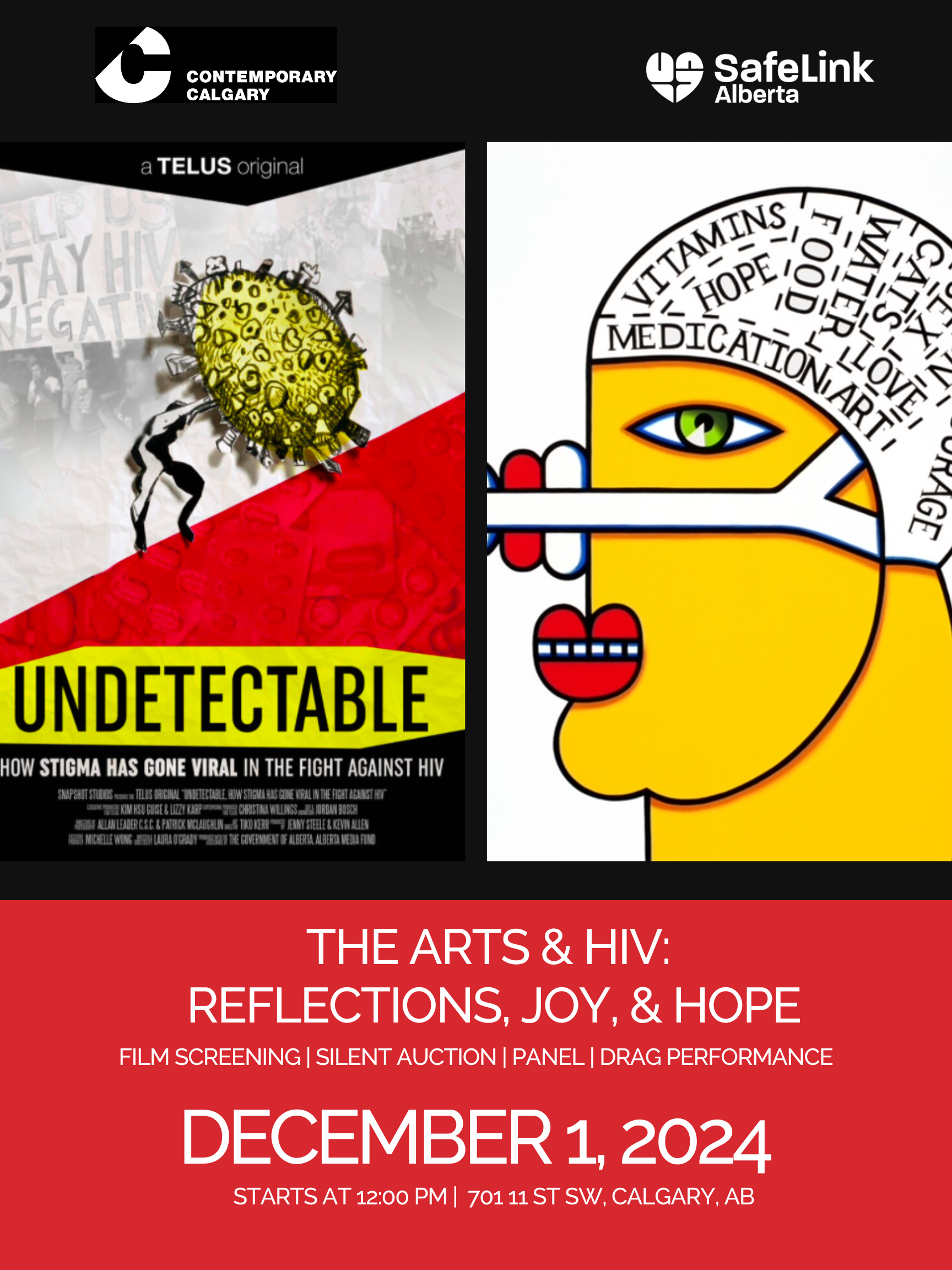
World AIDS Day in #YYC

Sunday, December 1st, is World AIDS Day. Safe Link Alberta (formerly known as AIDS Calgary) Calgary Queer Arts Society and Contemporary Calgary have come together to present an afternoon called ARTS and HIV. Reflections, Joy & Hope.

Hosted by drag performer Misty Meadows, the celebration will feature a recorded interview with Joe Average, an acclaimed Vancouver HIV-positive artist, a screening of award-winning filmmaker Laura O’Grady’s Undetectable and a Q&A panel moderated by James Demers. ARTS and HIV begins at noon and runs until 4:30 at Contemporary Calgary.

There will be inspiring drag performances by Misty Meadows, Argintina, and Shane OnYou. The event will also offer attendees a chance to bid on an online silent auction featuring Joe Average’s original piece Thinking Cap.

In lieu of admission, the organizers suggest leaving a donation in remembrance of someone lost to HIV/AIDS.

{KA}

In Hot Water: Gay Politics

{Congrats to Sheldon Cannon on this engaging series. Sheldon is presently interviewing other Calgarians connected to the Goliath’s Raid and we look forward to future posts! – Kevin}

Terry Haldane, Stephen Lock & the 2002 Goliath’s Bathhouse Raid

At around 2:30 PM on a Thursday, Calgary Police Service officers invaded one of our community’s safe havens, Goliath’s Bathhouse. This surprise raid occurred on December 12, 2002. In this series of blog posts, we will delve into the history of the Goliath’s raid. Along the way, we will explore injustice, changing queer culture and the politics of the gay and LGBTQ2+ communities, past and present.

Read Part 1: The Raid: here.

Read Part 2: The Court Battle: here.

Read Part 3: Our Relationship with the Police: here.

On the whole, the composition of the LGBTQ2+ community is defined by exclusion: composed of anyone who doesn’t fall into the dominant cisgender heterosexual framework. The beauty of this is that it has created a network of diverse people, all of whom have the experience of being marginalized in one way or another and who generally share a common goal of free sexual and gender expression. The flipside to this is that it seals disparate groups of people under a common title, which can muddle each group’s sense of identity. For the most part, a lesbian’s life does not look the same as a gay man’s life, which does not look the same as an intersex person’s life, which does not look the same as a nonbinary person’s life. So, it’s not helpful to pretend we all live a homogenous experience.

Under the LGBTQ2+ banner, it is still useful and natural for each group to have their own tribe with similar sexual and gender identities as themselves. Terry and Stephen found that in the past, at clubs, gay men and lesbians generally each did their own thing on a night out, needing time with their own people before all coming together for brunch the next day. They see Goliath’s as one such place where gay men can be around other gay men in a gay, masculine, sexual, and social environment. Being around others like oneself can strengthen one’s sense of identity and provide an outlet to be at ease. But, of course, there is a delicate balance between community building because of affinity versus being exclusionary. It is helpful to be under our larger LGBTQ2+ alliance in pushing for recognition of rights and especially fighting for our most vulnerable subgroups.

Physical Spaces and Sexuality

The Goliath’s raid story allows us to reflect on how our community and sexual connections have evolved over time. Currently, the gay sexual experience often centres on messaging and meeting from dating or hookup apps with little interaction beyond that or perhaps meeting somewhere like a gay club.

In the past, to meet other gay people, one needed to meet them first in real life, either at a bar, bathhouse, community organization, or some other physical space. As a result, these spaces often served multiple needs, facilitating both sexual and social connections. Terry and Stephen talked about how one would often go to the baths thinking they’d have this crazy sexual experience. Instead, they’d end up talking with someone and learning about each other’s lives: an unexpected and genuine human connection. Terry told a story about his friend Paul who would invite people he knew to Goliath’s every few months, rent the biggest room and bring a white tablecloth, champagne bottle, ice bucket, and candelabra, and throw a party with about 30 men. Terry describes it as one of the happiest, fun times in his life.

Further back to the AIDS crisis, the gay community was devastated from the virus’s effects but socially was at its strongest. Terry and Stephen say that at the time, there were about 60 LGBTQ2+ organizations in the city then. They remembered Gaylines (support/counselling phone line), a gay fathers group, gay and lesbian youth group, AIDS Calgary (now HIV Community Link), Apollo Friends in Sport (still active), the gay rodeo, CLUB Calgary (cowboy leather uniform buddies), OffCentre, two gay choirs, Camp 181 monthly dances, and more. The frequent funerals were another social bonding aspect of gay life at the time. Back then, connection via physical meeting was a necessity because of the lack of the Internet and a need to support one another through traumatic times. This led to a strong sense of belonging and cultural identity.

Now, with HIV posing less of a threat, relatively easy access to sexual partners via apps, and greater acceptance into general society, being gay is easier than ever. However, the necessity for physical meeting spaces has declined and with it the sense of connection to the local gay community. Goliath’s is still active, and cruising still exists, but they hold a less prominent position in gay sexuality now than before, with our sexual lives moving more to the private domain than the communal. Nevertheless, these spaces still hold an essential role, especially for men seeking an anonymous hookup or those who enjoy the semi-public or communal aspect of the bathhouse.

Another likely reason that the role of the bathhouse has declined is that gay men are increasingly more assimilated into mainstream society rather than being a distinct subculture. For many, being into other men is just their sexual orientation, and their lives are otherwise indistinguishable from their straight counterparts. The tension between assimilationist and liberationist schools of thought in gay politics is longstanding. Assimilationists aim to have gay people accepted into mainstream life, and liberationists reject conforming to traditional lifestyles, aiming to create an alternative lifestyle accepted as equal.

There are benefits to today’s level of assimilation: gay people can get married should they wish, we face less discrimination at work, and it’s getting easier to be accepted by family and friends. The downside to assimilation is that conformity can be stifling, the spirit of liberation gets lost, and our community loses its uniqueness and edge. Places like Goliath’s are a reminder of how our community adapted to meet our needs on the fringes of society, and I argue they are some of the last bastions of true disinhibition. The concept of a dedicated place for men to have gay sex with each other simply because they want to is such a radically liberated idea that it’s at odds with almost everything in traditional society, which is exactly why it is important.

During COVID, where we are all physically separated more than ever, I think we can all appreciate the importance of in-person human connection, be it social or sexual. The bathhouse still fills an important niche in our community. It is a symbol of our struggle for sexual liberation and an institution for us to be proud of; we should defend our ability to use it. Bathhouses are a connection to our community’s past and a unique aspect of gay life, having a place to be around others like us and indulge in the human experience.

Advertisement in February 2003 issue of Outlooks Magazine

Conclusion

When I asked Terry and Stephen their vision for the gay community, they said they don’t want an unhealthy divisive community, but a return to where gay men have a sense of identity “as to who we are, what we’re about, who we love, what we contribute to society, and still have room to include other people and their causes. So we need to say, hey, let us do this to help you, but not become so entrenched in a conglomerate of all these groups of people and organizations so much so that we lose ourselves.”

We should remember the people who experienced violations of their liberties by state officials and those who fought back against the raid despite the tremendous personal cost. We cannot become complacent with the liberties we enjoy because, back in 2002, people thought bathhouse raids were a thing of the past.

We still have a long way to go in advocating for our minority communities with the police, but it’s worthwhile to defend our sexual liberties and gay institutions. Hopefully, as in-person interactions resume post-COVID, our community will be able to reconnect. Perhaps we will have a renewed appreciation for our physical meeting places and how they enhance our community.

{SC}