Category Archives: Uncategorized

Check your basements – we want your stuff!

We needed a quiet month after the excitement of the Club Carousel Cabaret.  The amount of press we had was amazing and the sold out performance was more amazing still.  Check out the Calgary Herald review by Stephen Hunt.

The Calgary Gay History Project owes a big thanks to the artistic vision of Third Street Theatre: Paul Welch and Jonathan Brower for the creation of the cabaret.  Their next production opens this month: Late, A Cowboy Song runs from March 11 – 22nd, 2014: you should check it out.  Congratulations also to Paul for getting the Enbridge Emerging Artist Award at the recent Mayor’s Lunch for Arts Champions.

Look for new weekly gay history posts this month on Thursdays.  Now, however, we are calling you to search for old files, photos, meeting minutes, T-shirts, badges, pins, flags, queer publications, or other memorabilia that you could donate to a newly forming gay archives.  We (Kevin Allen and Carolyn Anderson) met with the Glenbow Archives last month, and walking through their vaults, saw that our community’s history is missing.

Here is where it could go:
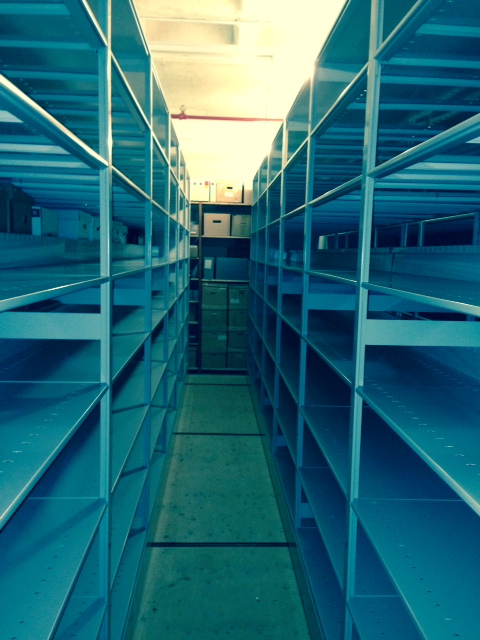
Future Gay History Archive at the Glenbow here?  Photo: Carolyn Anderson

Future Gay History Archive at the Glenbow here? Photo: Carolyn Anderson

The Calgary Gay History Project is currently gathering archival materials.  If donated to the future archives they will be cared for in perpetuity and made accessible to future researchers.  You might even be eligible for a tax receipt!  Contact Kevin for more information.

[KA]
Gay History Walk Revisited & Other News

The queer history project has some exciting news.  The province has come on as a project sponsor through the Alberta Historical Resources Foundation – thank you province’o’mine, and thank you Culture Minister Heather Klimchuk, who wrote us a kind congratulatory letter.

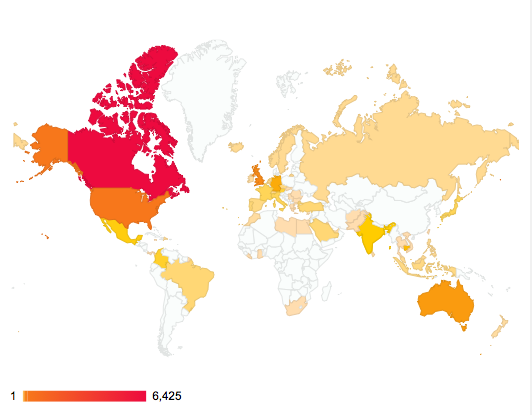
Since the project launched at last year’s Pride Week, there have been more than 7000 readers on the site including visitors from over 55 countries.  We have had two incredibly well attended public presentations, and one amazing gay history walk as part of the international Jane’s Walk movement supported locally by the Calgary Foundation.

Screen shot 2013-08-07 at 4.53.15 PM

Many of you who missed the walk last May, have been asking for a repeat, and I am happy to report we have one scheduled for the evening of Wednesday, August 28th from 7:30 – 9:00 PM.  [I suspect that we will retire to a local pub afterwards for any who want to mingle and chat!]

The walk will commence from CommunityWise (formerly the Old Y) at 223 12 Avenue SW – an important building that was a focus for our city’s fledgling gay right’s movement in decades past.  A current tenant there is Calgary Outlink, our queer community support organization, who also is an ongoing sponsor of the queer history project.

Finally, we will have a table at this year’s Pride Street Festival, Sunday, September 1st.  Come by, pick up a project postcard, and talk to us about queer history in Calgary – we would love to meet you.

p.s. If you have not seen it, Stephen Fry’s open letter to U.K. Prime Minister David Cameron, calling for a ban of the Sochi Olympics is powerful.  Closer to home Alberta queer right activist, Kristopher Wells, called for a similar ban in an Edmonton Journal editorial.

p.p.s.  For links to more queer news sites, check out blogger Joseph Atkins
Top 50 LGBT Google+ Pages Worth Following“.

[KA]

What turns women to Lesbianism? Ideas from 1966.

Chatelaine Magazine featured a 5-page article in October 1966, exploring the phenomenon of lesbianism written by Renate Wilson.  Largely sympathetic, the author contrasted lived experiences of the lesbians she interviewed for the story with academic and psychiatric theories of lesbianism – a certain gulf existed between the two of them.

What turns women to Lesbianism

Lesbians reported feeling fundamentally normal and were proud to be contributing members of society.  Many did not know they were lesbian until their 20s: often after they had married men and had children.

Wilson’s interview subjects reported:

“Until I was twenty I didn’t even know the word lesbian.”

“I read about lesbianism but didn’t connect it with my own situation”

“I got married, had a baby.  then I met this woman and it suddenly hit me like a sledgehammer: I could love her but not him.”

“I don’t hate men, I just don’t want to marry one.”

Wilson remarked that, “most lesbians aren’t distinguishable by appearance.  Of the dozen I met [in] a Vancouver apartment, a few wore slacks, but only one was vehemently against skirts.  They would not have stood out in a group of housewives, office girls or nurses getting together to play bridge or discuss PTA or union affairs.”

The article goes into some detail about potential causes of lesbianism, ruling out heredity, chromosomal abnormality, glandular imbalance, and free choice.  Wilson settled on Freud and current (in 1966) psychological trends, which focus on psychosexual development and the role of parents in a child’s upbringing, which sounds far-fetched and bizarre to a modern-day reader.

Wilson noted that if a girl does have lesbian leanings and is willing to be treated by psychotherapy, a change in orientation does not have the best of chances.  She writes: “According to the Toronto Forensic Service lesbians rarely attempt treatment and when they do they harder to help than males.  In ten years, Dr. Turner hasn’t seen one lesbian persevere in therapy to completion; yet he can count considerable success with male homosexuals.”

The article concluded with the legal context for Canadian homosexuals, noting that in common law lesbianism is mostly ignored.  Wilson explained, “When a revision of English law in 1885 condemned homosexual practices by men and women, Queen Victoria refused to sign it because, as she huffily explained, ‘women can’t do that together.’ Rather than enlighten Her Majesty, her ministers removed women from the clause.”