July is one of our favourite times of year—not for the über-famous Calgary Stampede happening currently, but for Historic Calgary Week, running July 23-August 2, 2021. It is the signature event for the Chinook Country Historical Society, who program engaging history events all year long. An incredible number of volunteer hours go into making Historic Calgary Week happen; the 2021 iteration is cleverly subtitled: Unmasking Our History.
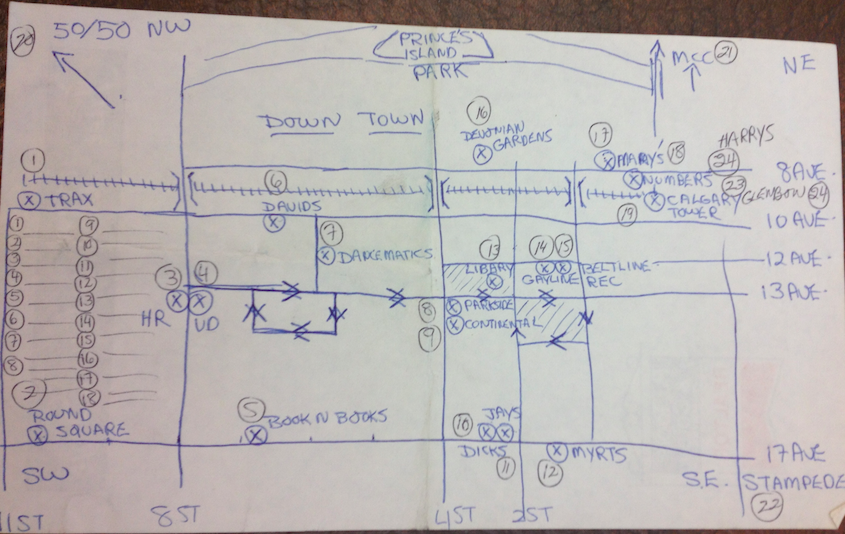
The Calgary Gay History Project’s Kevin Allen was invited on a mapmakers panel discussion on Tuesday, July 27 at 7:00 PM.
Calgary Gay History Project volunteer Sheldon Cannon is busy this summer researching the Goliath’s Bathhouse Raid by Calgary Police. This raid was notable in Canadian Queer History due to its timing: December 12, 2002—more than 20 years later than many similar raids in other Canadian cities. The raid was specifically referenced in the Calgary Police’s apology to the LGBTQ2 community in 2018.
Newspaper clipping from the Calgary Herald, March 1, 2003
Sheldon is interviewing activists, people who were arrested in the raid, and the Calgary Police to get a fulsome view of this pivotal moment in Calgary’s queer history. If you have a story you would like to share about the raid please contact us. We hope to present this research during this year’s Calgary Pride festival at the end of August.
In Canada, the House of Commons just passed Bill C-6: An Act to amend the Criminal Code, regarding conversion therapy.
The law defines conversion therapy as a practice, treatment or service designed to change a person’s sexual orientation to heterosexual, to change a person’s gender identity or gender expression to cisgender or to repress or reduce non-heterosexual attraction or sexual behaviour or non-cisgender gender expression. For greater certainty, this definition does not include a practice, treatment or service that relates to the exploration and development of an integrated personal identity without favouring any particular sexual orientation, gender identity or gender expression.
In a vote of 263-63, Parliamentarians determined conversion therapy, cheekily referred to as “praying away the gay,” will no longer be tolerated in Canada.
Celebrating the City of Calgary’s own Conversion Therapy Ban Legislation in February 2020 (Photo by Lou De Asis/The Press)
For many Canadians, this issue seems like a fait accompli. Notably, there were 63 opposed Members of Parliament. Moreover, a quick internet search reveals many wacky websites that make astounding arguments in support of conversion therapy. In fact, a creaky warhorse also known as the REAL Women of Canada—are they still around?—pronounced the legislation “wicked.”
Are the 63 MPs representing this anti-gay, anti-trans constituency?
Alternatively, Kootenay-Columbia MP Rob Morrison stated that he in fact opposes conversion therapy but: “voted against the bill because the government politicized the bill at a committee level and refused to support two amendments put forward by the Conservative party that he claims would add clarity to the bill and ensure that ‘voluntary conversations between individuals and their teachers, school counsellors, pastoral counsellors, faith leaders, doctors, mental-health professionals, friends or family members are not criminalized.’”
If this was a fatal flaw in the legislation why did 51 of Morrison’s Conservative peers vote in favour, even with their amendments thwarted?
Nine out of ten Calgary MPs voted on Bill C-6; there were six “yeas” and three “nays.” What did our Calgary nay-sayers conclude then about conversion therapy? And what will they think in 20 years? Will anyone remember to inquire? Will they feel embarrassed when asked and quickly change the subject?
These questions intrigue me. Our community’s human rights struggle has been dramatic but rapid. How do decision makers feel now who have been “on the wrong side of history?” My questions are not intended to shame but really probe how sentiments and community standards change.
For example, what do the MPs who voted against same-sex marriage in 2005 believe now? You may recall that vote was a closer: 158 yeas to 133 nays, and blurry across party lines.
And even this week’s vote might be behind Canadian public opinion. According to the Pew Research Centre, 85% of Canadians say homosexuality should be supported by society, and only 10% not. The 63 nay-sayers represent 19% of voting MPs.
What are the stories we tell ourselves to solve the complications of past decisions? Stay tuned Calgary Gay History Project readers—perhaps we have tripped across a new field of inquiry…