Tag Archives: queer

Earning Toasters in “The Hat”

By the late 70s, Calgary’s gay community was fairly established and extensive. If you boldly came out of the closet as a gay activist then, you would find a network of organizations and businesses to both support you and your work. Seeking approval from the straight community was decidedly out of fashion and gay separation was a recurrent theme in GIRC’s Gay Calgary newspaper.

In April 1979, the Alberta Lesbian and Gay Rights Association (ALGRA) was founded with representation from the Province’s biggest cities: Calgary, Edmonton, and Red Deer. Rural outreach was a priority goal for ALGRA and Calgary gays found themselves on missions in Southern Alberta to connect with rural gays as well as to coax them out of the closet.

Screen Shot 2017-03-09 at 1.56.37 PM

However, “Medicine Hat had a few shocks in store for three Calgarians who are gay and accustomed to being ‘out’,” wrote Charlotte Rochon, in the December 1979 issue of Gay Horizons.

Not only did they have a hard time trying to find a distribution prospect for their newspaper – the newsstand proprietor called Gay Horizons, “that shit,” but also the purported gay meeting place in the Hat didn’t really exist.

Fortunately, the intrepid Calgarians had a local contact whom they met for tea. It turned out that there was a covert network of gays and lesbians who might be coaxed out that evening for dinner.

Rochon wrote: “Dinner turned out to be quite encouraging after an afternoon of frustrations. Two of the contacts who came turned out to be part of the elusive underground: lesbians and gay men who do indeed have a group that meets regularly in one Medicine Hat bar that does not intimidate them. Dinner was a celebration of gays coming together”

As the evening progressed, the Calgarians were less than thrilled when they were requested to play it straight: no same-sex dancing or displays of affection. As they grumblingly cooperated  – “the closet is despicable” – they acknowledged that coming out in Medicine Hat might prove to be a riskier, and less anonymous, venture than coming out in Calgary.

They also concluded that the existence of the gay underground in Medicine Hat was a great sign – the beginning of a gay liberation movement in the Southern Alberta city.

The expedition informed Rochon’s politics. In a separate editorial, she wrote:

The gay movement should divert [its] energies away from lobbying heterosexual institutions in order to concentrate on the development of its own community.

Such a move has the potential to give our gay community the strength its members need to really ‘come out’ to be neither offensive or defensive, to simply be gay, content, beautiful, as we know ourselves to be.

The implications of community building are clear: as we grow stronger, more of us will be openly gay, more people will know us, larger and larger segments of society will come to appreciate us…. Familiarity breeds consent.

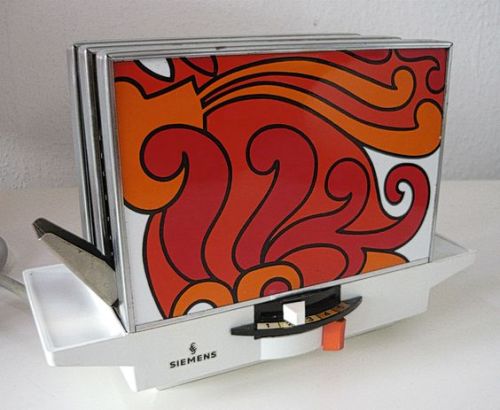
*”Earning toasters” refers to the social conservative notion of gays recruiting straights into their filthy lifestyle.  The gay community turned the notion into a joke as in, “one more recruit and I will have earned a toaster”: a primordial reward points plan.

Postscript: Brooks turned out to be a more tolerant town; their newsstand accepted Gay Horizons on the Calgarians’ road trip adventure tour.
toaster

Vintage 70s Toaster, Image Source: eBay

{KA}
Gaybasher Killed in Central Park

Central Memorial Park has a history of being a cruising park for gay men, and there are many related stories of police harassment there, as well as gay bashing incidents in the now gentrified Beltline greenspace.  Yet one night, in 1979, the tables turned and a gay basher became a victim.

On Saturday, September 22nd at around 10 PM, a skirmish broke out in Central Memorial Park. The result was that Beltline resident, Thomas Earl Nash, aged 22, was stabbed in the neck with a broken bottle. A half dozen people surrounded the dying man, lying behind the Memorial Park Library.  One of Nash’s panicked friends managed to hail a cab driving by on 13th avenue, who then raced them to the Holy Cross Hospital.

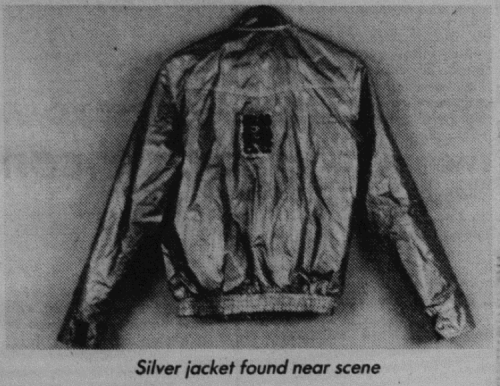
Nash did not survive the night.  A silver jacket from one of the attackers was abandoned at the scene.  It was also reported that large blood stains on the sidewalk remained the next day.  The police reported that no motive had been established for the killing, but that drugs were not involved.

screen-shot-2017-02-23-at-12-10-08-pm

Calgary Herald: Monday, September 24, 1979 page B1

The two men accused of the killing fled in a stolen car to Penticton, B.C. and were arrested by RCMP officers the following Tuesday. Brian Christopher Hawkurst, 20, and Greg Paul Spencer, 19, were charged with second-degree murder.

As the investigation proceeded, details emerged that Nash was one of three straight men who had been abusing gay men in the park. It seems that the gang of harassers hassled Hawkurst and Spencer, who then decided to hassle back. A chase ensued whereby Hawkurst and Spencer caught up to Nash at the alley behind the library, and attacked.

The alley, ironically, was well lit by a floodlight which had been installed the previous month at police request, to discourage homosexual activity in the area. Sadly, the cab driver who came to Nash’s aid reported that it was not the first time he had had to take a stabbed man from Central Memorial Park to the hospital.

calgary_central_memorial_park

Photo: Park in 2011 by Mack Male on WikiCommons

{KA}


Labels in YYC: do you like Queer?

The second episode of Calgary Rainbow Radio premiered this week. It is an interesting discussion about labels and the complications in how we identify in our community. Here is the transcript of our contribution to the show on the history of labels:

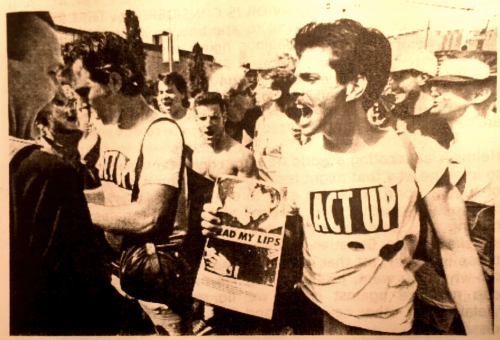
Hello. My name is Kevin Allen and I am the research lead of the Calgary Gay History Project.   When I initially conceived of the name of the project, I called it the Calgary Queer History Project and had printed posters and postcards to that effect. I personally like the word queer, and use it often. I came out in 1990 at the age of 19, when AIDS activism and queer nation was in the ascendant. The slogan “We’re here, we’re queer, get used to it” still resonates with me today. Yet in my first few oral history interviews with community elders, I discovered that “queer” is still a living pejorative for them. To honour their contributions to the project I shifted the name of our work to the Calgary Gay History Project.

screen-shot-2016-12-01-at-12-38-50-pm

Photo: from Zine, “Queers Read This: published anonymously by queers”

Terminology in the LGBTQ2S+ community is steadily evolving and there have been many transitions in terms over the decades. For example, I was surprised to learn that some women once considered the term lesbian an uppity feminist word in the mid-20th Century. These individuals maintained that they were gay women and not lesbians. In fact, Canada’s very first national lesbian conference, held in Toronto in 1973, ended up being called the Gay Women’s Festival. Ellen Woodsworth, one of the organizers, explained:

“Some of us really wanted to call it the Lesbian Conference or Lesbian Women’s Conference or something, but it was clearly going to be a barrier to others – either those who self-identified as gay or those who weren’t sure, or those who were really in the gay movement. We wanted everybody to feel safe to come.”

screen-shot-2017-02-14-at-5-24-58-pm

Woodsworth quote and poster image from Liz Millward’s book “Making a Scene: Lesbians Community Across Canada 1964-84.”

The word gay itself came into common usage to mean homosexual only in the 20th Century, although it likely had earlier usage antecedents. It was first uttered in this context in a famous Hollywood film in 1938, called Bringing Up Baby starring Cary Grant and Katherine Hepburn. There is a scene in the film, in which Cary Grant’s character’s clothes have been sent to the cleaners, and he is forced to wear a woman’s feather-trimmed robe. When another character asks about his robe, he responds: “Because I just went gay all of a sudden!” This reference to cross-dressing (and, by extension, homosexuality) was unfamiliar to most filmgoers. The line can also be interpreted then as, “I just decided to do something frivolous,” but it was a coded reference to the rather large gay community working in Hollywood at the time.

California was also the birthplace of the homophile movement in the 1950s, a sort of polite, pleading for tolerance effort, that early gay activists employed. Homophile societies seeded themselves across North America. The two most prominent: the Mattachine Society and the Daughters of Bilitis were both code names for homosexual men and women respectfully.

Amusingly, Harry Hay one of the Mattachine founders reported that in the 1930s and 1940s, gay people referred to themselves as temperamental – which I am really fond of now in 2017.

harry-hay

Harry Hay in 1937. Photo: LeRoy Robbins from the Bay Area Reporter

The word homosexual itself is a manufactured word and a mash-up of Greek and Latin roots. Its first known appearance in print is found in an 1869 German pamphlet called “143 des Preussischen Strafgesetzbuchs” written by Karl-Maria Kertbeny. He published it anonymously. His pamphlet advocated the repeal of Prussia’s sodomy laws. Kertbeny had previously used the word in a private letter written in 1868 to Karl Heinrich Ulrichs, a writer and forefather of the modern gay rights movement. Kertbeny used homosexual in place of Ulrichs’ term Uranian, which was the term he invented for his so-called third sex: men who had female brains and women who had male ones.

And of course, we are just scratching the surface of terminology past and present for queers, including names we call each other and those which are used against us. There are literally dozens of slang words. A sampling includes; dyke, faggot, molly, tommy, poof, pansy, Mary, limp-wristed, friend of Dorothy, butch, Kiki, muff diver, pillow biter, fairy, fruit and sod.

Like queer, perhaps it is time to reclaim some of them.

For myself, if I am looking for a change, I sort of like the ring of the Calgary Temperamental History Project.

{KA}