Calgary was incorporated as a town on November 7, 1884, with a population of 506, and grew phenomenally over the next 60 years to be a city of approximately 100,000 by the end of World War II. This period’s gay history is challenging to research for a number of reasons. Firstly, people organized their sexual lives differently then, and the concept of having a homosexual identity is actually a relatively modern one that solidified in North America after World War II. Men who had sex with other men could be perceived as normal as long as they presented a masculine gender identity and also showed a passing sexual interest in women.
Yet however normally these men were perceived, they were still criminals. Anti-sodomy laws were established in the United Kingdom as far back as 1533 and were updated in the 1885 Criminal Law Amendment Act to make illegal any kind of sexual activity between males. This crime was categorized and named “gross indecency.” Oscar Wilde famously was convicted under this amended law and given the maximum penalty: two years of penal labour. Canada, being a Commonwealth country, inherited the United Kingdom’s legal system and took its cues explicitly from it. Gross indecency entered into Canadian statute law in 1890, although Canada stiffened the maximum penalty to five years from two, and allowed for the lash as extra punishment.
Women were generally not considered sexual agents and were expected to be chaste until marriage. In common law, lesbianism was largely ignored. However, lesbianism was also targeted in the 1885 criminal law amendments, but Queen Victoria refused to sign it huffily explaining, ‘women can’t do that together.’ Rather than challenge Her Majesty, her ministers removed women from the amendment.
Another difficulty in researching gay history in this period is that there are very few references to its existence in the historical record, and even fewer people alive who remember these decades as adults. Gross indecency was prosecuted very rarely in these times: not often relative to the rates of prosecution and incarceration after the 1940s.
Nonetheless, the criminal record is one of the main sources of information we have about gay history at this time. For example, on November 18, 1911, a 27-year old Banff jeweler, John Ward, was found guilty of gross indecency in Calgary’s district court for having had anal intercourse with three different men that year. On June 11, 1914, Michael Noland was charged with committing an act of gross indecency with John Norman the day prior. The facts presented in the depositions divulged that it, in fact, was a case about oral sex.
Men in trouble with the law due to “perversion” or “degeneracy” tended to fall into two categories. Some men had the whiff of notoriety about them due to effeminate gender presentation; others were unlucky enough to have had sex with another man who was indiscrete. Often there was an outraged family behind many gross indecency investigations; they were seeking to punish the man who “perverted” their family member.
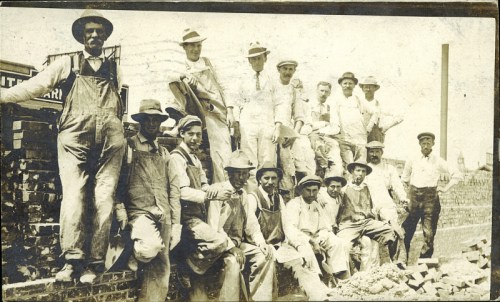
For much of Calgary’s early history, it existed as a frontier town with a distinctively masculine character. Not only was there a staggering influx of single working class men who built the City in its first booms, there was also a sizable population of British remittance men: black sheep in their Victorian families who had been gently exiled to the colonies – often for their sexual eccentricities – and funded to stay away.
During the pre-WWI building boom, the city census reported that Calgary was 75% men. The Albertan newspaper in 1907 wrote: “There are so many young men and so few young women that somebody was bound to get left in the cold.”
Much has been written about “Bachelor Subcultures” in North American cities of this era, and their fluid and accommodating sexual practices. Poolrooms, saloons, and rooming houses were central to this homosocial culture and Calgary’s landscape was typical in this regard.
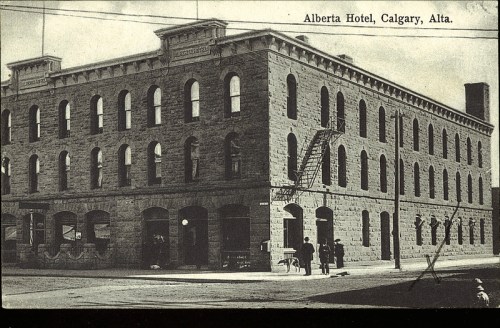
The Alberta Hotel, built in 1888-90, is a sandstone treasure we have on Stephen Avenue. It was the city’s pre-eminent hostelry in its heyday and is Calgary’s oldest remaining hotel building. The hotel was the preferred lodging and gathering place for well-to-do ranchers, businessmen, local personalities and remittance men. It was described as a “male Mecca.”
In contrast, the recently demolished Cecil Hotel was built for the working classes. Opened in 1914 with 57 rooms, the Cecil was purpose-built to accommodate travelers and blue-collar workers in the downtown east end. By 1924, it also housed a stable, blacksmith shop, grocery store, cafe and a tavern that took up nearly the entire ground floor.
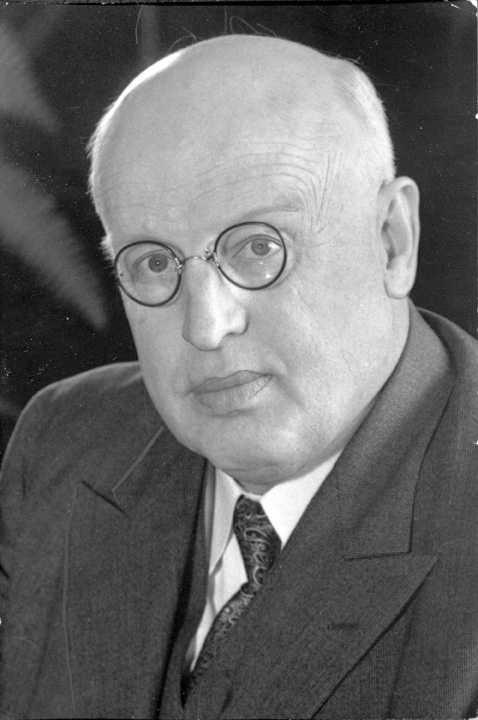
After the roaring 1920s, the depression hit Calgary particularly hard. Its antidote, William Aberhart, brought a strange mix of socialism and social conservatism to the city. The high profile Crescent Height High School principal, also known as Bible Bill, started Alberta’s Social Credit Party. His crusade against the depression and conventional economics hailed “Poverty in the Midst of Plenty” made him premier in a landslide election in 1935. He brought Christian fundamentalist principles to his government’s administration and had a strong interest in regulating Albertan morals.
By 1940, both Calgary and Edmonton had nascent gay communities, but the desire for “clean social conditions” brought Aberhart’s government to bear down on these loosely affiliated groups of men. In the high profile and sensational 1942 Same-sex trials in Edmonton, 12 men were investigated and convicted of participation in a “homosexual sex ring.” When several of the gross indecency charges were dismissed at lower courts, the Premier ensured that the Crown appealed these dismissals. He wrote: “I want to assure you that we want to do everything we can to curb the forces of evil.”
This sentence proved to be prophetic; for homosexuality, the moral tone in Calgary was now set for the next three decades.
{KA}




 Calgary Gay History