Tag Archives: lesbian

Lois is a Calgary superhero!

Congratulations to Lois Szabo, selected as this year’s Calgary Pride Parade Grand Marshall.  We, at the Calgary Gay History Project, think Lois is a truly deserving ambassador. If you have not seen it, check out this lovely profile of Lois composed by CBC journalist Terri Trembath.
szabo-les-lois

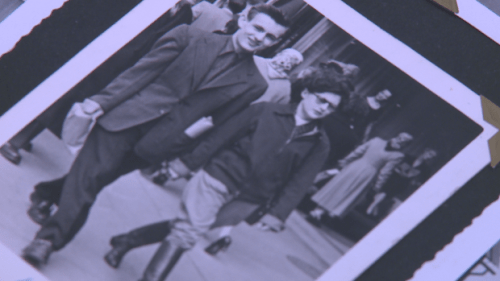
Family Photo of Les and Lois Szabo: Source, Terri Trembath/CBC News

Lois was born in March 1936 and married her husband Les at the age of 18. They had two children before Lois realized her true sexual orientation. She came out as gay in the early 60s and renegotiated the terms of her marriage with Les in order to live together and raise their children.

Lois found Calgary’s larger lesbian community in the 60s at the Cecil Hotel, where there was a separate drinking room for women that gay women occupied.  Finding great comfort and joy in discovering her community, Lois became one of the founders of Club Carousel, Calgary’s first community owned and run, private members club.  The Club was incorporated in 1970, as the Scarth Street Society; there were approximately 600 members by 1972. Weekend attendance could top 350 revelers in the small underground venue – no straights allowed.
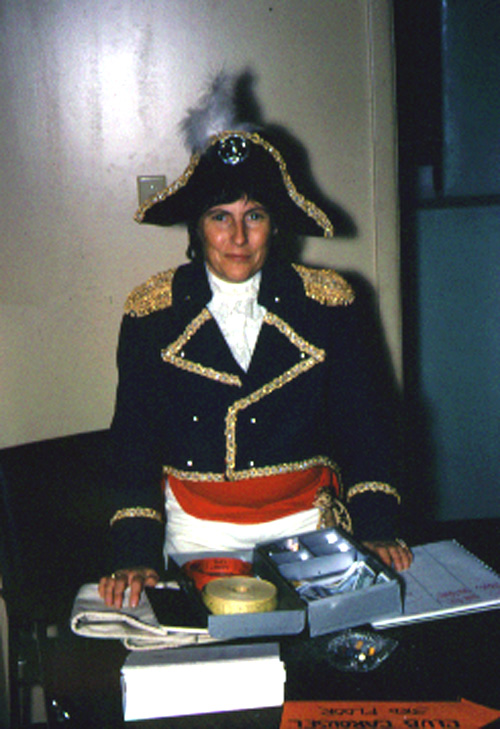
Lois Szabo Carousel Club 1972 copy
Lois at Club Carousel in 1972 with a little pomp!

Club Carousel was the first legal gay & lesbian club in Alberta and Lois was a key volunteer and board member for most of the Club’s history.  Using the Calgary club as a model, Edmonton, Saskatoon, Winnipeg and Regina established similar societies.  Club Carousel also sponsored prairie regional gay conferences from 1970 to 1976.

Since then, Lois has spent a lifetime volunteering and organizing in Calgary’s LGBTQ community.  She currently volunteers for the Kerby Centre’s Lesbian Seniors Group, One Voice Chorus, and Calgary’s LGBTQ2S+ Legacy Committee.

Lois was recognized by the community in 2015 receiving the Chinook Hero Award given annually to deserving LGBTQ leaders by the Calgary Chinook Fund Endowment Committee.
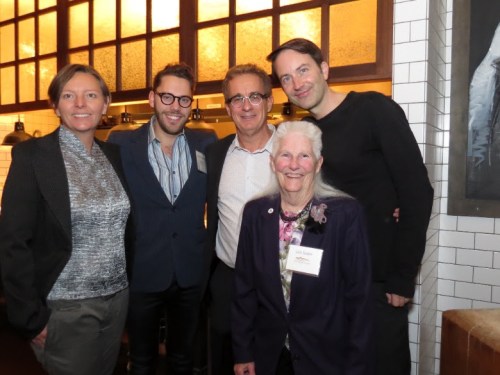
Lois at Chinook Fund Dinner copy

Lois receiving the Chinook Hero Award, October 21, 2015, with (L to R) Natalie Meisner, Playwright; Jonathan Brower, Third Street Theatre; Gary Courtney, Chinook Fund; & Kevin Allen, Calgary Gay History Project.

Amusingly, we recently found this comic book cover, which would have hit Calgary newsstands around the time Club Carousel was being conceived.

Lois, we think you are Super too, just like this other Lois!
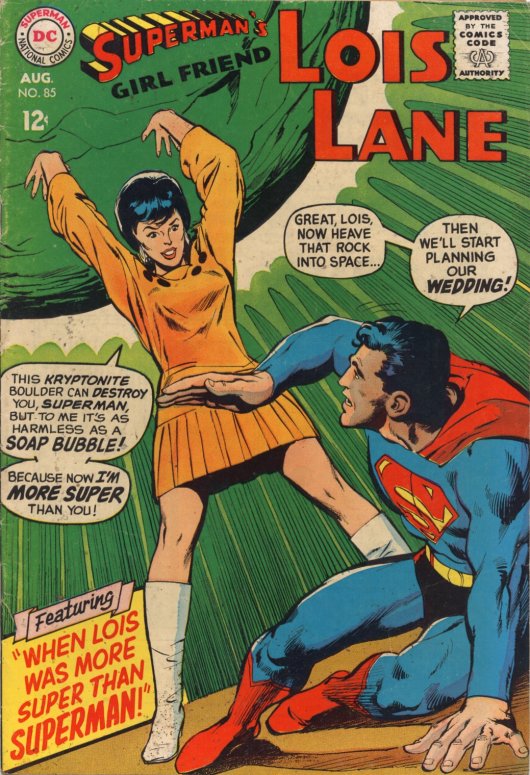
Supermans_Girlfriend_Lois_Lane_085

August 1968 DC Comic: “When Lois was more super than Superman.”

{KA}

YYC Gay History in YOW

Kevin has spent the week in Ottawa: working, doing research and going to museums. The Canadian Museum of History just unveiled its new permanent exhibition: the Canadian History Hall – quite impressive. Looking for Calgary gay history connections, we were surprised to find a couple. A photo of Jean L’Heureux (the subject of last week’s post – although he was not cited in the picture) and a rainbow pride banner with its origin story which was created in Calgary in 2005.

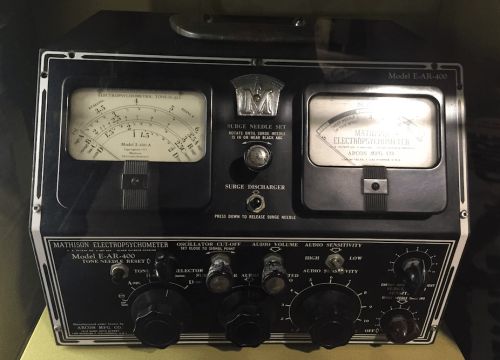
We also stopped into the Canadian War Museum to get some snaps of the “Electropsychometer” also know as the Fruit Machine, which the Canadian Government used to eliminate homosexuals from the public service in the 1960s. Tereasa wrote a post about it a few years ago.

Screen Shot 2017-08-18 at 9.37.09 AM

The Fruit Machine at the Canadian War Museum, Kevin Allen photo.

Pride Week in Ottawa begins shortly and there are already signs of rainbows popping up in the nation’s capital, but I am looking forward to coming home to experience YYC Pride. We will have a history booth at Pride in the Park on September 3rd and there are a couple of gay history walks planned on August 31st and September 2nd. We hope to see you out.

{KA}

Treaty 7’s Nio’kskatapi

Nio’kskatapi in Siksiká (Blackfoot) means “Three-Persons” in English. It was a name of honour given to the explorer, outcast and infamously known homosexual, Jean L’Heureux. Born around 1830 near Montreal, L’Heureux had ambitions of becoming a Catholic priest but was kicked out of seminary “for serious misconduct.”

He fled west ending up in St. Albert where he affiliated himself with the Oblates’ mission there. Caught in the act of sodomy he was cast out of the precinct. He made his way to Montana where he found Jesuits engaged in the building of a mission. Successfully impersonating a priest for a time, he was eventually busted and sent away. L’Heureux found sanctuary with the Blackfoot who, unlike the settlers and missionaries, were comfortable with his sexual preferences.

He became fluent in Blackfoot and a trusted friend and advisor to the First Nations in the region. L’Heureux preferred the company of indigenous peoples to other settlers he encountered. He also had a conflicted relationship with the Catholic clergy who were proselytising in the territory. The missionaries widely condemned his homosexuality as well as his clerical appropriations. Yet, after saving the life of one stricken Father Albert Lacombe and nursing him back to health in 1865, his status improved amongst the Catholic brethren.

Living and travelling in the Siksiká camps, L’Heureux preached that the First Nations spiritual beliefs were similar to his own: the primary difference being that the Christian God was composed of three persons in one. An amusing concept for the Siksiká, L’Heureux was forever renamed “Three-Persons.”

HBC

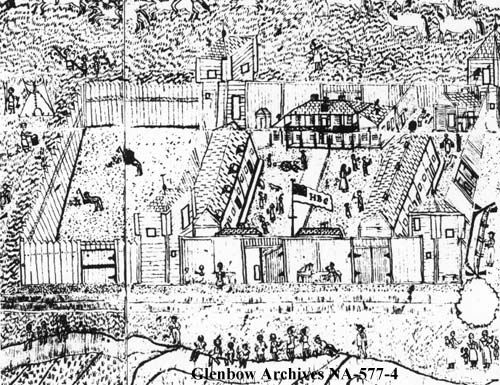
Jean L’Heureux’s hand-drawn 1873 map of the Hudson’s Bay Company Fort at Rocky Mountain House, Alberta. Source: National Archives of Canada via the Glenbow Archives.

In the 1870s, L’Heureux wrote and mapped a geography of Blackfoot lands as well as created a Blackfoot-English dictionary which was used by traders at Fort Calgary. Leading up to the Treaty 7 negotiations, the Lieutenant Governor of the North-West Territories, David Laird, wished for L’Heureux to act as interpreter for the Crown. However, L’Heureux declined as he already had committed to translate for Isapo-muxika (Crowfoot), the Siksiká head chief who was his personal friend.

The Treaty 7 negotiations took place on September 22, 1877. L’Heureux was the official spokesperson for the Siksiká leaders with the Government representatives. During the negotiations, he explained the terms of the treaty to the Blackfoot delegates and provided them with advice. One observer commented that L’Heureux “stood unswervingly with the Indians as an Indian.” When the negotiations concluded, L’Heureux inscribed the names of the Chiefs on the treaty document, validated each of their marks and signed it himself, as a witness. Through L’Heureux, the Chiefs thanked the representatives of the Government of Canada.

Jean L'Heureux

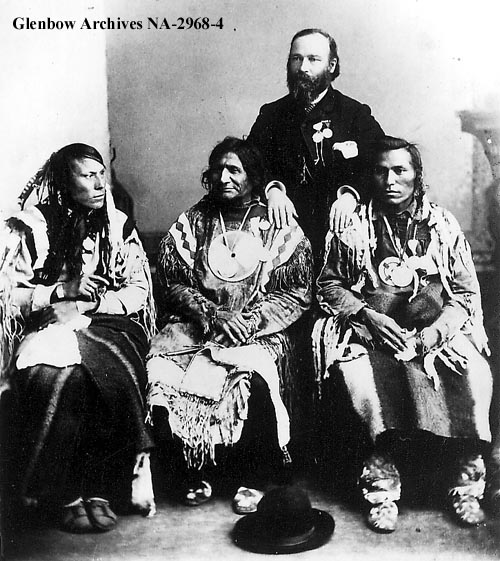
Jean L’Heureux with Blackfoot Confederacy Members: (L to R) One Spot, Blood; Red Crow, Blood; North Axe, Peigan; circa the 1880s. Source: Glenbow Archives.

For the remainder of his life, L’Heureux often interceded on behalf of First Nations people and their struggles with the Government. He was hired by the Department of Indian Affairs in 1881 as an interpreter, a position he held for ten years.  L’Heureux gained the enmity of an Anglican missionary, John Tims, who claimed he showed Catholic favouritism in his work for the Department. When nothing happened with that assertion, Tims accused L’Heureux of immorality on the reserve; he was quickly sacked. No investigation was ever conducted into the allegation.

Destitute and in ill health, L’Heureux lived a nomadic existence for many years. He moved to Father Lacombe’s hermitage at Pincher Creek for a time and then retreated to the foothills where he became a known recluse. Meanwhile, Father Lacombe had built a home for the poor and indigent in Midnapore. After repeated attempts, he managed to convince L’Heureux to move there in 1912. Jean L’Heureux died of old age at the Lacombe Home in 1919 and was buried in its grounds. He is listed in the church records as “a lay missionary.”

{KA}

Note: Treaty 7, the original document, is currently being displayed at Fort Calgary until October 2017: on loan from Library and Archives Canada.