Tag Archives: human-rights

Canada’s Shameful Harvest of Queers in the 60s

Fruit Machine 2

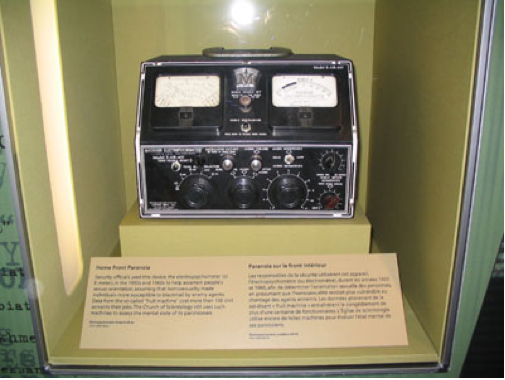
The Fruit Machine at the War Museum in Ottawa (Picture – Fran Rilley)

In the 1950s and 1960s, gay men and lesbians were seen as more than just a social problem, they were also viewed by the Royal Canadian Mounted Police (RCMP) as a national security threat. Cold War paranoia was high in Canada, and anything that resembled ‘otherness’ was deemed a threat to security. Homosexuals were labeled as such because of their ‘character weakness’. This weakness, according to the RCMP, was that they were unstable, self-deceiving, defiant towards society, and should not be entrusted with any government work which required secrecy. Therefore, homosexuals working with the federal government were easy targets to blackmail by Soviet agents, and could potentially reveal state secrets to the enemy.

This translated into reporting on men and women in the civil service, the majority being in Ottawa. The RCMP were looking for a more thorough way to detect homosexuals, or in the old slang ‘fruits’. In 1962, Professor F. Robert Wake, of Carleton University, created a report on a “fruit machine” said to be an efficient and scientific way of detecting homosexuals. The machine would detect the pupil response, breath and heart rates of a subject viewing naked or semi-naked images of women or men. Based on arousal levels, the participant was determined to be either gay or straight.

It was hoped that this would become part of a myriad of homosexual detecting tests for those applying to the government. Starting in 1963, it was used on unsuspecting volunteers who were told it was part of a research study. It was a failure: there were few volunteer test subjects, and the machine was hard to use as it has to be adapted for people with different heights, as well as differently sized pupils and eyeballs. Information about what the test was actually for was leaked and volunteering stopped all together. The “fruit machine” project was ultimately abandoned in 1967.

However, the anti-homosexuality campaign continued, and the negative effects on gays and lesbians cannot be overly stressed. Over 9000 People, including gays, lesbians and some straight civil servants, were harassed, questioned and targeted by the RCMP. Many lost their jobs in government or were demoted. Others were blackmailed into revealing others who were gay or lesbian.  They lost friends and respect from co-workers, or worse.   The Fruit Machine is a relic now of our nation’s shameful treatment towards a group of its own people.

[TM]

Further Information:

Gary Kinsman, “Character Weaknesses” and “Fruit Machines”: Towards an Analysis of the Anti-Homosexual Security Campaign in the Canadian Civil Service, Labour / Le Travail, Vol. 35, (Spring, 1995), pp. 133-161.
Article Stable URL: http://www.jstor.org/stable/25143914

CBC archives: http://www.cbc.ca/archives/categories/society/crime-justice/mounties-on-duty-a-history-of-the-rcmp/rcmps-fruit-machine-to-detect-gays.html

Gary Kinsman and Patrizia Gentile. The Canadian War on Queers: National Security as Sexual Regulation Vancouver: UBC Press, 2010
The Changer and the Changed in Calgary

Calgaryqueerhistory.ca had the good fortune to interview pioneering lesbian singer/songwriter Cris Williamson this week.   She will be performing in Calgary, June 8th at the Scarboro United Church (concert info: here).  The concert will also be a launch of Cris’ 31st album, Pray Tell: Songs of the Soul: 24 original songs released in a 2-CD set.

“I love coming to Calgary,” Cris says, “I grew up in Wyoming and went to school in Denver, so I am a prairie kid ultimately and feel so comfortable at the foot of the Rockies.”

Cris was one of the instigators of the Women’s Music movement which was a major touchstone for lesbian feminist culture in the 70s.  She inspired the creation of Olivia Records, a recording collective of lesbian women who worked outside the music industry.  Olivia Records was a social marketing machine before the internet and recruited women across the continent to function as its distribution network and concert production team.

“Young women now, especially in music, can run right down that road we made, as if that road has been there forever, but we women stood shoulder to shoulder to make that road, and we did it for the next generations – but some of them have no idea that that road had to be made,” Cris remarks.

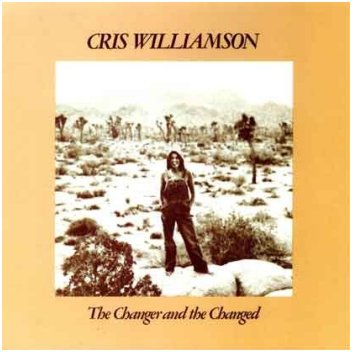
In 1975, Olivia Records released Cris’ The Changer and the Changed, which became one of the best selling independent releases of all time.

williamson-the_changer350

Cris reflects, “the music industry eventually gave us a grudging respect.  We sold records at shows, they didn’t – they sold them in stores; but we couldn’t get into stores!  Eventually we created women’s bookstores and music stores and entirely made a new game.  You know, I would go to music companies and ask about having more women recording artists and they would reply that they already had one woman in their roster of 40 or so artists – they did not notice the disparity.  What we were doing was absolutely revolutionary.”

The success of The Changer and the Changed thrust Cris into the spotlight, and she became something of a lesbian icon.  Cris explains, “it was kind of a double-edged sword, because you had a lot of responsibility.  Women would raise you to iconic stature yet at the same time [the movement] did not want icons, they wanted equality, and they would try to make sure you were not too high on your horse.  So there was a lot of criticism as well as applause and joy – but mostly joy.”

CrisGuitar

Cris recalls, “by word of mouth we were able to fill halls of 1000 – 2000 women who were hungry – really starving – for something that spoke to their lives.  I was amazed.  Women really wanted my work: I was like some dusty jewel at the side of the road that nobody had been interested in before, and then these women, these lesbians, took a huge, fierce interest in my work – I am really grateful.”

Women’s music was an important aspect of the construction of Lesbian Nation, a conscious movement to create safe spaces for women, and women-only spaces and institutions.  “I thought women-only concerts were the thing to do for a while, but I also thought that the eventual goal should be to become part of the world.  And I think it is closer to that now.  But out of that movement came women’s bookstores, women’s clinics, women’s helplines, rape crisis centres – many, many things came out of that focus on ourselves,” Cris explains.

CrisWilliamson

Cris concludes, “over the years, some women have come up to me and said ‘your music saved my life,’  or ‘I thought I was the only one who felt these things’ – which is so powerful.  But music, because of its shape is a kind of liquid, its portable and can be shared – I feel music raises us up.”  [KA]

Invisible: Queer Immigrants in the 1940s and 1950s

Crowds queue up outside the Canadian government Immigration office in London, England, during the 1956 immigration rush.

Crowds queue up outside the Canadian government Immigration office in London, England, during the 1956 immigration rush.

Canadian immigration history lacks any details on Queer immigration before the 1980s, mostly due to fear of being refused entry or even deportation. Before the 1950s, officials including border guards were given the power to exclude people who were coming to Canada for any “immoral purpose” – homosexuality was included in this definition.

The Immigration Act of 1952 was the first time the law directly referred to homosexuality as being grounds for being excluded entry into Canada. If the new immigrants were found to be gay or lesbians, they could be deported if they  “practice[d], assiste[d] in the practice of or share[d] in the avails of … homosexualism.” (1952 Immigration Act section 19). This was in keeping with the criminal law and Canada’s response to cold war paranoia about the ‘other’ – be they homosexuals or communists. Times and attitudes changed and the Immigration Act was repealed in 1977 where gay/lesbians immigrants were allowed to enter the country.

There are no known statistics of this time period on how or who was refused entry for being a ‘homosexual’. This lack of information has created a large hole in understanding what the Queer immigrants experience was in coming to Canada. If you are a member of the queer community and immigrated to Canada in the 1940s or 1950s, we’d love to hear your story. Please contact us!

For further information see Nicole LaViolette, “Coming Out to Canada: the Immigration of Same Sex Couples Under the Immigration and Refugee Protection Act” (2004) 49 McGill Law Journal

Canadian Council for Refugees, “A Hundread Years of Immigration 1900 -1999

Timeline: Same-sex rights in Canada, CBC News January 12, 2012

(TM)

Calgaryqueerhistory.ca welcomes researcher Tereasa Maillie to our collective.  Tereasa brings extensive experience in oral history practice as well as an enthusiasm for researching the queer immigrant experience.  She wrote today’s post and articles on this website will be identified by the author’s initials going forward (KA).