Tag Archives: Doug Young

Dying Young

{This is our last post in 2025! We at the Calgary Gay History Project wish you a warm and festive holiday season – Kevin}

In the history of Calgary’s queer community, few figures loom as large—yet remain as quietly influential—as Doug Young. Born in 1950 near Taber, Alberta, and raised in both Taber and Medicine Hat, Young’s life was marked by a deep commitment to social justice and community building that helped shape the early gay rights movement in Calgary.

Young’s academic journey took him from Medicine Hat College to the University of Calgary, preparing him for a lifetime of advocacy and community service. Before his activism fully took hold, he worked with the Alberta Service Corps and Canada Customs—experiences that undoubtedly broadened his perspective on community needs.

But it was in the late 1970s and 1980s that Doug Young became one of Calgary’s most active voices for gay rights. At a time when queer communities were often hidden and marginalized, Young stepped forward into leadership roles that were both challenging and essential. He served as President of Gay Information and Resources Calgary (GIRC) from 1977 to 1979, and continued on its board through 1981. Under his stewardship, GIRC became a vital resource—offering support, outreach, peer counselling, and serving as one of the few community touchpoints for queer people in the city.
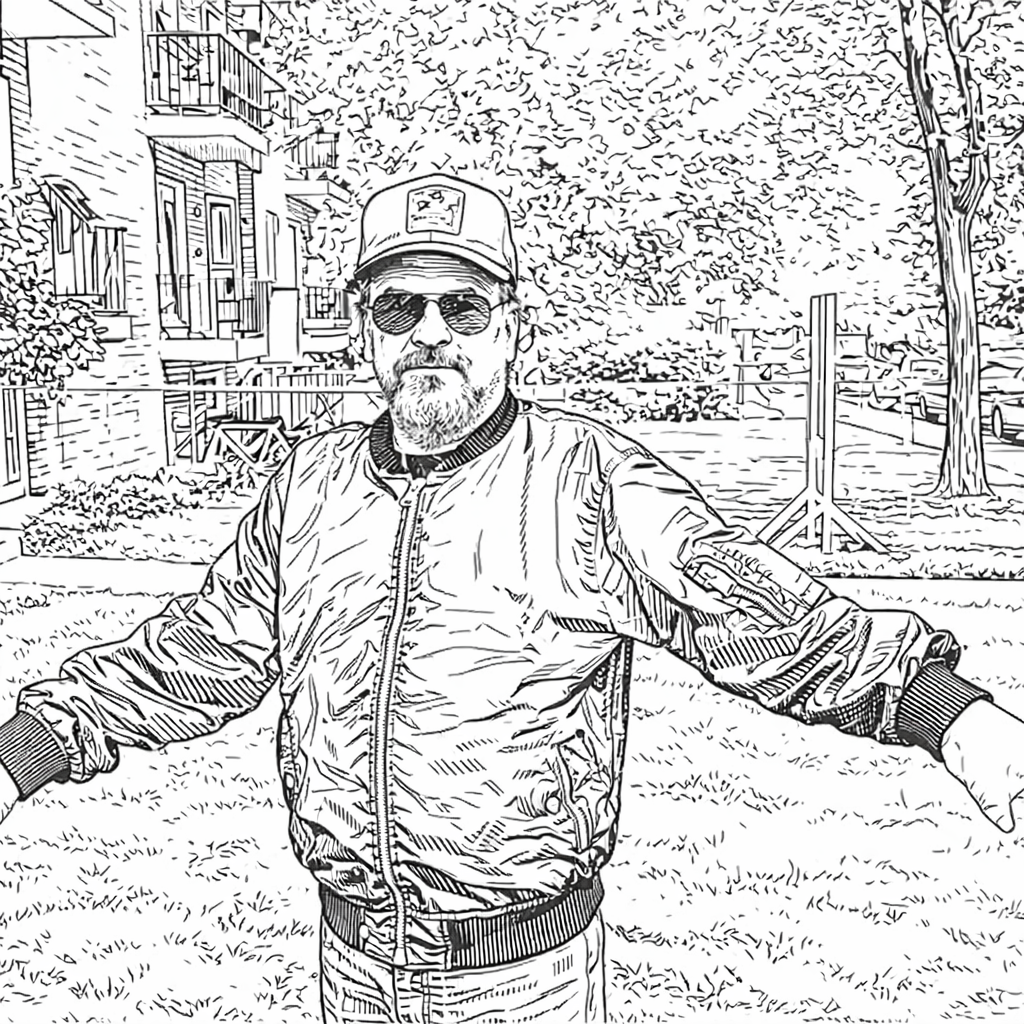
Line drawing of Doug Young derived from a photo in the Calgary Herald, June 14, 1994

Young didn’t limit his work to one organization. He was actively involved with the Alberta Lesbian and Gay Rights Association, AIDS Calgary, Gay and Lesbian Legal Advocates Calgary (GALLAC), the Right to Privacy Committee, and the Gay and Lesbian Community Police Liaison Committee—a network of groups focused on legal rights, health advocacy, safety, and community relations. This breadth of engagement speaks to both the urgency of the issues at the time and Young’s own drive to see real, sustained progress.

Young was an active spokesperson for the gay community and notably contributed to queer history through his extensive records. His personal papers were sorted and saved by Young’s friend John Cooper. They are now housed in the Glenbow Archives, which includes a remarkable hand-drawn map of gay spaces in the Beltline from the mid-1980s.
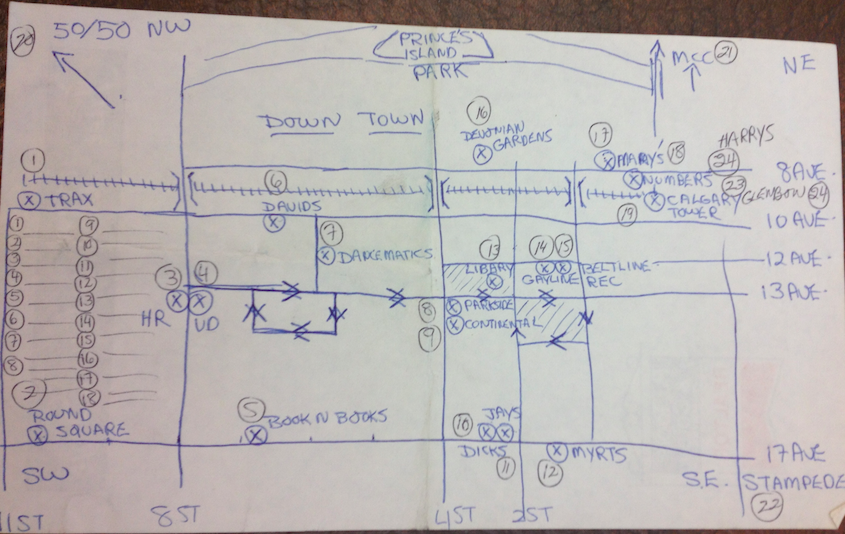
Doug Young personal papers, Glenbow Archives M-8397-1.

Perhaps most poignantly, Young’s leadership bridged the early gay rights era with the inevitable rise of the HIV/AIDS crisis. Community groups like AIDS Calgary grew out of activist networks in which Young was involved, helping mobilize volunteers, advocate, educate, and provide basic support during a time when fear and stigma often overshadowed empathy and action.

Doug Young passed away on April 15, 1994, from AIDS-related complications, a loss felt deeply across the community he helped nurture. While he did not live to see many of the legal protections and cultural shifts that came later, his efforts laid the necessary groundwork for Calgary’s queer organizations, public awareness efforts, and ongoing fights for equality.

At this dark time of year, I like to light candles to call back the light. I also light candles to remember those we’ve lost. Young would have been 75 in 2025 if he had lived, and I’m positive many other organizations would have benefited from his activism. The contributions of individuals like Doug Young are vital reminders of how far the community has come and how central grassroots leadership can make all the difference.

{KA}
A Windi Month in YYC

During February here, the chinook winds blow… In honour of this blustery month, the Calgary Gay History Project focuses on activist and musician Windi Earthworm (b. 1950) and his impact on our city. This week, we will update Windi’s story from Our Past Matters. Then, over the next few weeks, we will explore more about the activist’s life—details that have blown in since the book was published in 2018.

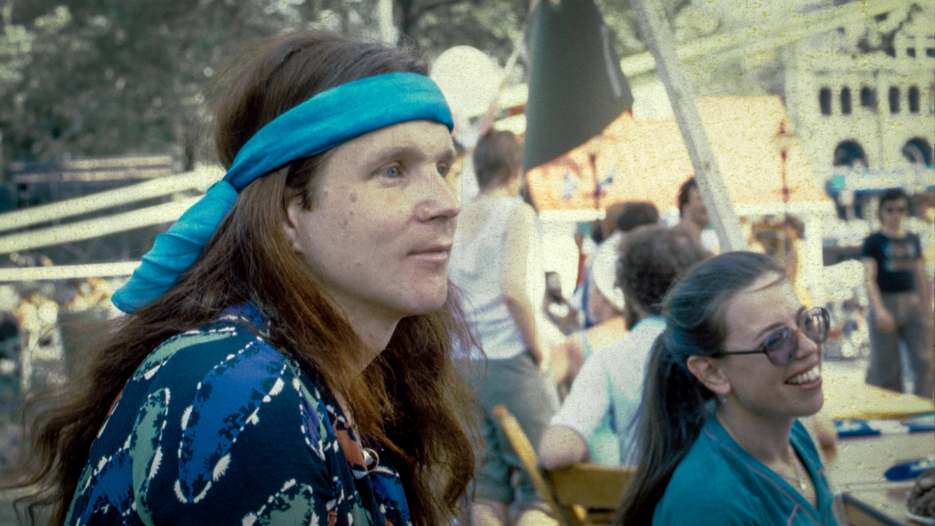
Windi Earthworm circa 1979.  Photo: François Couture from kersplebedab.com

Windi Earthworm, an American gay artist and activist, moved to Calgary in 1973. He was notable for his gender non-conforming dress and street music. He also was a dedicated agitator who had the conviction of his beliefs. For example, Windi chained himself to a marble pillar in the Palliser Hotel during a Progressive Conservative party convention in 1976 to protest the absence of legislation protecting homosexuals from discrimination.

Windi grew up in Seattle and was filled with wanderlust. In the summer of 1973, he swept into Banff and got a job at the youth hostel. He began a relationship with his coworker, Calgary artist John Evans, who at the end of the season invited Windi to move back with him to Calgary. They lived in an apartment in the Thomson Brothers Block on Eighth Avenue. Through mutual friends, Windi met People’s Liberation Coalition’s Myra “My” Lipton in 1974, and they made a powerful connection. Despite both being gay, My married Windi the next year, so he could remain in Canada. After the ceremony, they went for falafels with their marriage witnesses to celebrate. My later moved into the Thomson Brothers Block herself, where she and Windi saucily broke the wall between their two apartments, creating a new internal doorway. 

Windi sent this wedding photo to his friend Rex Leonard in 1975.

Later, Windi and My were part of a four-person protest group who took guerrilla action against an anti-gay skit. The sketch was included in the nightly performance of a band called The Dandies in the Four Seasons Hotel’s Scotch Room. One evening in June, when the skit was about to be unleashed, Windi and his friends rushed the stage; My took over the microphone. They explained to the surprised audience why they were offended. As the hotel bouncers dragged them away, they asked the manager if she had ever been to a gay bar. When she replied, “no,” they told her they were going to invite all of their friends and turn the Scotch Room into a gay bar the following night if the performance was not changed. It was changed.

The success of their intervention made them critically aware that Calgary needed a gay activist group, particularly since the People’s Liberation Coalition had gone dormant. Gay Information Resources Calgary (GIRC) started shortly thereafter. The group’s first chairperson (on paper) was Windi Earthworm. 

Activist Doug Young (1950-1994), in a 1980 interview, remembered Windi hanging out in the Kings Arms Tavern in the mid-70s, and always thought him a bit strange with his long blue jean skirts. He noted that Windi did not stay long at GIRC as the other people who helped set it up thought he was crazy and eventually squeezed him out.

Quebec Filmmaker Claude Ouellet recalled meeting Windi in 1976 when he was a young person hitchhiking across the country. Finding himself in Calgary, without money, he ended up meeting the troubadour on the Eighth Avenue Mall. Windi at that time was taking in street kids who needed shelter. Windi sheltered Claude and his friend for the night in his apartment. Claude thought the denim skirt and cross-dressing flare was courageous for Calgary in 1976.

Later in the 1980s, when both lived in Montreal, Claude made a documentary about Windi as a year-end film school project. At that time, Windi was central to that city’s Anglo-anarchist left. He often was hassled by the Montreal police, or worse, for being a strolling musician, despite being licensed to be. He was also seen occasionally in press coverage being dragged away from peace demonstrations.

Claude Ouellet’s documentary about Windi: “Ragged Clown.”

Described as a caring, unique, and challenging person, Windi died from AIDS-related causes on July 16, 1993, in Victoria under the care of My Lipton. Windi’s courage and artistry are remembered fondly on a memorial website: “There’s a Fire Truck on My Ceiling: Windi Earthworm Remembered.”

{KA}

Historic Calgary Week

July is one of our favourite times of year—not for the über-famous Calgary Stampede happening currently, but for Historic Calgary Week, running July 23-August 2, 2021. It is the signature event for the Chinook Country Historical Society, who program engaging history events all year long. An incredible number of volunteer hours go into making Historic Calgary Week happen; the 2021 iteration is cleverly subtitled: Unmasking Our History.

The Calgary Gay History Project’s Kevin Allen was invited on a mapmakers panel discussion on Tuesday, July 27 at 7:00 PM.

Behind the Scenes with the Mapmakers will tackle how one maps a city’s unknown histories. Kevin is joined by Calgary Through the Eyes of Writers Author Shaun Hunter and the Calgary Atlas Project’s Jim Ellis. They will chatter about charting the city’s cultural landscape, using maps to (sometimes literally) pin down the past. The panel will be moderated by Heritage Calgary’s Asia Walker and hosted online by the Calgary Public Library.

Register for Behind the Scenes with the Mapmakers: here. Registration is free, but spaces are limited.

Gay Activist Doug Young’s map of the 1980s Beltline: Glenbow Archives M-8397-1.

{KA}