Tag Archives: Calgary

Holiday Reads from @YYCGayHistory

Calgary-Gay-History-Project-adjacent author, Gordon Sombrowski, launched What Narcissus Saw this month. It is the second short story collection from the acclaimed Fernie/Calgary based writer. Holiday shoppers can find What Narcissus Saw at a handful of independent bookstores and online. His Calgary launch party at Loft112 was on Saturday, December 11th.
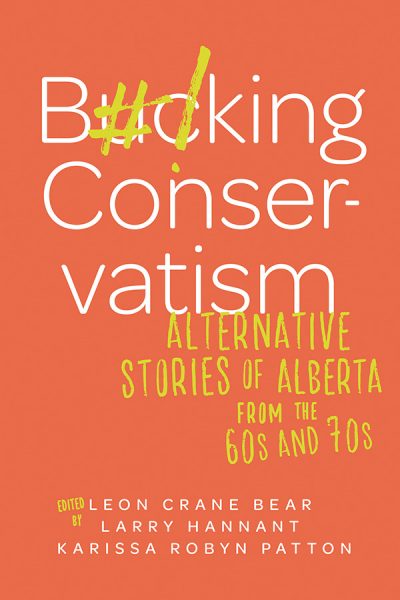
Athabasca University Press just released Bucking Conservatism: Alternative Stories of Alberta from the 1960s and 1970s edited by Leon Crane Bear, Larry Hannant, and Karissa Robyn Patton. Calgary Gay History Project researchers Nevena Ivanović and Kevin Allen contributed a chapter to the book with editor Larry Hannant called, Gay Liberation in Conservative Calgary. Bucking Conservatism was produced under a creative commons license and is free to read online or download.
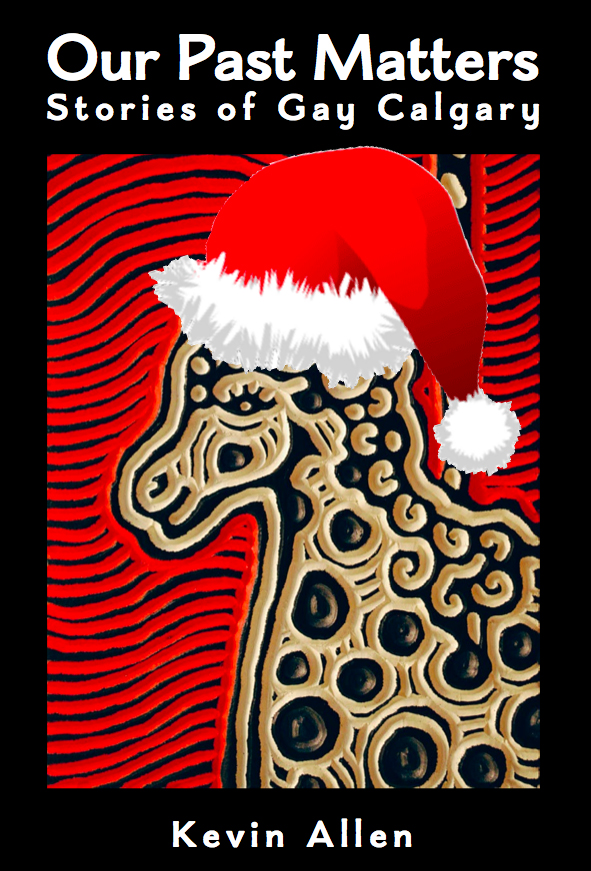
Our Past Matters has had another stellar year. It is now a textbook in two University of Calgary courses—one in Social Work, the other in Gender & Sexuality Studies—despite not being an academic read! The Our Past Matters ebook also had a short run as an Amazon #1 Best Seller in its category.

Readers note: this is our last post for the calendar year. Thank you for your ongoing support and enthusiasm for local queer history. Consider these books as our good read recommendations for this holiday season. If you enjoy them, leave reviews on sites such as GoodReads and Amazon for other readers to discover.

Happy reading!
{KA}

Gay men are smarter than straight men – so says history.

{The Calgary Gay History Project is revisiting its most impactful blog posts—now numbering in the hundreds—since its inception nine years ago. Gay men are smarter than straight men—so says history has been, hands down, its most popular post since it was published on July 18, 2013. It also has a notable time reference to the big Calgary flood.}

The sixties were a boom-time for psychometric assessment, and in particular Intelligence Quotient (IQ) research. Perhaps one of the most famous and controversial papers of the time, was Arthur Jensen’s article, published in 1969, How Much Can We Boost IQ and Scholastic Achievement? It concluded that 80% of the variance in IQ in the population studied was the result of genetic factors due to race.

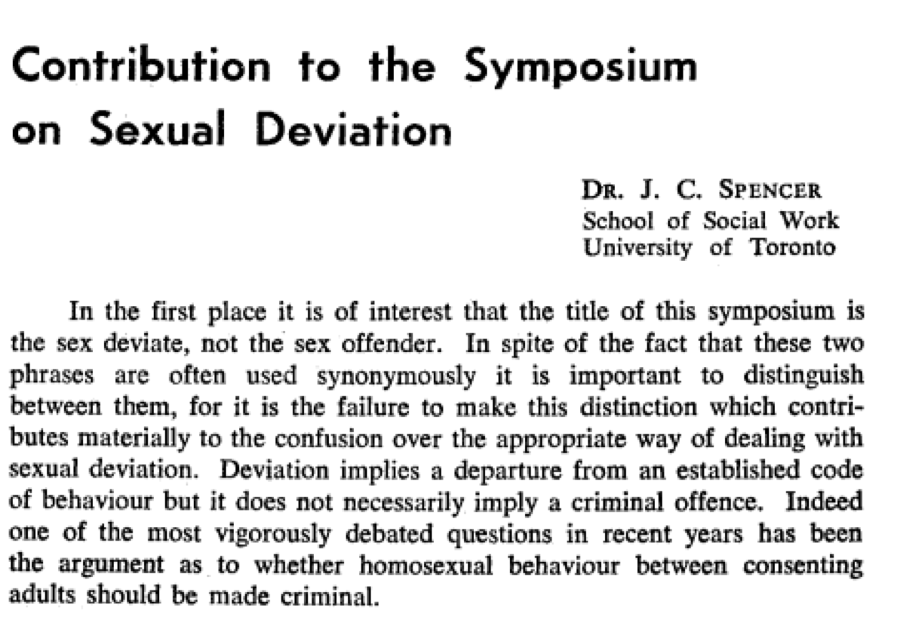
Similar lines of research were done on homosexuals. In Canada, a University of Toronto Social Work professor, John C. Spencer, published an article in the Canadian Journal of Corrections (1961). He looked at 132 sexual offenders in the Toronto Forensic Clinic. These incarcerated individuals were categorized into three groups: exhibitionists, pedophiles and homosexuals. Spencer concluded that while exhibitionists and pedophiles had essentially normal IQ’s, the average intelligence of the homosexual offender was significantly higher than average (IQ of 114 vs. the population average of 100). Reading between the lines, he may have been an early homosexual rights advocate as he mused openly about criminal law being a vehicle for moral condemnation (see article image below).

Other researchers confirmed the IQ findings. Renée Liddicoat, published A Study of Non-Institutionalized Homosexuals, also in 1961, and found that South African homosexual men and women had significantly higher verbal IQ scores than that of her heterosexual control group.

A 1949 study of 100 neurotic homosexual and 100 neurotic heterosexual soldiers similarly found evidence of higher intelligence scores and educational achievement amongst the gay soldiers (Winterstein-Lambert, E. Bulletin de la Faculté de Médicine de Instanbul). In fact, this paper’s conclusion was that the gay community did not need psychological treatment, rather job placement support in order to deal with neurotic symptoms.

However, like many IQ studies there is a potential for cultural bias in the research as well as other sources of error. Some studies showed no difference, and at least one showed reduced intelligence in homosexual men. A quirky finding in many intelligence studies was the homosexual male’s sensitivity to art and culture. Silvio Marone, in the International Journal of Sexology (1954) wrote: “homosexual behaviour is not rare among artists, and homosexuality has a great influence on art.”

Finally, speaking of great influences, the Calgary Public Library’s Magazine’s and Newspapers department was devastated by the recent flooding in Southern Alberta. Many of the articles researched for this website have come from that basement department (such as: this one). We are really saddened by this particular loss. Individuals interested in donating to the Library’s flood recovery fund can find more information: here.

{KA}

A Black Orchid in YYC

Heritage Calgary commissioned a research project on a historic house known as the Arthur Bishop Residence in Crescent Heights. From 1995-2000, it was also known as the Black Orchid Manor, one of Calgary’s few gay-friendly B&Bs. 

Researcher and writer Kerri Rubman discovers the hidden history of the house, in this Heritage Calgary blog post, featuring an interview with Don Bastian, an influential figure in Calgary’s gay history and one of the owners of the former Black Orchid Manor.

Don Bastian, Winner of the 1995 National Leather Association’s top title: Mr. NLA International. Photo: Stevie Anderson in CLUE! Magazine, November 1994.

{KA}