
{This is part one in our Winter Olympic Series, written by William Bridel. Enjoy!}
Brian James Pockar was born in Calgary on October 27, 1959. He began skating as a young boy at the Calgary Winter Club. According to Skate Guard, a figure skating history blog, in his early days on Winter Club ice, a coach, Winnie Silverthorne, approached Pockar’s parents after noticing his “daredevil-ness” and natural athleticism. While initially interested in ice hockey, Pockar chose to focus on figure skating and quickly rose through the competitive ranks within Canada.
At the age of 12, Pockar competed at his first national championships. Four years later, he won bronze at the 1976 World Junior Figure Skating Championships, and two years after that, became the national men’s champion of Canada for the first time. At the completion of his amateur competitive career, Pockar was a three-time national champion. He had also won several international medals, most notably the bronze at the 1982 World Figure Skating Championships. Pockar’s third-place finish in 1982 launched a 14-year medal-winning streak by Canadians in the men’s event at the global competition.
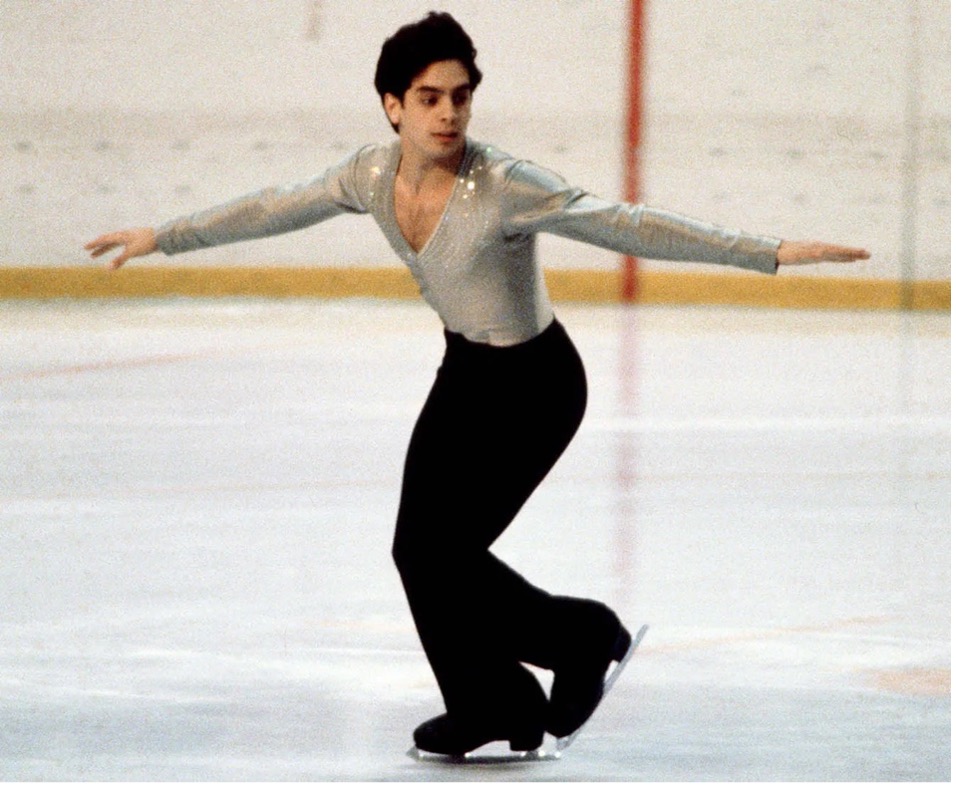
Pockar was the lone Canadian entry in the men’s event at the 1980 Olympic Winter Games in Lake Placid, New York, a place he earned having won his third national title earlier that year. He finished 12th in all portions of the Olympic competition, an event won by the incomparable Robin Cousins of Great Britain. Pockar remains the last male from Calgary to compete in the Olympic Winter Games in figure skating. Pockar was also involved in the 1988 Calgary Olympics, credited as the artistic director of figure skating performances in the Closing Ceremonies.
As a young boy in the sport at the time of Pockar’s greatest successes, Brian was my idol. I marvelled at his technical abilities, but even more so, I loved his musicality, his style, his flair. I was nine when he finished third at the 1982 World Championships. I could execute his entire medal-winning performance in the basement of my family home in my sock-feet. The many triples he completed in his program? Well, those were only imagined in my rendition…but I knew the order of elements by memory and believed I “was” Brian Pockar in those moments. I also most certainly had a crush on him. He was a beautiful man. As Ryan Stevens of Skate Guard described him, he was “like the romantic lead in a silent movie.”
Frequently described as a private person, Pockar never declared his sexuality publicly, which was not unusual in the 1970s and ‘80s in sport generally, and in figure skating specifically. Only Great Britain’s John Curry, the 1976 Olympic champion in the men’s event, had discussed his sexuality in mainstream media at the time. According to sociologist and historian Dr. Mary Louise Adams, the first time Pockar’s sexuality was likely specifically mentioned publicly was in a media story published in 1998 about Brian Orser, another great Canadian figure skater. Orser was quoted as saying he was concerned about his own sexuality impacting professional opportunities in and outside of skating and used Pockar as an example. According to Orser, Pockar was fired from his broadcasting position with CTV—a role he held for several years after he retired from amateur competition—when network executives learned he was gay.
Pockar died of AIDS-related illness in Calgary on April 28, 1992. He was 32 years old. According to a statement issued by a family friend at the time of his passing, “Brian wanted to be remembered for his accomplishments in life and not for the cause of his death” (Maki & Toneguzzi, 1992, p. D1). Honouring that statement here, in addition to his many achievements in the sport noted above, Pockar is also credited with landing the first-ever one-foot triple Salchow/double flip combination in international competition—which is wildly difficult! He was inducted into the Alberta Sport Hall of Fame in 1989 and posthumously into the Skate Canada Hall of Fame in 2012. Per one of Pockar’s final wishes, a bursary was established in his name to help support young male figure skaters in the province—a bursary still given out annually.
Brian Pockar: Olympian. World medalist. Choreographer. Broadcaster. Calgarian.
{WB}
Sources
Adams, M. L. (2011). Artistic impressions: Figure skating, masculinity, and the limits of sport. University of Toronto Press.
Skate Alberta/Northwest Territories/Nunavut. (n.d.). About: Athlete Awards. https://skateabnwtnun.ca/about/awards-2/athlete-awards-athlete-funding/
Maki, A., & Toneguzzi, M. (1992, April 30). Friends mourn death of Pockar. Calgary Herald, D1.
Stevens, R. (n.d.) Brian Pockar. Skate Guard: Figure Skating History Blog. https://www.skateguardblog.com/p/brian-pockar.html?m=0


 Calgary Gay History