Tag Archives: Calgary

From the Calgary Winter Club to Olympic Ice

{This is part one in our Winter Olympic Series, written by William Bridel. Enjoy!}

Brian James Pockar was born in Calgary on October 27, 1959. He began skating as a young boy at the Calgary Winter Club, a club he would represent through the entirety of his skating career. According to Skate Guard, a figure skating history blog, in his early days on Winter Club ice, a coach, Winnie Silverthorne, approached Pockar’s parents after noticing his “daredevil-ness” and natural athleticism. While initially interested in ice hockey, Pockar chose to focus on figure skating and quickly rose through the competitive ranks within Canada.

At the age of 12, Pockar competed at his first national championships. Four years later, he won bronze at the 1976 World Junior Figure Skating Championships, and two years after that, became the national men’s champion of Canada for the first time. At the completion of his amateur competitive career, Pockar was a three-time national champion. He had also won several international medals, most notably the bronze at the 1982 World Figure Skating Championships. Pockar’s third-place finish in 1982 launched a 14-year medal-winning streak by Canadians in the men’s event at the global competition.

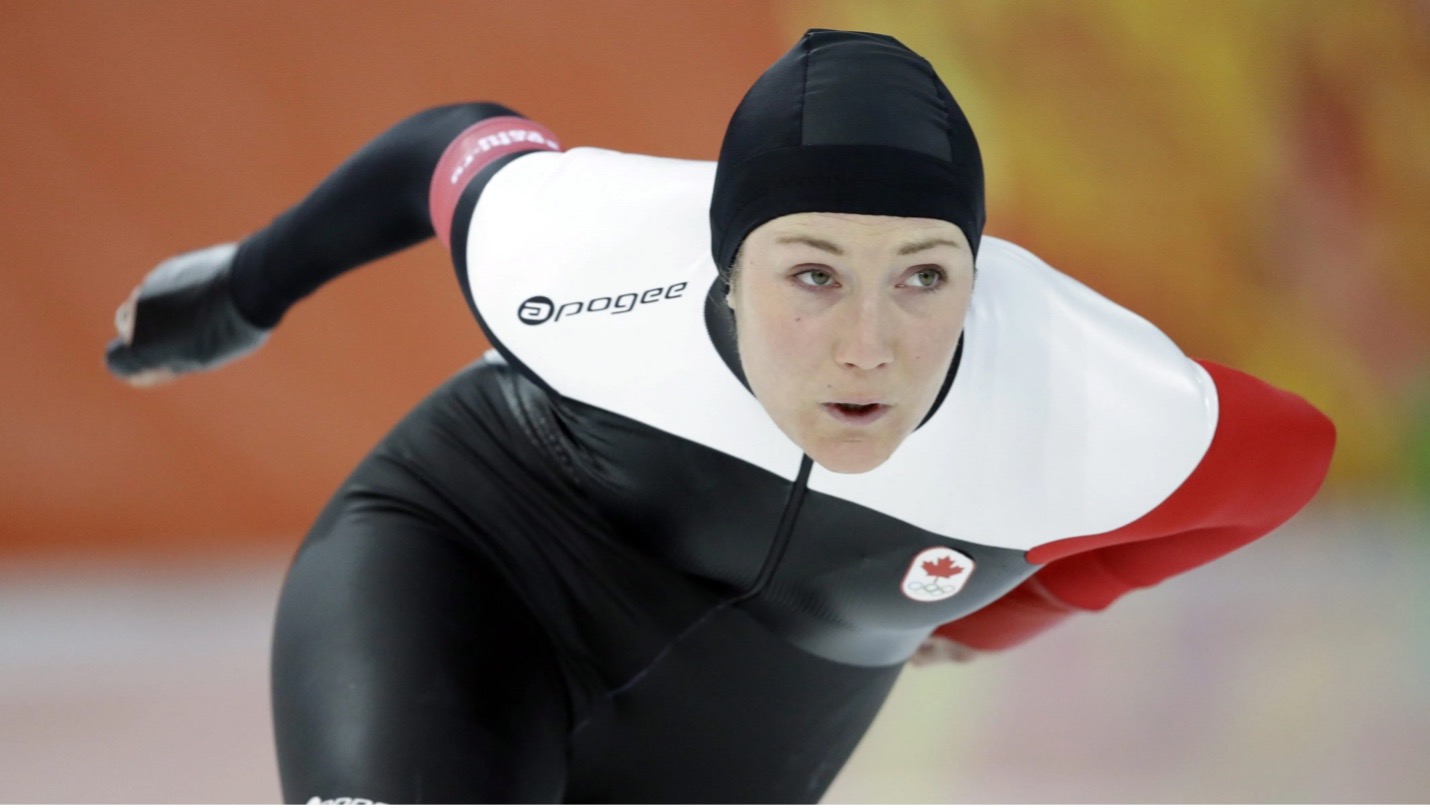
Pockar competing at the 1980 Olympic Winter Games. Photo retrieved from the Canadian Olympic Committee’s website.

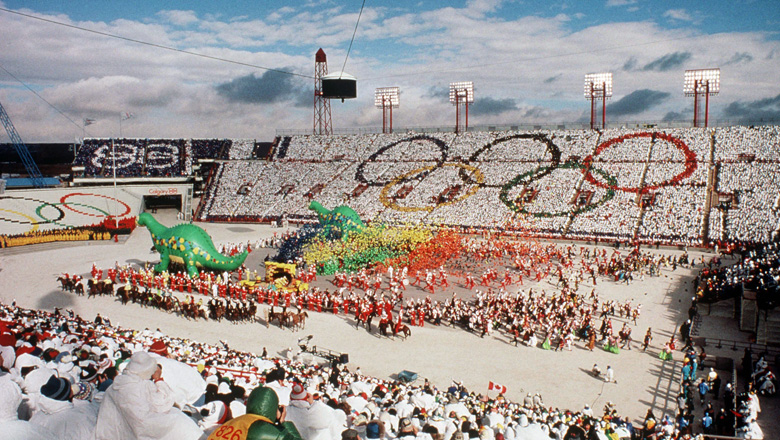
Pockar was the lone Canadian entry in the men’s event at the 1980 Olympic Winter Games in Lake Placid, New York, a place he earned having won his third national title earlier that year. He finished 12th in all portions of the Olympic competition, an event won by the incomparable Robin Cousins of Great Britain. Pockar remains the last male from Calgary to compete in the Olympic Winter Games in figure skating. Pockar was also involved in the 1988 Calgary Olympics, credited as the artistic director of figure skating performances in the Closing Ceremonies.

As a young boy in the sport at the time of Pockar’s greatest successes, Brian was my idol. I marvelled at his technical abilities, but even more so, I loved his musicality, his style, his flair. I was nine when he finished third at the 1982 World Championships. I could execute his entire medal-winning performance in the basement of my family home in my sock-feet. The many triples he completed in his program? Well, those were only imagined in my rendition…but I knew the order of elements by memory and believed I “was” Brian Pockar in those moments. I also most certainly had a crush on him. He was a beautiful man. As Ryan Stevens of Skate Guard described him, he was “like the romantic lead in a silent movie.”

Frequently described as a private person, Pockar never declared his sexuality publicly, which was not unusual in the 1970s and ‘80s in sport generally, and in figure skating specifically. Only Great Britain’s John Curry, the 1976 Olympic champion in the men’s event, had discussed his sexuality in mainstream media at the time. According to sociologist and historian Dr. Mary Louise Adams, the first time Pockar’s sexuality was likely specifically mentioned publicly was in a media story published in 1998 about Brian Orser, another great Canadian figure skater. Orser was quoted as saying he was concerned about his own sexuality impacting professional opportunities in and outside of skating and used Pockar as an example. According to Orser, Pockar was fired from his broadcasting position with CTV—a role he held for several years after he retired from amateur competition—when network executives learned he was gay.

Pockar died of AIDS-related illness in Calgary on April 28, 1992. He was 32 years old. According to a statement issued by a family friend at the time of his passing, “Brian wanted to be remembered for his accomplishments in life and not for the cause of his death” (Maki & Toneguzzi, 1992, p. D1). Honouring that statement here, in addition to his many achievements in the sport noted above, Pockar is also credited with landing the first-ever one-foot triple Salchow/double flip combination in international competition—which is wildly difficult! He was inducted into the Alberta Sport Hall of Fame in 1989 and posthumously into the Skate Canada Hall of Fame in 2012. Per one of Pockar’s final wishes, a bursary was established in his name to help support young male figure skaters in the province—a bursary still given out annually.

Brian Pockar: Olympian. World medalist. Choreographer. Broadcaster. Calgarian.

{WB}

Sources

Adams, M. L. (2011). Artistic impressions: Figure skating, masculinity, and the limits of sport. University of Toronto Press.

Skate Alberta/Northwest Territories/Nunavut. (n.d.). About: Athlete Awards. https://skateabnwtnun.ca/about/awards-2/athlete-awards-athlete-funding/

Maki, A., & Toneguzzi, M. (1992, April 30). Friends mourn death of Pockar. Calgary Herald, D1.

Stevens, R. (n.d.) Brian Pockar. Skate Guard: Figure Skating History Blog. https://www.skateguardblog.com/p/brian-pockar.html?m=0

Welcome William!

Thrilled to be a part of the Calgary Gay History Project, Dr. William Bridel brings a sociological lens to queer history, with a particular interest in sport, physical activity, and health. William completed his PhD at Queen’s University in 2011, accepted a postdoctoral research position at the University of Alberta from 2011-2012, and then moved to Ohio to teach at a liberal arts college named Miami University of Ohio. He moved to our city in the summer of 2014 to begin work at the University of Calgary. He is currently the Senior Associate Dean, Academic Programs, and an Associate Professor in the Faculty of Kinesiology.

William Bridel. Photo credit: @rising_solstice_photography

Having been involved in sport and physical activity most of his life and experiencing both the benefits of and barriers to participation, William and his research team have, over the years, explored 2SLGBTQIA+ inclusion in various sports historically and in contemporary times. Of particular interest to us is his ongoing research project on the role of sport in Calgary’s queer history.

In October 2025, we posted some of his writing on Calgary’s queer hockey history. To coincide with the 2026 Olympic Winter Games (OWG), which run from Friday, February 6 to February 22, William will be sharing a series of posts featuring queer Calgarians who have competed in past Olympic Winter Games—as well as one that will focus on the 1988 OWG, held here in Calgary.

{WB}

Dying Young

{This is our last post in 2025! We at the Calgary Gay History Project wish you a warm and festive holiday season – Kevin}

In the history of Calgary’s queer community, few figures loom as large—yet remain as quietly influential—as Doug Young. Born in 1950 near Taber, Alberta, and raised in both Taber and Medicine Hat, Young’s life was marked by a deep commitment to social justice and community building that helped shape the early gay rights movement in Calgary.

Young’s academic journey took him from Medicine Hat College to the University of Calgary, preparing him for a lifetime of advocacy and community service. Before his activism fully took hold, he worked with the Alberta Service Corps and Canada Customs—experiences that undoubtedly broadened his perspective on community needs.

But it was in the late 1970s and 1980s that Doug Young became one of Calgary’s most active voices for gay rights. At a time when queer communities were often hidden and marginalized, Young stepped forward into leadership roles that were both challenging and essential. He served as President of Gay Information and Resources Calgary (GIRC) from 1977 to 1979, and continued on its board through 1981. Under his stewardship, GIRC became a vital resource—offering support, outreach, peer counselling, and serving as one of the few community touchpoints for queer people in the city.

Line drawing of Doug Young derived from a photo in the Calgary Herald, June 14, 1994

Young didn’t limit his work to one organization. He was actively involved with the Alberta Lesbian and Gay Rights Association, AIDS Calgary, Gay and Lesbian Legal Advocates Calgary (GALLAC), the Right to Privacy Committee, and the Gay and Lesbian Community Police Liaison Committee—a network of groups focused on legal rights, health advocacy, safety, and community relations. This breadth of engagement speaks to both the urgency of the issues at the time and Young’s own drive to see real, sustained progress.

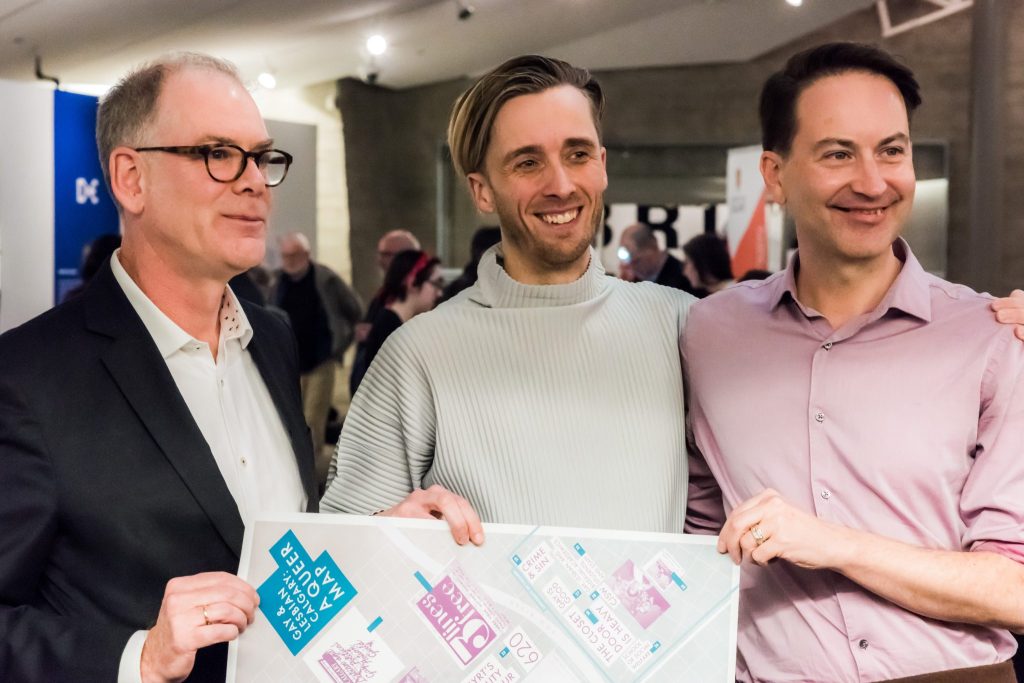
Young was an active spokesperson for the gay community and notably contributed to queer history through his extensive records. His personal papers were sorted and saved by Young’s friend John Cooper. They are now housed in the Glenbow Archives, which includes a remarkable hand-drawn map of gay spaces in the Beltline from the mid-1980s.

Doug Young personal papers, Glenbow Archives M-8397-1.

Perhaps most poignantly, Young’s leadership bridged the early gay rights era with the inevitable rise of the HIV/AIDS crisis. Community groups like AIDS Calgary grew out of activist networks in which Young was involved, helping mobilize volunteers, advocate, educate, and provide basic support during a time when fear and stigma often overshadowed empathy and action.

Doug Young passed away on April 15, 1994, from AIDS-related complications, a loss felt deeply across the community he helped nurture. While he did not live to see many of the legal protections and cultural shifts that came later, his efforts laid the necessary groundwork for Calgary’s queer organizations, public awareness efforts, and ongoing fights for equality.

At this dark time of year, I like to light candles to call back the light. I also light candles to remember those we’ve lost. Young would have been 75 in 2025 if he had lived, and I’m positive many other organizations would have benefited from his activism. The contributions of individuals like Doug Young are vital reminders of how far the community has come and how central grassroots leadership can make all the difference.

{KA}