Tag Archives: bisexual

The Golden Age of Gay Bars in YYC

{The Calgary Gay History Project is revisiting its most impactful blog posts—now numbering in the hundreds—since its inception nine years ago. The Golden Age of Gay Bars in YYC has been the source of much nostalgia since it was published on September 22, 2017. It recounts a time of oppression, community, possibility and camaraderie.}

Calgary was booming in the 70s. The city’s population increased about 50% in those 10 years. Club Carousel, the only gay club at the beginning of the decade saw its popularity wane as commercial gay bars opened in the city. The owners and operators had more capital to invest in their emerging discotheques, and the growing gay community flocked to them.

The Parkside Continental ran from 1973-1986 and was located at the corner of 13th Avenue and 4th Street SW (where Shelf Life Books is currently). The Parkside was named after a famous gay tavern in Toronto. Vance Campbell, a businessman and gay bar owner from Vancouver moved to Calgary to start the Parkside with local partners.

In the early years, there were provincial regulations about food being served with alcohol at bars. Rudy Labuhn, who was initially a DJ at the club and then manager, remembered that when the Parkside began they served 50 cent burgers to all drinkers.  He explained that the Province also limited the amount of recorded music that could be played. Fortunately, a straight bar called Lucifer challenged those rules successfully ushering in the age of disco to Calgary. Interestingly, the bar would end most nights with a song that was decidedly more downtempo: Broadway singer Maureen McGovern’s song, “The Continental.”
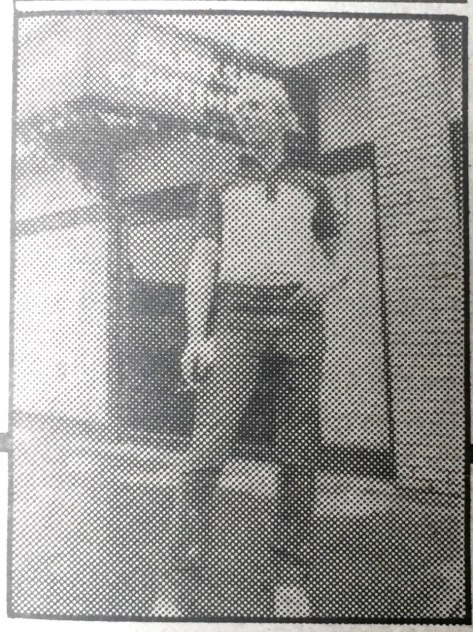
Vance

A grainy image of Vance Campbell in front of the Parkside Continental from the Body Politic, Sept. 1980.

The Parkside expanded upstairs creating a second bar called The Green Room. The Imperial Sovereign Court of the Chinook Arch in April 1976 was founded there; their first coronation followed in January 1977 at the Holiday Inn Downtown. Drag legend, Sandy St. Peters who grew up in Calgary and lived and performed across Canada, entertained occasionally at the Parkside. After a big Saturday night at the bar, she would run across the street to campily welcome churchgoers arriving Sunday morning for early service at the First Baptist Church. In addition to drag performances, Eartha Kitt famously did a highly regarded concert one night in the Green Room.
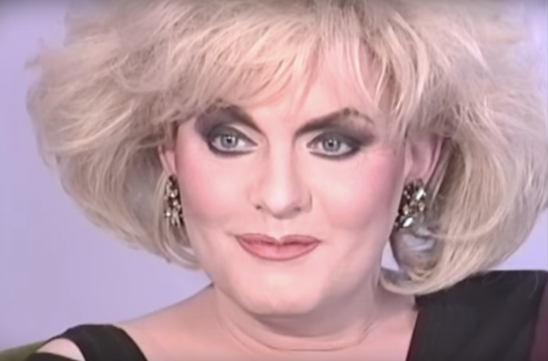
Screen Shot 2017-09-22 at 12.46.50 PM

Sandy St. Peters (1953-2001). Image Source: YouTube

Vance Campbell proved to be a divisive figure at times publicly opposing the local gay activist community, which revolved around Gay Information & Resources Calgary (GIRC), headquartered only one block away. He was described by the Body Politic in 1980 as one of the power brokers in the gay community “confident enough of his position to write to the mayor and counter GIRC’s claim that Calgary could face a gay rights march.”

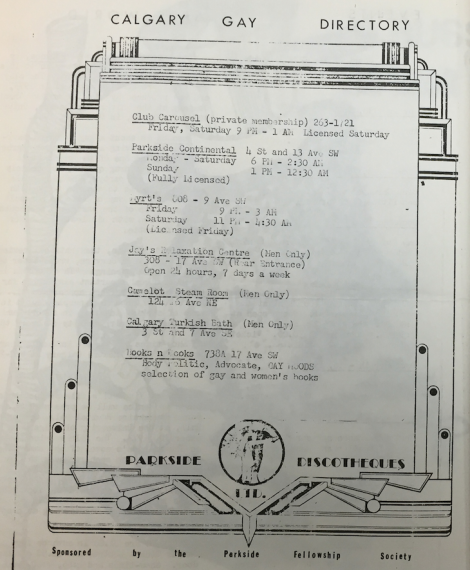
Another reason perhaps why Campbell felt powerful was he was an owner of Calgary’s other gay bar of note: Myrt’s.  Opened in 1976, the sign on the building said Myrt’s Beauty Parlour and was located at 808 9 Ave. SW (now a parking lot). This gay lounge and disco were initially open Friday and Saturday nights for men only. As its popularity grew, it operated six nights/week and became a mixed club, reportedly played the best music in the city.
Parkside Discotheques

Advertisement in GIRC’s 1977 publication, “Gay Moods”

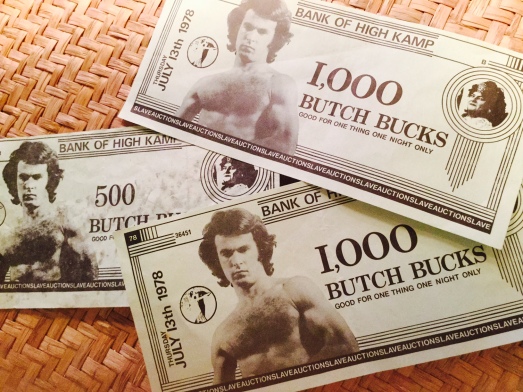
A hallway off the dance floor led to a 150-seat theatre known as the “Backlot” which also served as an after-hours bar. The gay community was encouraged to use it as much as possible; it was the venue for emerging theatre artists, Imperial Court drag shows, Mr Butch Calgary “Slave Auctions” and, on Sunday mornings, Metropolitan Community Church services. Myrts’ final song every night was Kermit the Frog’s “Rainbow Connection.”
Butch Bucks

Butch Bucks from a Calgary Slave Auction in 1978. Donated to the YYC Gay Archives by Terry MacKenzie.

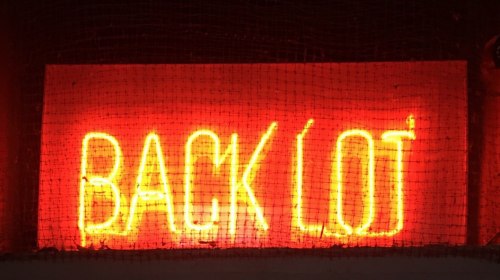
The bar closed on New Year’s Eve 1981/1982 as the building fell victim to boomtown redevelopment. Myrt’s and the Backlot briefly moved to 17th avenue before it closed again. One former patron broke into the site and retrieved the neon “Backlot” sign. The preserved sign now hangs over the door of the contemporary Backlot bar on 10th Ave. SW.
Backlot

Neon sign at the Backlot Bar, 2017. Photo: Kevin Allen.

{KA}
Defending Lesbian Moms in YYC

{The Calgary Gay History Project is revisiting its most impactful blog posts—now numbering in the hundreds—since its inception nine years ago. Defending Lesbian Moms in YYC was initially published on August 25, 2017.}

For decades in Calgary, if you were out as a lesbian and had children, you would likely have them taken away. Therefore the stakes were high for gay women: being a mom was decidedly a good reason for keeping the closet door barricaded shut. Unofficial estimates claim up to 50% of lesbians in the 1960s and 1970s had children through previous heterosexual relationships or marriages. If they were outed, former husbands or even the state itself would intervene to ensure that these “unfit mothers” had their children removed.

Lois Szabo, recently honoured with a park named after her, is a lesbian and also a mother. She was able to work out a child rearing arrangement with her husband privately. Sadly, Lois knew of other lesbians in the 1960s who lost access to their children completely and became utterly broken. One lesbian she knew was institutionalized. Another killed herself slowly through alcoholism.

In fact, it was not until November 21, 1975, when an openly lesbian mother was awarded custody of her child in Canada. In the groundbreaking decision of K. vs. K., Justice D. W. Rowe of the Alberta Provincial Court reasoned that a child’s likelihood of becoming gay would not increase solely by being raised by a homosexual parent – contrary to the view widely held in Canadian society. Regrettably, this decision did not set a new legal standard as throughout the 1980s lesbian mothers continued to lose custody battles specifically due to their sexual orientation.

However, the 1975 decision fired up feminist activists to begin challenging the legal bias against lesbians in Canadian courts. In 1978, the first Lesbian Mothers’ Defence Fund (LMDF) was started in Toronto, initially through a grant from a local church group and then sustained through private donations.

In Calgary, Lynn Fraser was working at the Calgary Status of Women Action Committee, a job she described as “very low paid but very exciting.” Lynn was an unapologetic feminist and activist. She recalled, “I had a big button I always wore that said, ‘Lesbian Mother,’ which sometimes caused me trouble – but I never backed down.”

Lynn had organized Feminist Town Halls in Calgary which included both actions and public speakers. In 1982, the first “Women Reclaim the Night March” was staged in Calgary in conjunction with a talk by Andrea Dworkin, a well-known American anti-pornography activist. Another speaker in the Town Hall series was Francie Wyland, the coordinator at Toronto’s LMDF.

Screen Shot 2017-08-24 at 1.51.38 PM

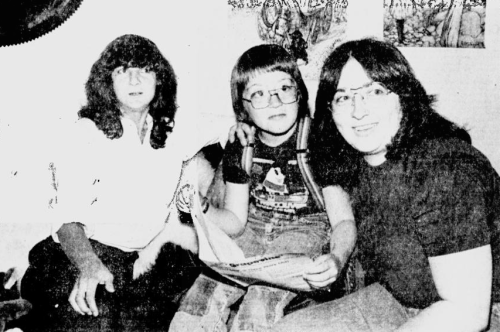
Francie Wyland, Dustin Smith, and his mother, Lynn Fraser. Photo: Garth Pritchard, Calgary Herald July 2, 1981.

There was a loose collective interested in starting a LMDF chapter in Calgary after Francie Wyland spoke to the lesbian community in 1981. Lynn met Marilyn Atkinson and her partner Lou at that first gathering featuring Francie. Marilyn also became a key organizer in the collective. As a mother herself, Marilyn volunteered to provide peer support to lesbian mothers and women during any potential custody struggles. The collective was based out of Gay Information Resources Calgary (GIRC) initially.

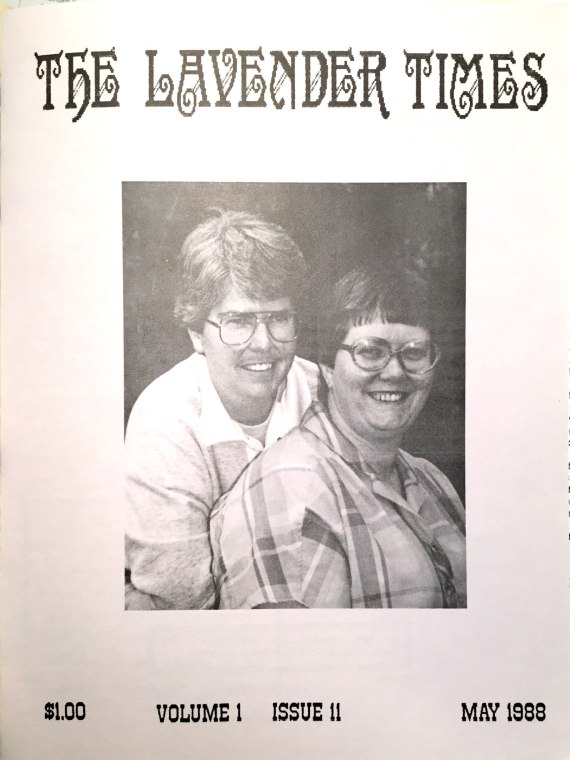
Lavender Marilyn

Lou with Marilyn Atkinson featured in Calgary’s Lesbian Publication The Lavender Times on the occasion of their 25th Anniversary.

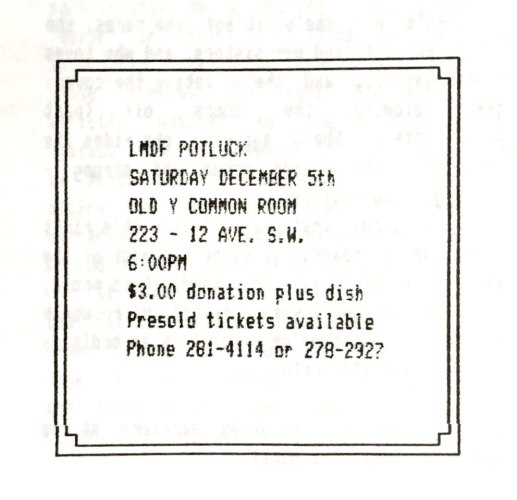
The LMDF was a low-budget, grass roots organization. Pot-luck suppers and community dances were its primary source of funding. In 1982, two Calgary lesbians took pledges to cycle across the county to raise money for the LMDF. It took them four months, but they made it to St. John’s that summer after starting in Vancouver.

In 1983, the father of Lynn’s son, Dustin, started making noises about challenging her for custody of their child. That mobilized Lynn to call Francie in Toronto for LMDF advice. Beltline lawyer, Neva Ramsay, volunteered to do the incorporation papers for the local chapter and on April 21st, 1983, the Lesbian Mothers Defence Fund Society of Alberta was born. Dustin’s father backed off.

There was a lively social scene with Calgary’s LMDF, which moved out of GIRC into their own office at the Old Y. The potlucks and dances would even attract lesbians without children! A bonus to the socializing was that their children got to play with other kids who had lesbian moms, making their family structures seem much more commonplace.

The Lavender Times, November 1987

The LMDF offered information, support, referrals to lawyers, and financial help to lesbian mothers struggling to keep or win custody of their children. The advice in child custody cases included: going to court is the last resort; do not leave your children behind; beware of ex-husbands kidnapping your kids. The LMDF also advocated for social change in the judicial system, proclaiming that the straight court system failed lesbians.

Lynn recalls: “It was an exciting time to get your voice out there and be heard. There was so much misinformation and so much fear—it seemed like almost everybody was in the closet.”

As the LMDF developed, Marilyn was hired to organize lesbian conferences which she remembered proved quite popular: “Women came from everywhere to attend.” The first conference in 1985, was funded by the local lesbian community itself. When the conferences began to attract public funding, protests were heard.

Maureen Buruill, a lobbyist with REAL Women of Canada in January 1987 wrote an editorial in the Calgary Herald complaining about her own organization’s lack of funding:

“Women’s groups across Canada receive funding from the Secretary of State’s Women’s Program. One example was a grant to the Calgary Lesbian Mothers Defence Fund to set up a “lesbian-gay” workshop collective. This organization also received a grant to arrange a lesbian conference. Why is our tax money given to these groups and refused to a group seeking to preserve family values?”

Despite the social conservative yowling, the legal system evolved to have less bias against lesbian mothers. Consequently, the LMDF’s activities morphed into helping lesbians get pregnant – initially by connecting donors to mothers but also by running sperm! It was not until 1992 that artificial insemination in hospitals became legally available to single and unmarried women, including lesbians in Calgary. The LMDF then began fundraising for artificial insemination in doctor’s offices and stopped running sperm themselves. Several babies were born from the LMDF’s sustained efforts.

In 1992, the society changed its name to the Lesbian Mothers Support Society to better reflect its efforts and developed a notable online presence. It also was active in advocating Provincially for adoption rights for the partners of lesbian mothers. The society wound down its operations in 2002. However, in its 21 years of history, the LMDF made a huge difference: defending lesbian mothers and moving social justice forward in Calgary.

{KA}

Undetectable

UNDETECTABLE has its Calgary premiere on Sunday, September 26th, 4PM at the Calgary International Film Festival (CIFF). UNDETECTABLE is a deep dive into the hysteria, misinformation, stigma and prejudice that has surrounded the HIV/AIDS epidemic since the early ’80s. Through the eyes of current front-line workers and tireless activists, the film exposes how early societal prejudice is directly linked to today’s rising infection rates.

This is the second collaboration between Calgary filmmaker Laura O’Grady and historian Kevin Allen, whose first project together GROSS INDECENCY: THE EVERETT KLIPPERT STORY was a CIFF award-winner in 2018.

UNDETECTABLE was featured earlier this month at the LGBT Toronto Film Festival where it won the audience award for best short film.

UNDETECTABLE is a TELUS Original documentary and was produced with the assistance of the Government of Alberta, the Alberta Media Fund and Calgary Arts Development, in collaboration with the Calgary Gay History Project.

Join us on Sunday for the premiere at Eau Claire cinema or watch it online at home!

{KA}