Category Archives: Gay history

AIDS 1988: lighting a fire under Health Minister Epp

{Happy Easter! The Calgary Gay History Project is reflecting on AIDS history to explore how Calgarians and Canadians reacted to this earlier pandemic.}

As the world compares and contrasts national governments and their response to the novel coronavirus, this week we explore how the Canadian Government reacted to the AIDS pandemic.

AIDS is considered by some a chronic manageable disease in Canada. It was one of the deadliest viruses in Canadian history; more than 26,000 people died from HIV/AIDS since its arrival to the country in 1982. More than 32 million people have died from the virus worldwide. The disease in Canada has predominantly affected marginalized communities. For example, in the 80s, the largest populations with the virus were men who had sex with men and intravenous drug users – groups many politicians found distasteful. As the 80s progressed, the gay and lesbian community angered. This, in turn, generated grassroots activism which shamed the Federal Government into action on AIDS.

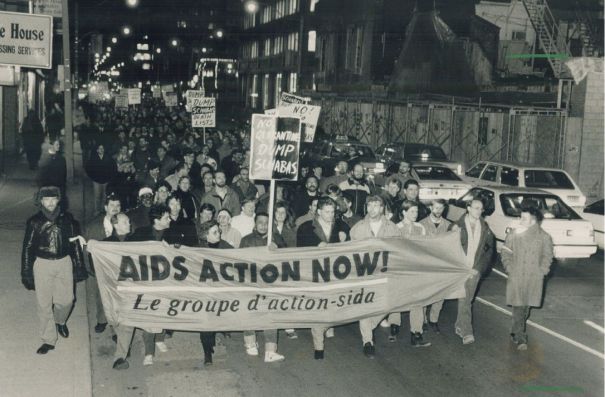
One of the most effective groups was AIDS Action Now (AAN) in Toronto. In an Xtra.ca interview, AAN Founder Tim McCaskill said: “We figured out that this wasn’t just a virus that was killing us. It was that no one was doing fucking anything. Even medical staff in hospitals worked under a cloud of ignorance and fear. Nurses were wearing space suits, not delivering meals, not cleaning out bedpans because they were afraid to go into patients’ rooms . . . It was awful.”
aids-protest-1990

AAN Protest in 1990. Photo: Ken Faught, Toronto Star

In the Spring of 1988, AAN burned in effigy the Federal Health Minister, Jake Epp, a socially conservative politician who avoided even saying the word “AIDS.” They coordinated high profile die-ins and hounded Prime Minister Brian Mulroney at speaking engagements. The heat of embarrassment provoked government action. Later that year, Mulroney replace Health Minister Epp with Perrin Beatty, who by temperament was more able to deal with both AIDS and gays. They created the first National AIDS strategy in 1990. The strategy made significant concessions to activist pressure, including prevention programs to halt the spread; care, treatment and support programs for those with the disease; funding to support treatment research; and the establishment of a National Treatment Registry.

It took eight years for the Federal Government to get to its National Aids Strategy after the first case appeared in Canada. In that year (1990) 1514 additional Canadians were diagnosed with AIDS.

{KA}
A virus-free club in YYCgayhistory?

{The Calgary Gay History Project has hunkered down at home, doing our part for social distancing in Canada. As a distraction, we’re diving deep into local AIDS history over the next few weeks to explore how Calgarians reacted to this earlier pandemic.}

In May 1987, four years after the first case of HIV was diagnosed in Calgary, local entrepreneurs Ross Anderson and Terry Daley attempted to start an AIDS-free private club. An initial advertisement received interest from more than 300 Calgarians who wanted to join.

The club concept included dining and dancing areas, a night club and a gym. To join, people would pay $300 and need to have two tests for the virus, one when they applied and the next one eight weeks later. There was also an ongoing testing schedule proposed, which was never finalized.

Doug Morin, the executive director of AIDS Calgary, disapproved. He explained that people who join the club might be at a higher risk of catching the disease than people who don’t.

“It spreads like wildfire when everyone assumes he’s OK. It’s so scary when people stick their heads in the sand, and don’t worry about it. The test is only good for the day it’s taken,” Morin added.

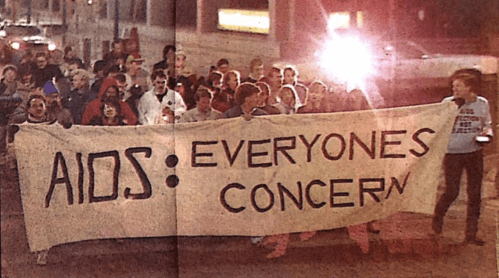
AIDS Vigil Calgary 1987

Calgary AIDS Vigil, March 22, 1987. Photo: David Lazarowych, Calgary Herald

Anderson, in an interview in the Calgary Herald, said he did not know exactly when the club would open or where it would be.

“The fear of AIDS affects everybody. People like yourself and myself are inhibited about making contact. We want to provide a situation so [people] can act normally,” Anderson clarified. He mused that setting up the club would not be easy, and they would not be able to provide absolute health guarantees to clubgoers.

At the time, 33 people had been diagnosed with AIDS in Calgary.

{KA}

Self-isolating? Free Book!

Dear Calgary Gay History Supporters,

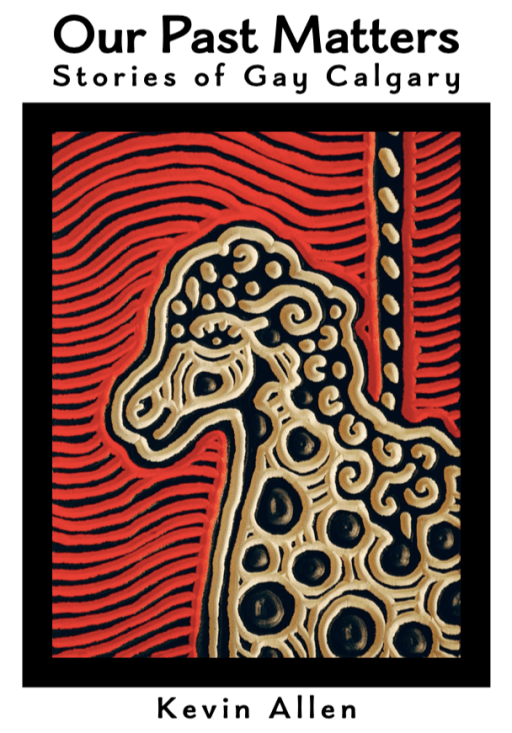
It is distressing to find our world so disrupted by pandemic. With social distancing and closing borders, we will likely find ourselves with much more time at home. Reading has always been a favourite pastime and retreat for me. Now that we may find bookstores and libraries closed, it occurred to us, that we could assist our fellow Calgarians by providing free PDF downloads of Our Past Matters: Stories of Gay Calgary.

The book, which was on the Calgary Herald’s local best-seller list in 2019, explores our city’s LGBTQ2 past. In it, you will find stories of resiliency and courage, darkness and light. Until April 30, 2020, email Kevin at calgarygayhistory@gmail.com with the subject line: “PDF please” and we will send you a copy.

Our Past Matters EBook Cover

Write “PDF Please” for a free copy!

Calgarians have a long tradition of taking care of each other. This was perfectly illustrated a few days ago by Sam Hester’s Pulling Together-Even as We Move Apart in the Sprawl.

Please take care and give support, as you are able, to our self-isolating elders, who often are the keepers of our stories.

To a hopeful future!

{KA}