Tag Archives: Rick Sullivan

50 years of peer support in YYC!

2023 marks the 50th anniversary of the first queer peer support organization in Calgary: the People’s Liberation Coalition (PLC).

Started in January 1973, the People’s Liberation Coalition served the Calgary gay community by offering information and counselling using a peer support model. The PLC office was located at the Old Y (CommunityWise) in room 314, and they attempted to have office hours from 7-11 p.m., seven days a week.

The group was an evolution of the Gay Liberation Front (GLF), which had begun meeting in September 1972, spearheaded by University of Calgary grad student Rick Sullivan.
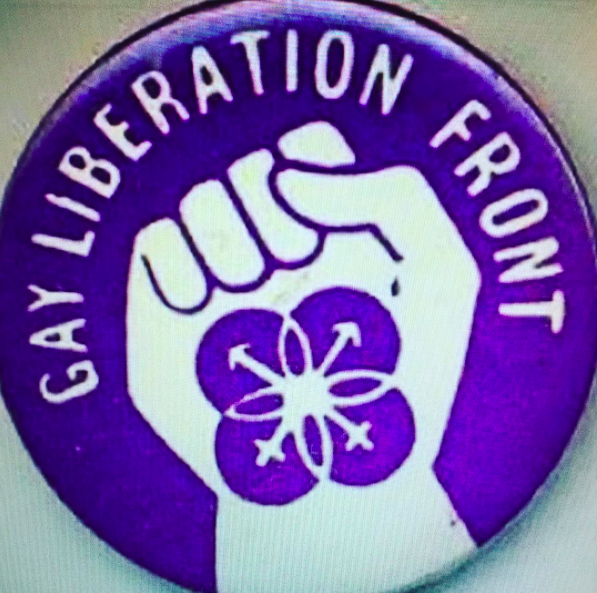
GLF Button from the early 1970s

Lesbian activist, My (Myra) Lipton attended these early GLF meetings. She and Rick would attend Human Sexuality classes at the U of C as guest speakers. According to a student journalist, My called for women’s freedom to control their bodies and “engage in whatever sexual activities they prefer.” She also stated that the “greatest threat to the male role is solidarity among women, and lesbianism epitomized that solidarity.”

Biweekly consciousness-raising meetings of the GLF were held in the Beltline. Doug Jameson, a university student then, remembered the meetings in rundown apartments. He said, “people talked about the place we were at and trying to get petitions going to give to the government. There were about a dozen of us, and we were known to the RCMP.”

In fact, the RCMP came to Rick Sullivan’s apartment one night to question him about his activities with the GLF and The Gauntlet, attempting to intimidate him. The RCMP even requisitioned his student record from the University of Calgary, but the Registrar refused to cooperate.

Meanwhile, the GLF brainstormed the idea of a peer support organization. My Lipton cheekily wanted to call it, “Does Your Mother Know?” a phrase she often asked those who were coming out. However, to the larger group, the name People’s Liberation Coalition stuck, and they found a space at the Old Y and a roster of volunteers to offer peer support. Shortly after its inception, the PLC announced their intention to sponsor “a mixed boogie” at a local community hall.

My remembered: “the PLC was breaking new ground in Calgary. The immediate need that we had to convey to people who were coming out was that they were OK—it was society that had the problem.”

Mount Royal College student Rex Leonard saw a poster for PLC at his on-campus guidance centre. He headed to the Old Y that night and surprised PLC volunteer Joanne, who was answering the phone that night—there were not many drop-in visits! Rex’s world expanded as he was introduced to more gays and lesbians. He appreciated that the organization was centred around social activism, not just a place to find a romantic partner. Rex became a dedicated PLC volunteer.

An Australian gay activist named Brian Lindberg, who travelled through Western Canada later in 1973, described the movement in Calgary as going through a difficult period. He wrote:

“The gay information centre was staffed by only a few people (one in particular) who continued to maintain the service even though little assistance could be obtained. Considering the population size of Calgary, I was surprised not to find a well-organized gay liberation movement.”

The PLC ran out of steam as key members moved away from the city, and no replacements were found. Keeping the office open seven days a week proved challenging, and after about a year of operating, the PLC faded away.

Queer peer support was resurrected in June 1975 as Gay Information and Resources Calgary (GIRC) by My Lipton and Windi Earthworm. There has been a more or less continuous peer support service at the Old Y for 50 years. This legacy is continued by the esteemed Calgary Outlink today.


Leaping Lesbians at the Old Y, 1985

{KA}
CURED @ CUFF.Docs

Today the 8th Annual CUFF.Docs Documentary Film Festival opens and runs until December 1st. As per new pandemic restrictions the festival has moved completely online. If you like documentaries, this festival always delivers. Now they have a must-see film for queer history fans.

CURED takes viewers inside the campaign that led to a pivotal moment in the struggle for LGBTQ equality: the American Psychiatric Association’s 1973 decision to remove homosexuality from its list of mental illnesses. Combining eyewitness testimony with newly unearthed archival footage, the film reveals how a small group of impassioned activists achieved this unexpected victory.

“Suspenseful and furnishing a slam-dunk case about the landmark importance of this event, Cured is probably the best LGBTQ documentary of the year.” – Bay Area Reporter

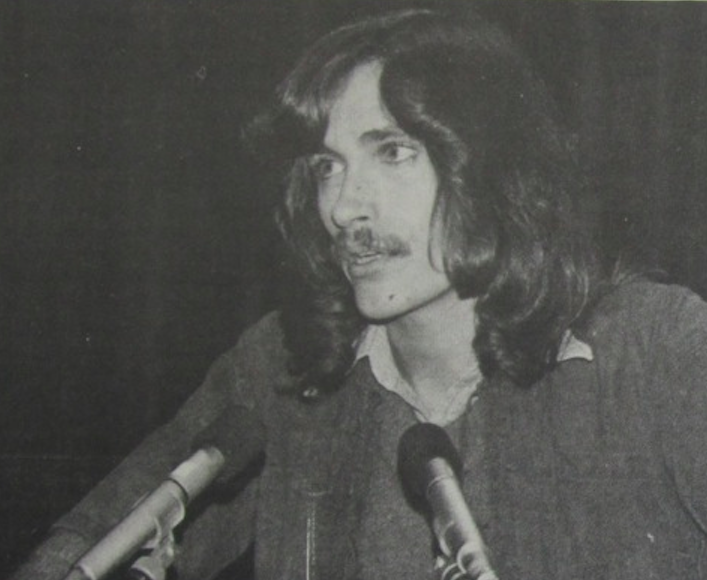
Interestingly, there is a Calgary connection to this historical event. Rick Sullivan, a University of Calgary grad student and gay activist of the early 70s attempted a similar intervention. He met with local delegates to the American Psychological Association’s AGM to bring forward a motion to strike homosexuality as a mental illness from the DSM. The U of C delegates going to the convention declined to bring his motion forward. He says: “I remember being very stung by this at a personal as well as a political level.”

U of C Student and Calgary Gay Liberation Front co-founder Rick Sullivan in 1974

Brennan Tilley, CUFF’s lead film programmer says: “a common theme across many selections in CUFF.Docs this year is how stories are told and by whom. We have several films that feature subjects that define their own narrative. The inclusion of homosexuality in the DSM is an oft mentioned piece of history. What is rarely covered is how it came to be removed. The ultimate decision came four years after the Stonewall uprising. There is a stark contrast in the methods of these two events but they are closely tied stepping stones in the progress of LGBTQ rights. It is important to highlight how a landmark decision was reached through meetings, academic research, symposia, reviews, deliberations, and a vote. It also is much more entertaining than one might expect from a documentary about a scientific body altering a manual.”

An image from CURED: activists Barbara Gittings, Frank Kameny and Dr. Anonymous

{KA}

Gauntlet Mining finds History Gems

The University of Calgary Student Press, 1970-1980: From Anonymous Classified Ads to Gay Liberation Op-Eds to Gay Academic Union as a Part of Campus Life

As the Criminal Code changes that decriminalized private same-sex acts between consenting adults in Canada went into effect in August 1969, the legal struggle against discrimination, for full civil and human rights of sexual minorities and for social and political change in Canada was just beginning. The 1970s are often called a formative age of queer activism: a time of gay and lesbian liberation movements, changing mores about sexuality in general, of a forging of a more visible community of people identifying by their sexual orientation, building upon but moving away from underground queer subcultures (as discussed in an earlier post on The Body Politic).

We looked at over ten years (1969-1980) of the University of Calgary student newspaper, The Gauntlet, to deepen our understanding of Calgary’s gay and lesbian history during this turbulent decade, and explore the role that the University and its student press played, providing a space for debate, but also for reaching out, support and organizing around an emerging advocacy agenda.

GLF

The Gauntlet Classified Ads – 1972

Despite the Gauntlet’s uneven editorial tone and often flawed reporting, as well as many omissions of landmark moments in gay and lesbian activism of the 1970s, a look at its writing from this decade still reveals important aspects of gay and lesbian history in the city. Moreover, it testifies to the role that the University of Calgary played as a public space, where early gay activism, as well as debate on some of the defining national gay and lesbian issues of the decade took place.

Read the full essay: here.

{NI}