Tag Archives: J. B. Smith

On Hiatus & Heritage Park Connection

{We are taking a break and not staffing the history desk for the next couple of months, but look for new Calgary Gay History Project research in late May. —Kevin}

Thanks to everyone who came out for the presentation Our Past Matters – A History of Calgary’s 2SLGBTQ+ Community at Heritage Park last week. Our goal was to find a queer history connection to Heritage Park, and we did!
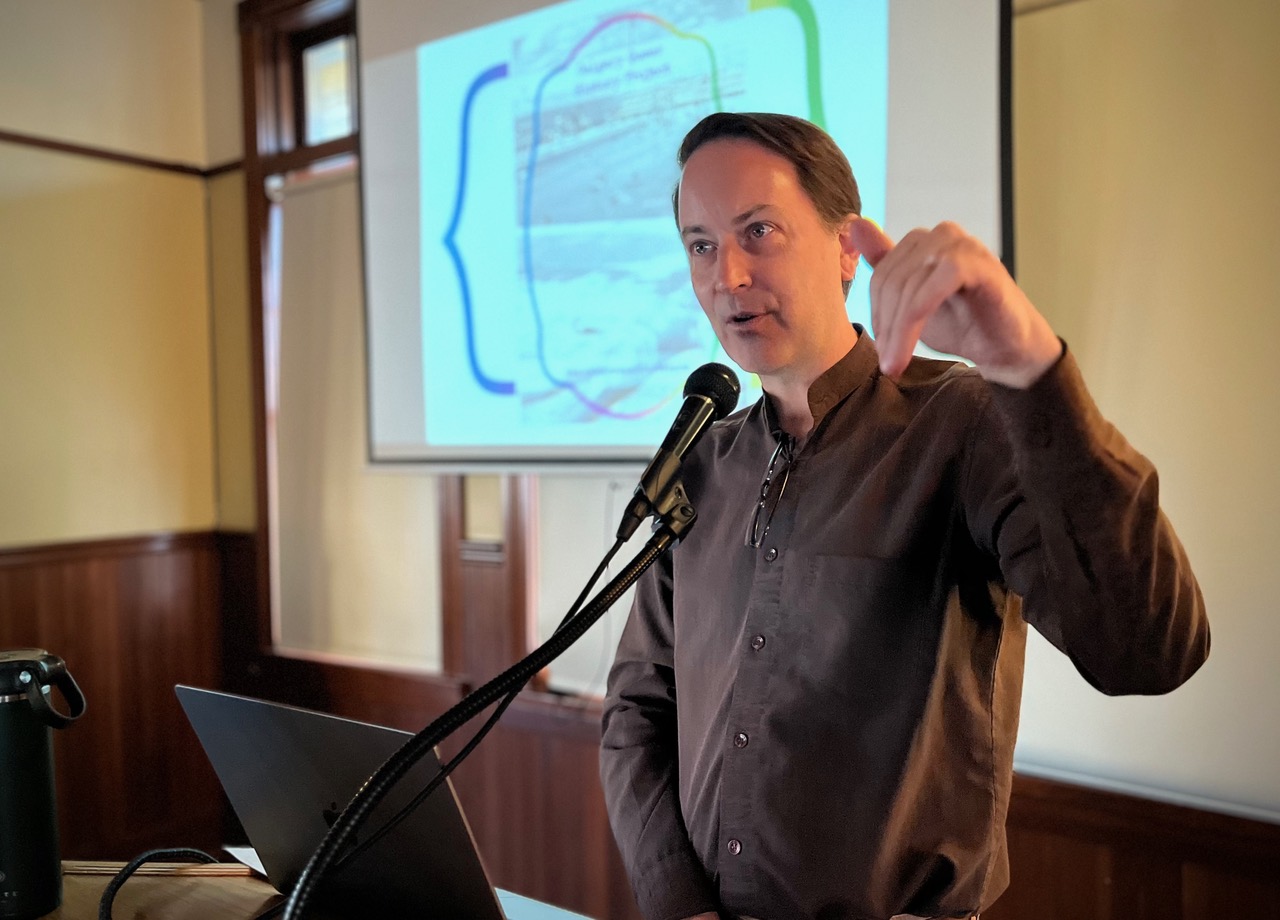
Kevin Allen presenting at Heritage Park. Photo: Patrick J. Monaghan

The “Sandstone House” on the grounds of Heritage Park is a replica of a house built in 1891 for James Bruce Smith (1849–1906), a lawyer from Lindsay, Ontario, who was a founder of the Calgary Bar Association in 1890 and who became the city solicitor in 1899. In 1901, he was charged with gross indecency due to his affair with Walter Joesph McHugh. History professor, Jarett Henderson, explores this story in detail: here.
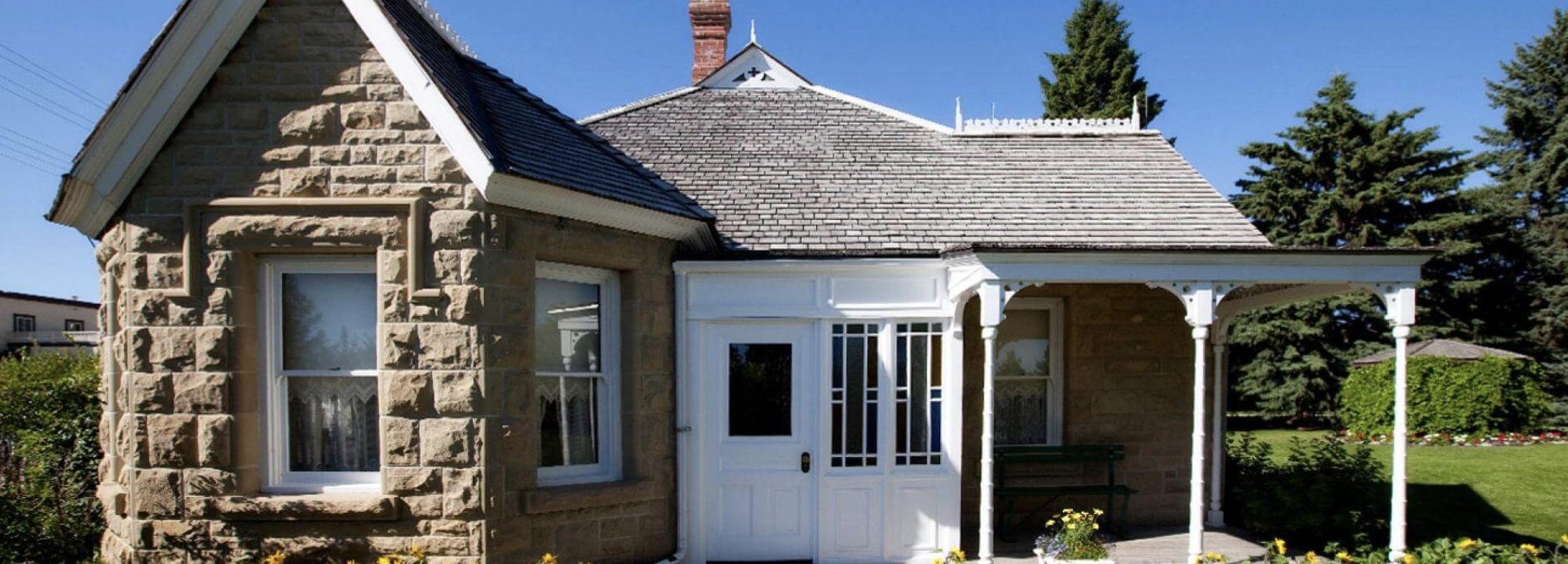
The Sandstone House from Heritage Park’s Website

The house was located at 1011–4 Avenue West (later changed to SW), where the Avatamsaka Monastery exists today (and if you have a long memory, you might recall Calgary’s original Mountain Equipment Coop store).

Heritage Park published a biography of the storied house for Alberta History Magazine’s Winter 2023 issue explaining the house was famous for being rented to Colonel James Macleod (who named Calgary and facilitated Treaty 7) and his family in 1894. It was where he was living when he died of kidney disease. The famous Calgarian’s body lay in state inside the house for several days; it was there that his funeral procession began.

Special thanks to researcher Jason Brooks, who brought the connection to our attention.

Happy Spring, everyone!

{KA}

Queer History Halloween!

{A spooky treat—a guest article from Jarett Henderson, a former Calgarian and historian of Canada, gender and sexuality, and the British Empire – K.}

Today, many queer folks celebrate Halloween as a topsy-turvy Gay Christmas of sorts: an opportunity to live loudly and proudly as one’s authentic self. For sixteen-year-old Walter McHugh in 1901, his Halloween night could not have been more different. That night Walter confessed to his rancher father that he had been having sex (for some time) with the Calgary lawyer J. B. Smith. 

Walter’s Halloween night assertion set into motion a three-month-long ordeal that culminated in February 1902. After a series of appearances before the Supreme Court of North West Territories that paradoxically archived unspeakable sexual encounters, Smith was proclaimed “not guilty” of gross indecency: the federal crime that regulated sex between men in Canada and its territories since 1892. Walter was removed to Ontario, where he was enrolled in Ottawa College before returning to Calgary, where he lived and worked for the rest of his life. Walter and his headstone remain at rest atop the Calgary skyline in the Catholic Cemetery. 

Walter McHugh’s grave in Calgary’s St. Mary’s Pioneer Cemetery

While much remains unknown about the nature of the relationship between Walter and Smith, in what follows, I offer some observations about how efforts to regulate sex between men can shed light on how queer carnal acts were perceived as threats to male settlers, their bodies, and the state’s efforts to reproduce heterosexual settler colonialism in early-Calgary.

Original citation for full text: Jarett Henderson, “Rex v. J. B. Smith (Calgary, 1902): Queer Carnal Acts and Heterosexual Settler Colonialism in Canada’s Prairie Empire,” Prairie History: The Journal of the West, 5 (Summer 2021): Click here for full article. 

The McHugh Family at the start of the twentieth century. Walter is standing directly behind his father who reported him to authorities: University of Calgary, Glenbow Digital Photo Collection, NA-217-6

{JH}