Tag Archives: Body Politic

A Body Politic Revisited

Calgary Gay History Project Researcher Ayanna Smart recently left YYC to study in Ontario – we wish her all the best, and hope she returns when her studies are complete.  Here are her thoughts on her participation.  – Kevin

For six months last year, I was a volunteer with the Calgary Gay History Project. I was tasked with digitizing back copies of The Body Politic, an LGBT Canadian magazine that ran from 1971 to 1987. The Body Politic was one of the first and most influential Canadian LGBT publications, and was instrumental in helping build this community in Canada. Reading it now, in 2015, was one of the most amazing experiences I’ve had all year.

Screen Shot 2015-11-16 at 1.09.58 PM

A Seven Page Feature Article about Calgary’s Gay Community was published in September 1980.

The history of the LGBT community in Alberta and Canada is incredibly eye opening. Coming from the relative safety of the present, one can think of this period in LGBT history as one of painful battles. Seeing it though the eyes of those who were there revealed really positive and powerful attitudes and experiences. I was surprised to see how much optimism there was in the community in the 1970s, though I really shouldn’t have been. Canada’s LGBT community, post-Stonewall, was being established, growing in strength, and was very political. Because of Stonewall, this community had demonstrated evidence of their political and social power to effect change at the small and large scale. The Body Politic helped establish a supportive and politically active queer community.

In a time when people often came out ofter marrying an opposite sex parter, and coming out could easily mean losing family, the queer community was a very necessary place. The community pages and classified ads in the Body politic were full of people looking for ways to connect – to new friends, to new partners, to new social groups. Community groups were popping up everywhere, and the Body Politic made them easier to find. By helping erase isolation and build a community, the Body Politic supported the community and individuals.

The Body Politic, as is clear from the title, was also a highly political magazine. It reported on legal protections for LGBT persons, discriminatory and non-discriminatory employers, and the voting histories of political candidates. Reading through the Body Politic, I saw stories of lesbians demanding support from their unions, gay people demanding non-discriminatory media representation and queer people placing pressure on political representatives at all levels of government. The LGBT community was, at this time, very politically active.
AyannaIn a time when the presence of clubs supportive of LGBT youth in schools is a contentious issue, I am encouraged by the attitude and the work of Canada’s early LGBT communities. Community is a powerful thing, and with it we can change a nation.

{AS}
A Not So Gay World

“What does the future hold for Canada’s homosexuals?  Will the time ever come when a gay couple can mix as freely in society as their heterosexual counterparts?”

These were questions posed in the epilogue of A Not So Gay World:
Homosexuality in Canada
 published in 1972 by McClelland and Stewart.  The book, was the first non-fiction work about homosexuality published in Canada. Tellingly the authors “Marion Foster” and “Kent Murray” were pseudonyms for the real authors, a lesbian and gay man who remain unknown throughout the text except as good friends and social commentators.

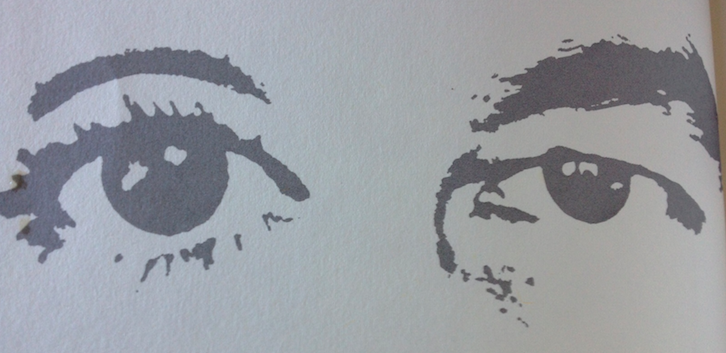
A Not So Gay World Eyes

Cover Image from: A Not So Gay World: Homosexuality in Canada

The book received scathing reviews from gay activists at the time.   Rick Bébout’s review in Canadian Reader exclaimed: “This is a work worthy of bug eyed tourists in a foreign country. The authors do well to keep their real names to themselves.”  Ed Jackson, in issue #7 of the Body Politic wrote: “what we don’t need is yet another book delineating the ‘giant shadow’ of loneliness haunting the life of the homosexual.”

However, in hindsight the book has proved to be a critical time-capsule: capturing a transition in Canadian society with a depth that few other sources can match.  A Not So Gay World explores the gay community on both sides of the 1969 ‘decriminalization of homosexuality’ in Canada.  As correctly pointed out by interviewed activist George Hislop, the Criminal Code amendments were not all that dramatic, “when in fact it never was illegal to be a homosexual.”  Yet they were hugely symbolic and greatly affected public attitudes, in a similar way that legalizing same-sex marriage has done in our generation.

One sees the clash of gay cultures between the homophile movement of the 60s and the gay liberation movement in the 70s which flowed from University campuses.  The authors clearly feel some camaraderie with the former and write nostalgically about seedy bars, outrageous characters, and just-under-the-radar shenanigans.  Ironically, these same high spirited characters and their more socially conservative peers are described as antagonists to the emerging gay liberationists.  University of Toronto gay activist Charlie Hill explains that he gets mostly indifference from the campus community, but “I think we get more hostility from gay people themselves, because we are a threat to their anonymity, their carefully structured lives.  They do not want to change because they are afraid of change.”

Canadian society did change thankfully, because of those stubbornly proud activists, and consequently we can answer Marion and Kent’s epilogue question: YES, our time has come.

{KA}

The Body Politic

The Body Politic was one of Canada’s earliest and most influential LGBT newspapers. Published from 1971 to 1987, it covered national and regional news, activism and LGBT representation and helped to connect Canada’s LGBT community.

Through my involvement with the Queer History Project, I have been reviewing the Body Politic, and specifically looking for articles about Calgary and Alberta, and national events that affected the LGBT community. After reviewing most issues of The Body Politic published in the 1970s, a picture of life for LGBT people in Canada in that decade has emerged – one of endemic prejudice, but also one of hope. I am struck by the growth of a strong community and its persistent efforts toward legal protections in the face of adversity.

The Body Politic, May 1978

The Body Politic, May 1978

Unsurprisingly, in the 1970s, homophobia and open prejudice were widespread and far more common in Canada than they are today. The lack of legal protections for LGBT persons both reflected society’s views and permitted this marginalization. For instance, in a 1977 incident, two men spotted kissing in a car in Edmonton were arrested on charges of gross indecency. The trouble did not stop there. Instead, shortly thereafter, their employers were alerted. Needless to say, being fired because of one’s sexual orientation in the 1970s was not uncommon.

Just one year later, in 1978, the Alberta School Trustees Association successfully passed a resolution requesting that the provincial government not introduce legislation preventing local school boards from “dealing with proven incidents of homosexuality among… employees, elected officials or student enrollment.” In fact, the Alberta Individual Rights Protection Act did not include sexual orientation as a prohibited ground for discrimination until a Supreme Court case two decades later in 1998.

Although Canada in the 1970s did appear to be a hostile environment for LGBT people, during that time there was also a sense of optimism amongst LGBT people. Local groups appeared in many cities, national conferences were held, and The Body Politic communicated news, issues and stories to people across the country. Our community was far better connected than it had ever been.

The power of community work was also becoming clear during this time. For example, the LGBT community supported members by helping to fund the legal costs of persons fired because of their sexual orientation. In 1976, Calgary’s Gay Information and Resources was established with the financial support of members of the LGBT community. The organization ran a counselling and information telephone line and provided resources for community members. The Alberta Gay Rights Association (ALGRA) was formed in 1979 to “coordinate efforts in the areas of civil rights, rural outreach, public education and inter-group communication.” A stronger and more united community was being formed.

From my review of the 1970s issues of The Body Politic, it seems the LGBT community of the 1970s was a more publicly visible, more political and more connected group of people than ever before. The Body Politic was a powerful tool and provided an important service during that time, conveying the many views of the LGBT community to readers across the country.

{AS}