Tag Archives: Alberta Theatre Projects

Casey and Diana at ATP: Theatre & Queer History

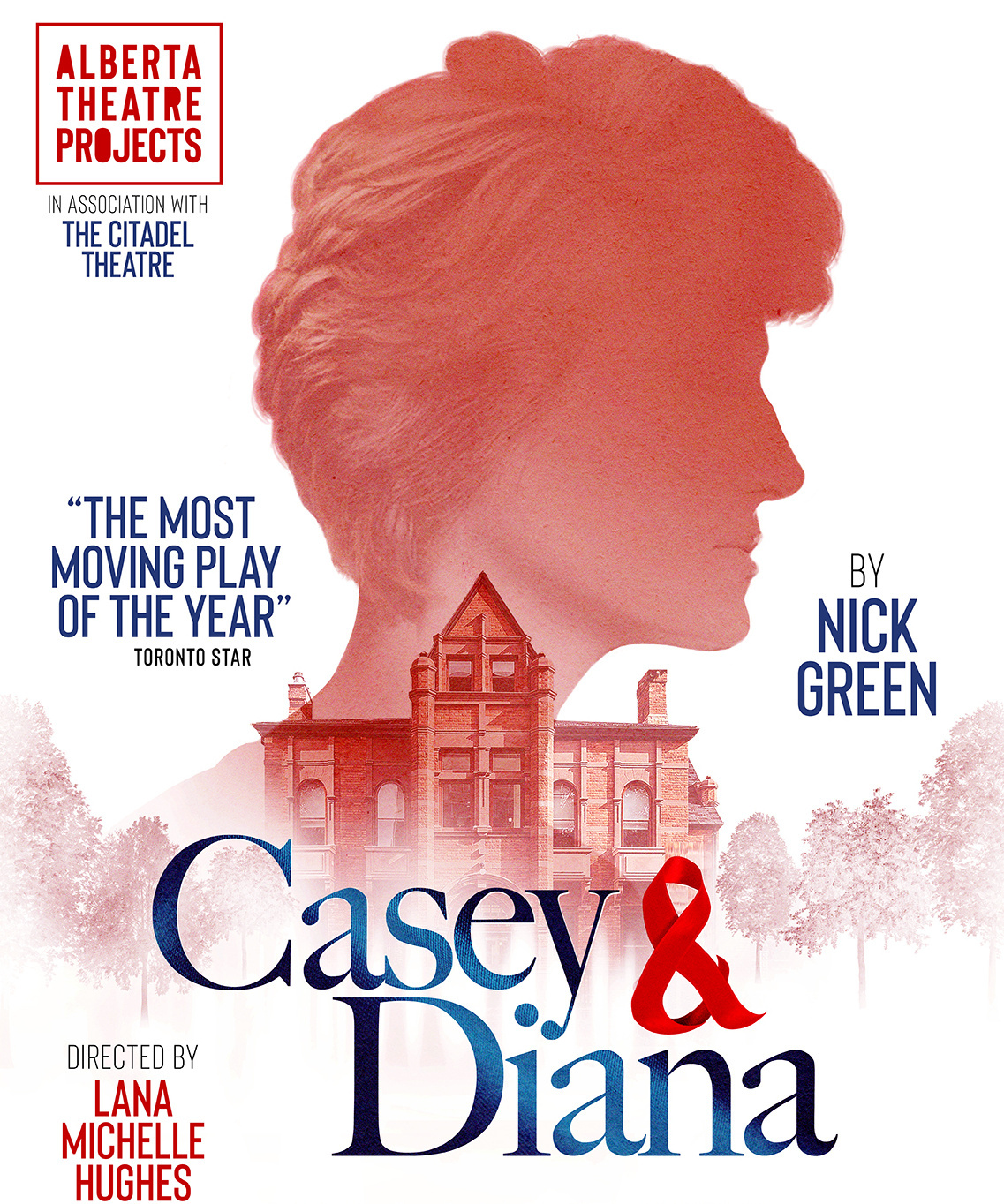
Casey and Diana, currently on stage until March 15th at Alberta Theatre Projects, revisits a specific historical moment during the AIDS crisis: Princess Diana’s 1991 visit to Casey House, Canada’s first free-standing AIDS hospice in Toronto. Set against a backdrop of fear, stigma, and widespread misinformation about HIV/AIDS, the play focuses on the residents and caregivers of Casey House as they prepare for a visit that would later be seen as culturally significant.
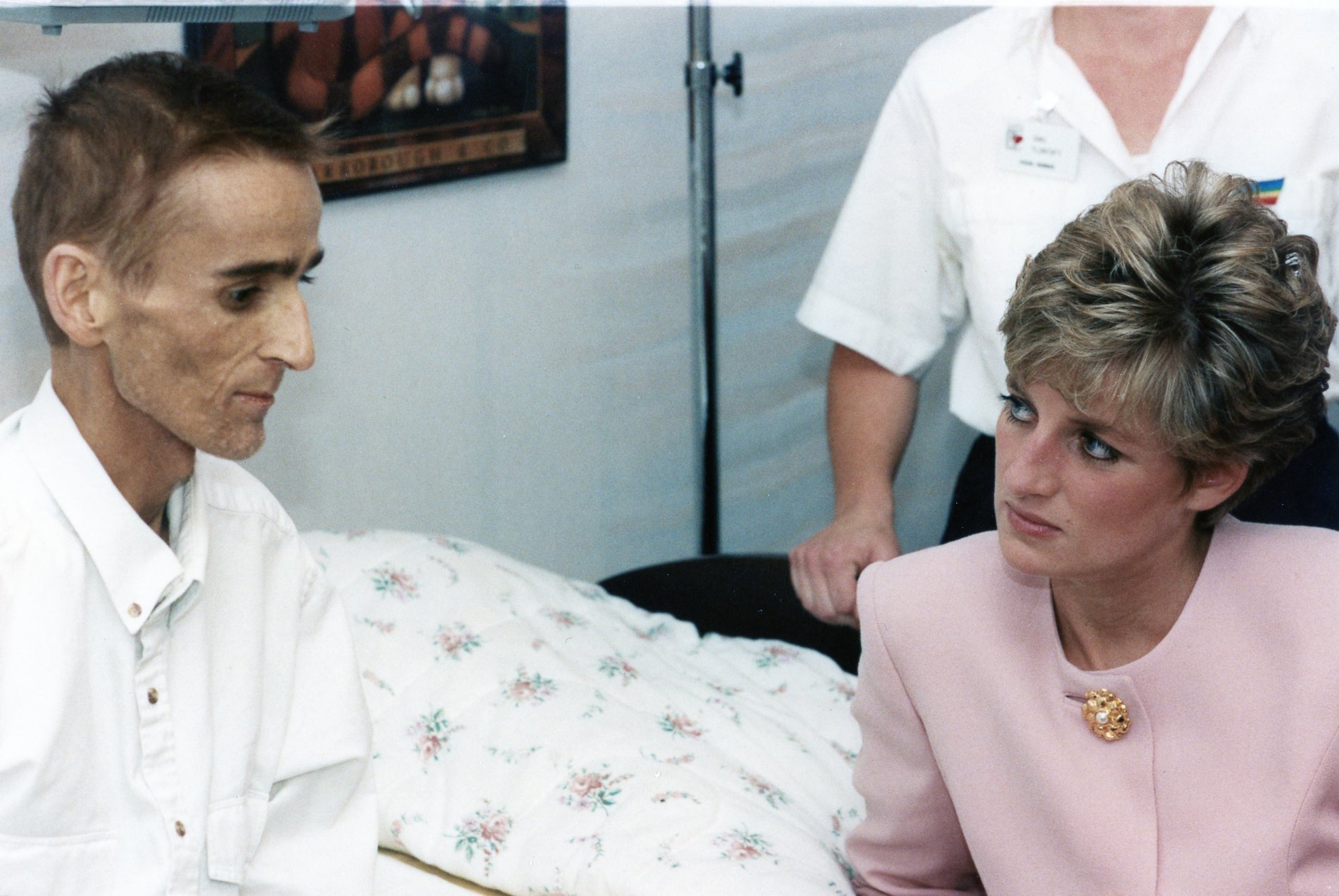
Diana, Princess of Wales with a resident of Casey House in 1991

Princess Diana helped shift public perception by challenging the myth that people living with AIDS were untouchable. But the play’s real power lies in its focus on the residents and caregivers — queer people and allies navigating love, humour, grief, and survival amid a crisis that decimated communities while governments largely looked away.
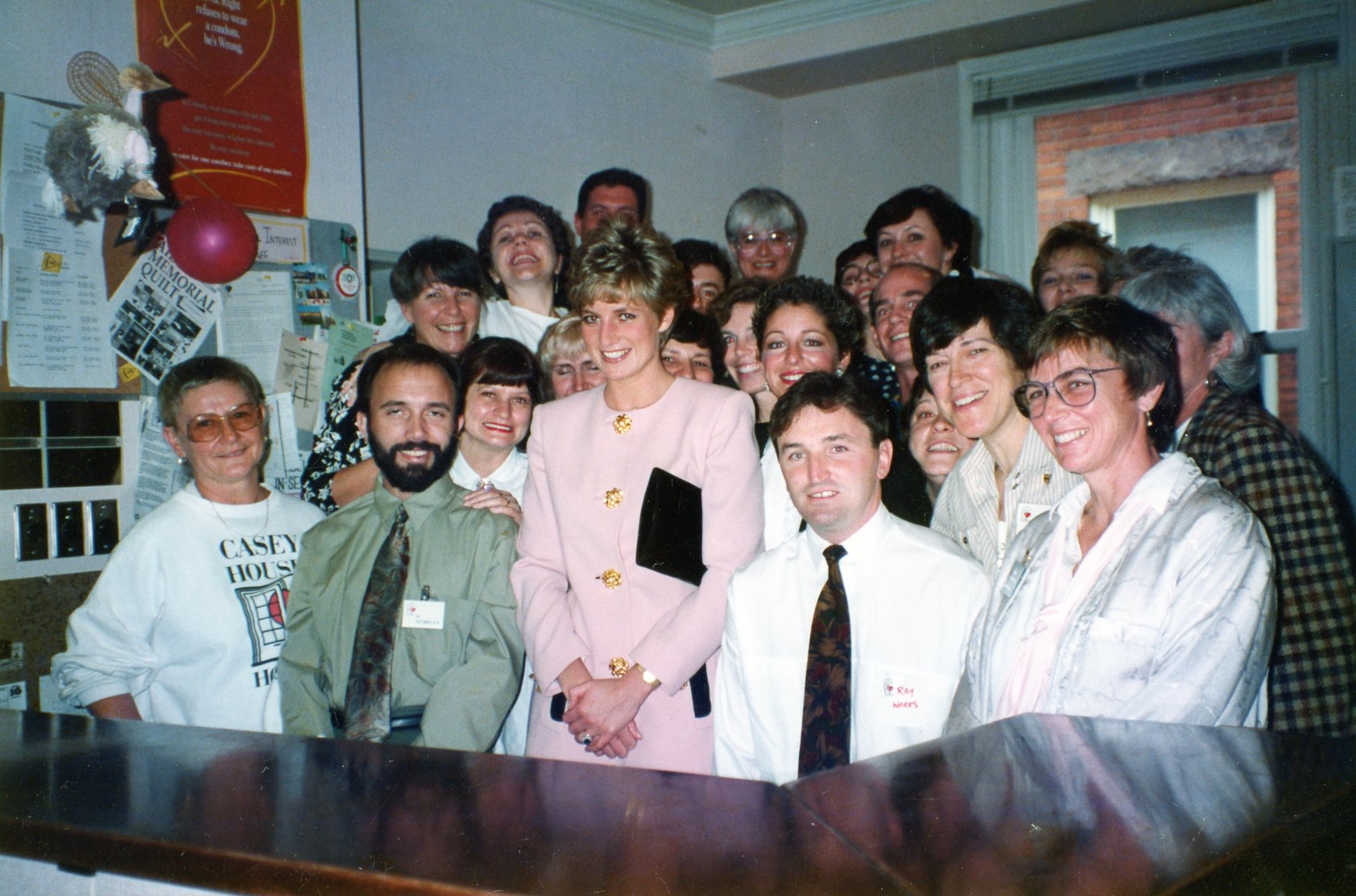
Diana with staff and volunteers of Casey House, 1991

ATP extends this historical framing beyond the stage through its lobby installations and community partnerships. As Raegan Frenette, from the company, notes:

Part of coming to Alberta Theatre Projects is being in the lobby and engaging with activations that make theatre more than just a show, but a full experience. For Casey and Diana, we wanted the lobby to feel like an extension of the story of Casey House, offering more context for how the AIDS crisis impacted our community here in Calgary.

To do this, we reached out to HIV-related organizations that have, and continue to, support our community through education, treatment, and prevention. We also included LGBTQ+ organizations that help build and sustain queer community across generations. Alongside these partnerships, we incorporated historical elements like the Queer Map of Calgary, Section 7 of the Canadian AIDS Memorial Quilt, and anecdotes in our program from real Calgarian experiences.

A very special shoutout to Safelink Alberta, SHARP Foundation, Calgary Pride, Rainbow Elders Society, Grandmothers to Grandmothers, the Afro-Care Support Network, Canadian AIDS Society, and the Calgary Gay History Project for engaging in the arts with us. We are so grateful for their participation and the amazing work they do in the community.
Image
ATP’s Casey & Dianaclick image for showtimes & tickets!

By connecting Casey and Diana to Calgary’s own queer and HIV history, ATP makes it clear that the AIDS crisis was not something that only happened elsewhere. It affected people here, and its impact is still felt today. The production invites audiences to reflect on how community care, advocacy, and remembrance have shaped queer life in Calgary, and why those histories continue to matter.

{KA}

It Gets Louder: YYC’s Proud Theatre History

{Kevin is on a book tour currently in Toronto and Ottawa – check out dates/times: here!}

I was fortunate to be invited to the opening night of The Louder We Get. The musical is Theatre Calgary’s exploration of a true story, which was precedent-setting for the LGBTQ2 human rights struggle in Canada. The Louder We Get portrays the 2002 battle between high school student Marc Hall and the Durham Catholic School Board. The drama inherent in the story is whether Marc will be able to take his boyfriend to prom. His legal case made Canadian and international headlines – and he won – making for a triumphant ending. The long-standing ovation and visibly moved audience at opening night augers well for a long-life for The Louder We Get: go see it!

Louder Cast

The artists of The Louder We Get celebrating on Opening Night

Calgary’s theatre community has been brave historically in showcasing gay stories, even when there was public hostility to their staging. Furthermore, the theatre was one of the earliest safe places for gay people to find work and also be open about their lives. For example, Ken McBane, a Theatre Calgary set designer was one of the five founders of Calgary’s Club Carousel in 1970. It was Ken who came up with the circus-themed look of the Club, and the Carousel was the site of many performances of musicals, plays, and stage-nights.

Roger Perkins

A “Stage Night” at Club Carousel circa 1972

The Loose Moose Theatre Company, founded in 1977, was an early adopter of gay content in Calgary. In March 1980, it co-produced with Gay Information and Resources Calgary (GIRC), Fortune and Men’s Eyes at the Pumphouse Theatre.

Fortune and Men’s Eyes is a play set in a Canadian prison for youth and deals with society’s injustice towards gay people. Written in Canada’s Centennial Year, 1967, by John Herbert, the play shocked audiences and helped force Canadian society to acknowledge the existence and rights of homosexuals.

In 1991, Theatre Calgary presented a highly lauded production of playwright David Stevens’ The Sum of Us. Described as frank, funny and touching, the play explored the relationship between a widowed father and his gay son, set in a working-class suburb of Melbourne, Australia.

Theatre Calgary secured impressive talent for their production. Gordon Pinsent played the widower Harry, and Ted Atherton, his son Jeff. Theatre director Eric Steiner was engaged to bring The Sum of Us to the Canadian stage. Steiner, who came to Calgary, via Stratford, Chicago and Toronto had worked with Theatre Calgary before, directing The Normal Heart in 1986, one of the first plays about AIDS ever presented in the city.

Playwright Stevens was on the record that the Theatre Calgary production was the finest his play had been given. And Calgary audiences liked it too; the show tripled its expected revenues at the box office. Theatre Calgary then leveraged its success and opened the play in Toronto that November at the Bathurst Street Theatre for an open-ended commercial run.

The gay play that attracted the most controversy in Calgary was Alberta Theatre Projects (ATP) staging of Angels in America in 1996. Before even opening, the play attracted a wagonload of controversy. “Why are taxpayers still having to hand over hundreds of thousands of dollars to a company that stages a self-indulgent production many feel is abhorrent? It is simply not right,” expressed the Calgary Sun.

Calgary-Shaw Tory MLA Jon Havelock suggested that plays offending community standards should not receive public funding. He added, “It seems to me that in some instances people confuse sexual expression with artistic expression.” Calgary-Fish Creek Tory MLA Heather Forsyth called Angels obscene and about ATP said: “If they can’t come up with better shows than this, maybe they shouldn’t be getting funding.”

There were heartfelt published defenses of Angels in America too. A well-known educator, Dariel Bateman, wrote a guest column in the Calgary Herald. She described the play as: “a glorious opportunity to stare down despair, to make sense of things, as we must.”

Ultimately, ATP found themselves rewarded. The controversy put extra bums in seats and attracted almost $50,000 in individual “Angels Consortium” donations. The play doubled expected ticket revenues and was sold out in its final weeks—setting audience records for the company.

{KA}

Angels in America in Calgary

On September 19, 1996, Alberta Theatre Projects (ATP) premiered Tony Kushner’s Pulitzer Prize-winning play, Angels in America. Before even opening, the play attracted a wagon load of controversy. “Why are taxpayers still having to hand over hundreds of thousands of dollars to a company that stages a self-indulgent production many feel is abhorrent? It is simply not right,” expressed the Calgary Sun.

Screen Shot 2017-06-21 at 3.03.33 PM

Image from ATP Theatre Program: Photographer Jason Stang

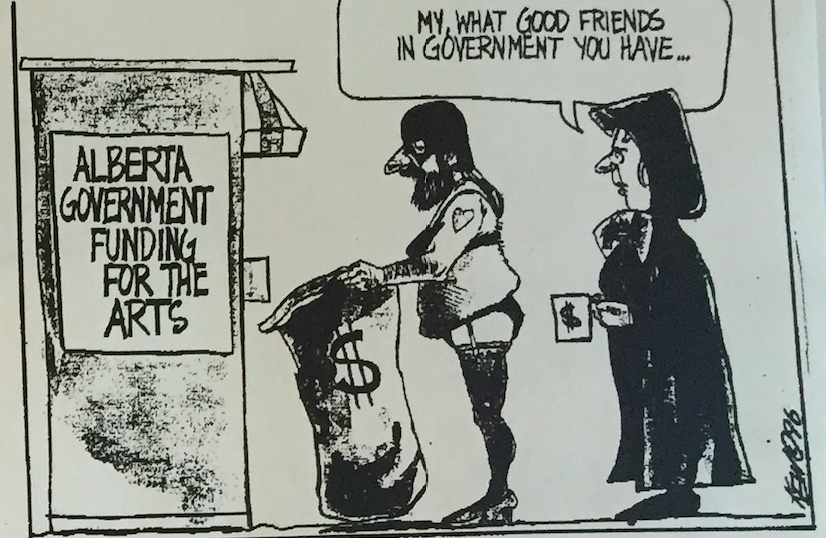
A number of Alberta MLAs were also on the record questioning provincial funding of ATP, which was $550,000 that year, about 1/6th of its operating budget. Calgary-Shaw Tory MLA Jon Havelock suggested that plays offending community standards should not receive public funding. He added, “It seems to me that in some instances people confuse sexual expression with artistic expression.”

Calgary-Fish Creek Tory MLA Heather Forsyth called Angels obscene and about ATP said: “If they can’t come up with better shows than this, maybe they shouldn’t be getting funding.”

Screen Shot 2017-06-21 at 3.04.30 PM

Edmonton Sun Editorial Cartoon: September 15, 1996

ATP’s producing director, Michael Dobbin, rejoindered that MLAs were wrong to attack the play without seeing it first, and he criticized their community standards argument. At the theatre company’s Annual General Meeting, just days before the play opened, he expressed equal outrage: “I say, back off! I say, let the ballots be counted at the box office! That’s the only censorship that I’m prepared to accept.”

Calgary’s reactions to the controversy were polarized; there were dozens of articles and editorials in the Calgary dailies extremely for or against. A conservative radio call-in show buzzed with furor, and ATP itself fielded a number of strange or hostile phone calls, including one who pledged to “shut the show down – we are not going to stand for it in this City.”

There were heartfelt published defenses of Angels in America too. A well-known educator, Dariel Bateman, wrote a guest column in the Calgary Herald on September 13th. She described the play as: “a glorious opportunity to stare down despair, to make sense of things, as we must.”

On of the most fascinating developments was when the Calgary Herald’s Don Martin managed to get protesting MLA Havelock to actually see the play with him. He summarized the experience in an article titled: Angels in America: The sequel: It’s easy to be a critic before the house lights dim, published on September 27th. As the play progressed, surprisingly Havelock became engrossed. At one point he felt compelled to spontaneously applaud; he loved it. He wrote, “thoroughly enjoyable” on a comment card before he left.

Alberta Report Cover, October 7, 1996.

The conservative and sometimes inflammatory publication, Alberta Report, made Angels in America its cover story on October 7th. It took the ATP promotional image of an angel and altered it for its cover, making it sickly: thinning muscles and adding skin legions.* Alberta Report writer Kevin Grace opined that Angels “is an artistic failure but it bears a powerful revolutionary message. While it elevates the belief current in the ‘AIDS community’ that victims of the disease are holy martyrs, homosexuals and AIDS victims are only one division of Mr. Kushner’s vaster army: one that seeks to destroy the very concept of the law – on earth and in heaven.”

He sensationally concluded his three-page article with: “those who see Angels in America as mere entertaining, diverting theatre, should know what they are getting into. In hell, the Marquis de Sade is smiling.”

Ultimately, ATP found themselves smiling. The controversy put extra bums in seats and attracted almost $50,000 in individual “Angels Consortium” donations. The play doubled expected ticket revenues and was sold out in its final weeks – setting audience records for the company.

{KA)

* Photographer Jason Stang filed a lawsuit against Alberta Report for altering his image claiming the publication: distorted, defaced and mutilated his work.