Tag Archives: AIDS Quilt

Casey and Diana at ATP: Theatre & Queer History

Casey and Diana, currently on stage until March 15th at Alberta Theatre Projects, revisits a specific historical moment during the AIDS crisis: Princess Diana’s 1991 visit to Casey House, Canada’s first free-standing AIDS hospice in Toronto. Set against a backdrop of fear, stigma, and widespread misinformation about HIV/AIDS, the play focuses on the residents and caregivers of Casey House as they prepare for a visit that would later be seen as culturally significant.
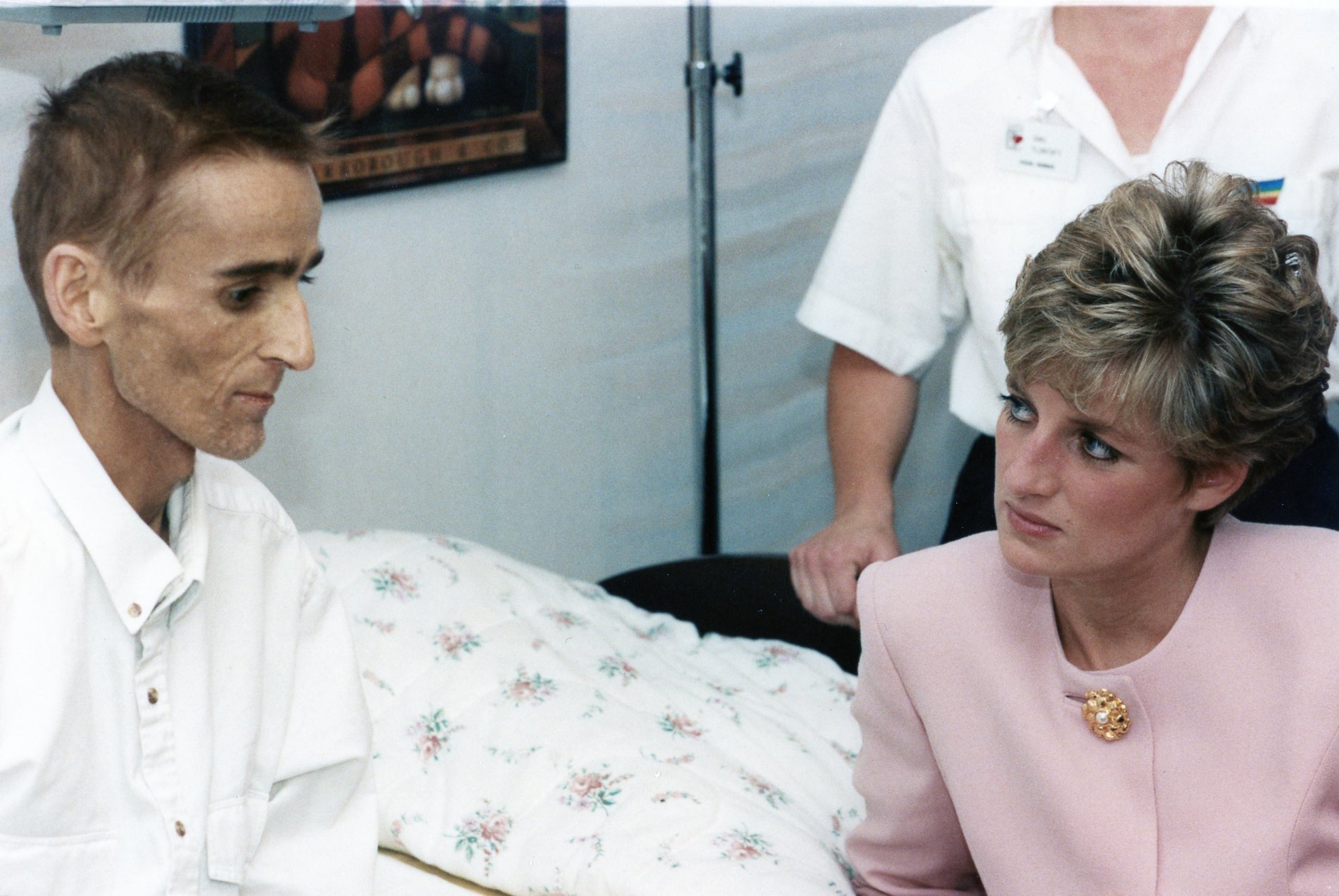
Diana, Princess of Wales with a resident of Casey House in 1991

Princess Diana helped shift public perception by challenging the myth that people living with AIDS were untouchable. But the play’s real power lies in its focus on the residents and caregivers — queer people and allies navigating love, humour, grief, and survival amid a crisis that decimated communities while governments largely looked away.
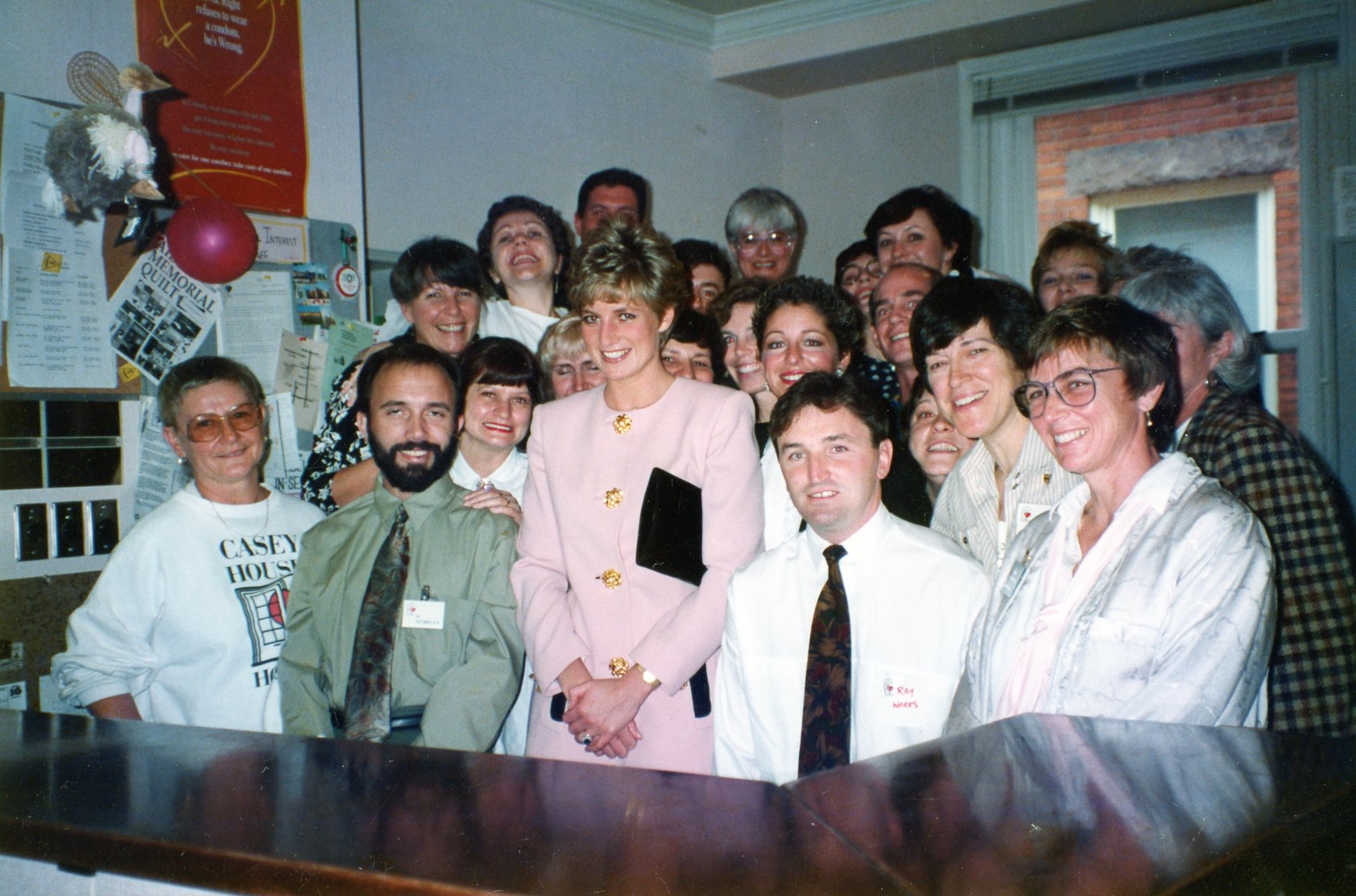
Diana with staff and volunteers of Casey House, 1991

ATP extends this historical framing beyond the stage through its lobby installations and community partnerships. As Raegan Frenette, from the company, notes:

Part of coming to Alberta Theatre Projects is being in the lobby and engaging with activations that make theatre more than just a show, but a full experience. For Casey and Diana, we wanted the lobby to feel like an extension of the story of Casey House, offering more context for how the AIDS crisis impacted our community here in Calgary.

To do this, we reached out to HIV-related organizations that have, and continue to, support our community through education, treatment, and prevention. We also included LGBTQ+ organizations that help build and sustain queer community across generations. Alongside these partnerships, we incorporated historical elements like the Queer Map of Calgary, Section 7 of the Canadian AIDS Memorial Quilt, and anecdotes in our program from real Calgarian experiences.

A very special shoutout to Safelink Alberta, SHARP Foundation, Calgary Pride, Rainbow Elders Society, Grandmothers to Grandmothers, the Afro-Care Support Network, Canadian AIDS Society, and the Calgary Gay History Project for engaging in the arts with us. We are so grateful for their participation and the amazing work they do in the community.
Image
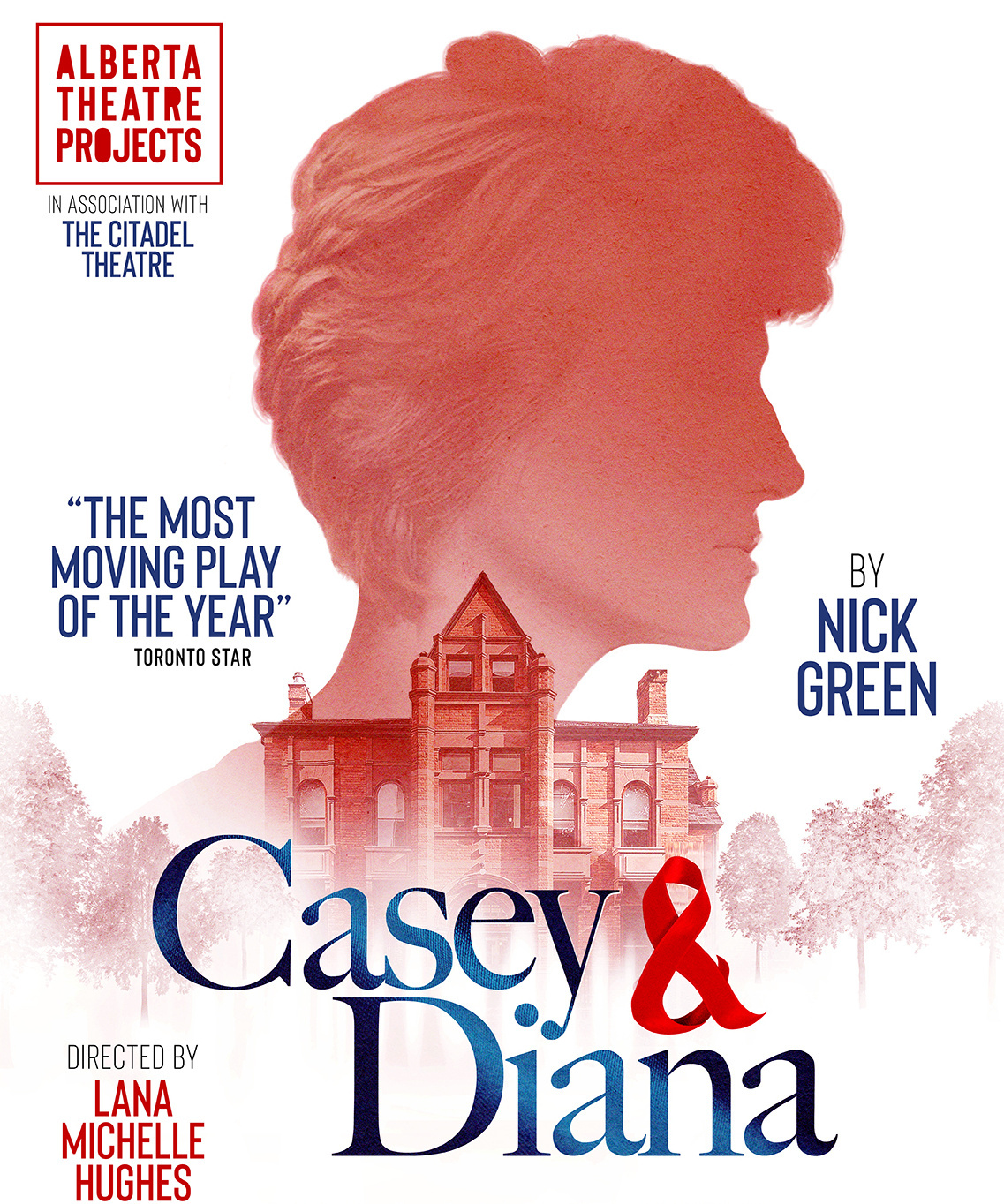
ATP’s Casey & Dianaclick image for showtimes & tickets!

By connecting Casey and Diana to Calgary’s own queer and HIV history, ATP makes it clear that the AIDS crisis was not something that only happened elsewhere. It affected people here, and its impact is still felt today. The production invites audiences to reflect on how community care, advocacy, and remembrance have shaped queer life in Calgary, and why those histories continue to matter.

{KA}

Remembering Mark

One of the moving aspects of working on local gay history is that—sometimes—the stories you are sharing of long dead activists come to life when living family members reach out and connect.

In April, I was writing a series about AIDS: reflecting on one pandemic while we move through another. I discovered the story of Mark Perry-Schaub, a thwarted Calgary ’88 Winter Olympics volunteer, who fought to regain his volunteer position after losing it, because he had AIDS.

After coming across the post, Ann—a relative—wrote to me. Mark died before Ann was born; this unknown Uncle left a haunting ache in Ann’s family.

Mark Perry-Schaub (photo courtesy of his family)

Ann explained: “I’ve always been drawn to learning more about Mark, and talking about him. That’s why I contacted [his friend] Dave McKeen when I was 16, and attempted to contact Doug McKay, Mark’s friend who’d been his roommate and cared for him in the final months (unfortunately McKay died in 2005 when I was a toddler). I’ve written a number of essays on Mark, and AIDS in general, for school… I just always wanted to know more, like as much as is possible without being able to meet him. I think being LGBT+ myself results in me being even more interested, like he could have been such a great supportive figure in my life. We could have been close.” 

Ann shared photos, news clippings, and fleshed out details of Mark from family stories. Mark, even appeared in an AIDS Calgary video: Respect Yourself Protect, Yourself. Although I had seen it before, I did not make the connection that the man named Mark in the video was Mark Perry-Schaub. What a surprise to see Mark animated again!

Mark in a still from AIDS Respect Yourself Protect Yourself

According to Ann, Dave McKeen told her that: “Mark had a heart of gold and even when too ill to really help, he was still volunteering his time and energy to help those in greater need; no one volunteered as much as he did.”

Mark died on April 1, 1988, aged 26, just weeks after the Calgary Winter Olympics concluded. His memorial service was held at the Metropolitan Community Church. Although his parents weren’t in attendance, his siblings were; it was a profound loss.

Ann shares, “it sounds like he was an amazing person. Of everyone, alive or dead, he’s the person I’d want to meet the most. I imagine he’d have been an awesome uncle.”

I think Ann is right…

{KA}

AIDS vs. the ’88 Olympics

{The Calgary Gay History Project is writing a series about AIDS history reflecting on how Calgarians and Canadians reacted to this earlier pandemic.}

If you lived in Calgary in 1988, you would remember the heightened sense of reality and esprit de corps that was the Winter Olympics. It was a time of Hidy and Howdy, sun ice jackets, and the frequent repetition of Calgary’s Olympic colour palette: teal, purple, orange, red, and pink. It was also a time of AIDS.

Gay bus driver, Mark Perry-Schaub, was a volunteer driver for the Calgary ’88 Olympics Committee (OCO). For three years, he participated in transportation planning with the OCO but was ousted from his position in December 1987 when he informed them of his then-recent AIDS diagnosis. He fought to be reinstated and, when denied, took up his cause through local media. The 25-year-old Perry-Schaub was told by volunteer manager Paul Taylor that he could no longer work on the transportation committee because in case of a traffic accident, OCO did not want him to either administer first aid or bleed on anyone.

The media pressure worked. The OCO managed to find Perry-Schaub a different volunteer job after a significant amount of public scrutiny. The OCO’s press secretary Bill Payne said: “We have an obligation to minimize the risk at any time. Some might say it’s a slight risk, but at what point do you take action?”

Perry-Schaub told reporters after his closed-door meeting with OCO officials: “I would rather be in transportation where I was trained. In my opinion, I think OCO has over-reacted. I felt I’d been railroaded into a new position.”

AIDS Calgary Executive Director, Doug Morin, was critical of the OCO. He stated: “It’s a decision based on inaccurate and incomplete information. Mark is not a threat to himself, OCO staff, or volunteers. There’s no significant risk that can’t be dealt with through adequate precautions.” Morin also noted that the OCO refused an AIDS Calgary offer to provide educational materials to the organization.

A week after the meeting, the OCO offered Perry-Schaub the choice of a dozen new jobs. He selected a position in the main press centre’s video distribution office. It turned out that the job was the last big project of Perry-Schaub’s life; he died just a few weeks after the games concluded in February 1988.

Despite being weakened by illness, Perry-Schaub put in long hours in the media centre video library, distributing cassettes of Olympic events to journalists. “It was really important to him to be an Olympic volunteer,” said Terry Steward, manager of OCO information services and Perry-Schaub’s boss. He added that OCO officials had reservations about letting Perry-Schaub work in the media centre for fear that visiting journalists might complain – however none did, even after learning about his situation.

By mid-March, Perry-Schaub was admitted to hospital with pneumocystis carinii pneumonia (his third bout). He died on April 1st, 1988. More than 200 people attended his memorial service, but his parents stayed away. They had disowned their son because he was gay.

Screen Shot 2020-04-24 at 5.27.25 PM

Mark Perry-Schaub’s panel (left), part of Section 24 from the Canadian Aids Memorial Quilt website.

When the AIDS memorial quilt made its stop in Calgary in July 1989, 14 local panels were added to the 1000 visiting ones. They were hung in layered sections in the Calgary municipal building atrium. One of the new panels was in tribute to Mark Perry-Schaub made by his friend Dave McKeen whom he had met at AIDS Calgary.

Perry-Schaub’s panel is adorned with a huge heraldic lion, draped with a banner bearing his name as well as the symbols of the Calgary Winter Olympics where, according to his friends, he had the time of his life.

{KA}