Were you sporty in the last century?

{This week we are sharing a call for participants in a research project investigating local LGBTQ+ sports history.}

My name is William Bridel and I am an Associate Professor in the Faculty of Kinesiology at the University of Calgary. I am also a 2020-2021 Calgary Institute for the Humanities Fellow. I am a member of the LGBTQ+ community.

Calgary’s CLUE Magazine and their cover story about the 1994 Gay Games

I am conducting research to explore sport and physical activity in the lives of Calgarians who identify as lesbian, gay, bisexual, transgender, queer, or another LGBTQ+ identity and who participated in sport or physical activity during the time period of approximately 1960 to the early 2000s. My primary interest is in investigating the role sport and physical activity played in individuals’ lives but also in relation to community-building. My project seeks to build on the amazing work of Kevin Allen and the Calgary Gay History Project as well as research done with a former honours student at the University of Calgary, Connor MacDonald. The University of Calgary Conjoint Health Research Ethics Board has approved this research study (REB20-1526).

A Calgary Softball Team from the 1960’s that was predominantly lesbian

For this study, I am seeking individuals who identify as LGBTQ+ and who participated in sport or physical activity in Calgary at some point between the 1960s and early 2000s. Participants must also be English-speaking as I am unilingual. You will be asked to participate in an interview lasting around 60 to 90 minutes during which we will talk about your participation in sport—mainstream and/or LGBTQ+ specific (e.g., Apollo, Different Strokes, softball, bowling, etc.)—or physical activity (e.g., YMCA/YWCA). I would also like to discuss the meaning that sport and physical activity has had in your life.
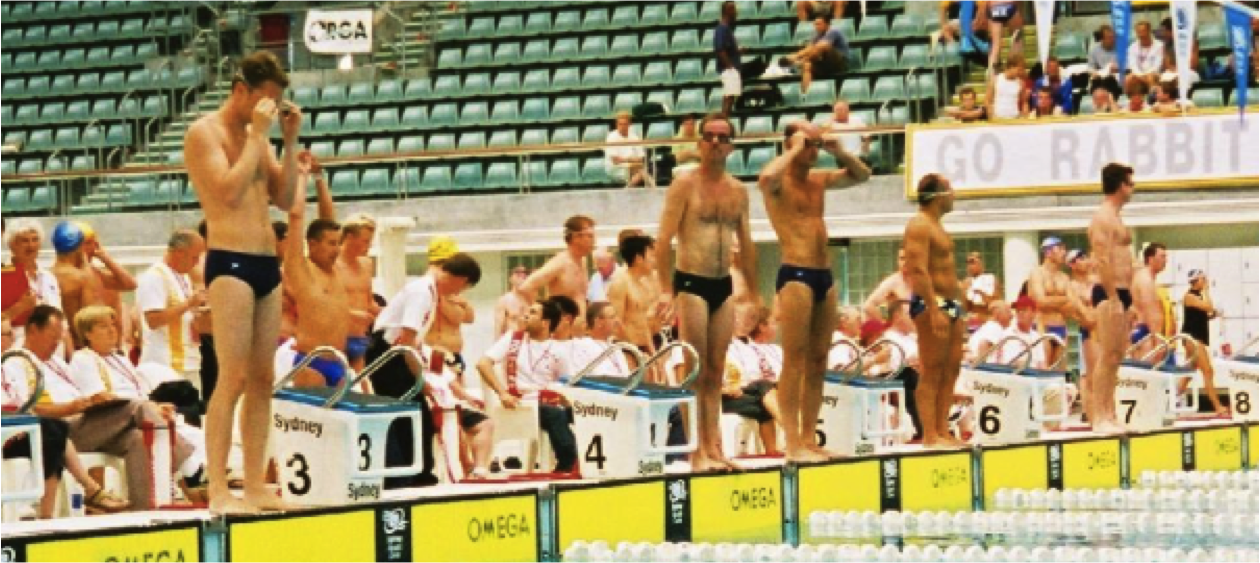
Calgary’s Different Strokes Swim Club at the Gay Games in Australia (2002)

I will be conducting interviews virtually given the global pandemic; we can discuss different options such as Zoom, Skype, FaceTime, phone, etc. The interviews will be confidential, and steps will be taken to ensure your privacy throughout the process. If you choose, a pseudonym can be used in place of your name and team and organization names can be altered at your request. Interviews will be scheduled for a day/time that is most convenient for you.

If you are interested in participating in this study, please email me at william.bridel@ucalgary.ca with the following information: (1) name; (2) brief comment on your involvement in sport and/or physical activity during the 1960s to early 2000s; (3) your gender identity and sexuality; and (4) your pronouns. Once your message is received, I will contact you to discuss the study in further detail and to determine if you are still interested in volunteering to participate.

Womyn’s Annual Golf Classic organizers, Sam & Bailey, organized Lesbian long weekends in Fernie, BC in the 90s

I am also happy to answer any questions that you may have about the study. I can be reached at william.bridel@ucalgary.ca. Thanks so much for your time and consideration. —William (he/him)
Everett Klippert Coda

As many readers of the Calgary Gay History Project know, a lot of our work has been focussed on the life of Everett Klippert—unjustly incarcerated for most of the 1960s for being gay.

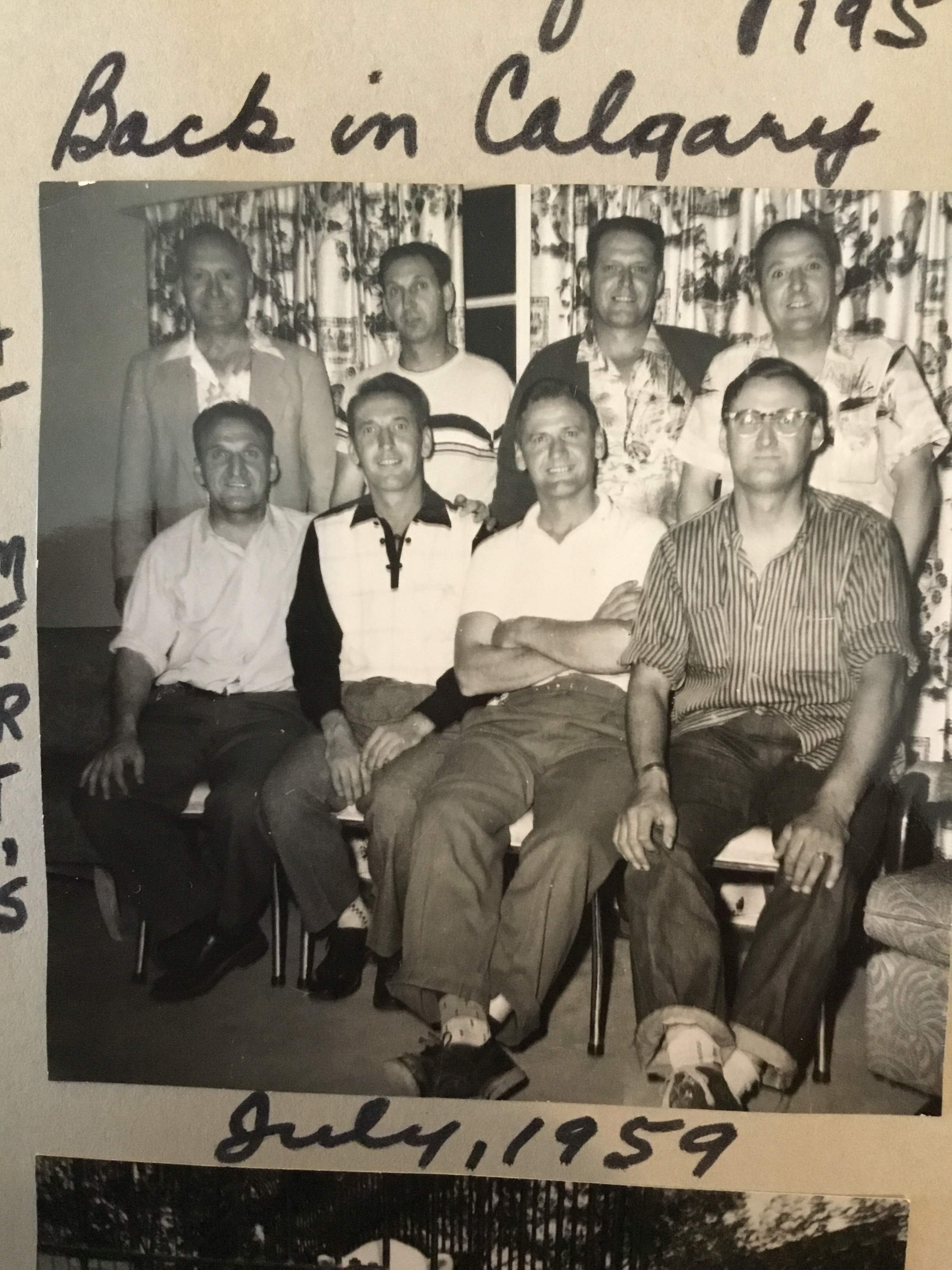
Everett (bottom right) with his brothers, the year before his first incarceration

In 2020, the Klippert family applied to the Parole Board of Canada for an expungement of their uncle’s criminal record—a provision that was made available to them through the Expungement of Historically Unjust Convictions Act. This Act was part of the Government of Canada’s formal apology to the LGBTQ2 community in 2017.

The expungement order was granted on November 18, 2020, which means Everett is deemed never to have been a criminal. Although he died almost 25 years ago, his family is deeply satisfied with the outcome.

Interestingly, Ottawa-based lawyer Brian Crane, who defended Everett in the Supreme Court trial of 1967, offered to assist the family with the application, pro bono. It’s remarkable that Mr. Crane’s career has spanned these two ends of Everett’s story.

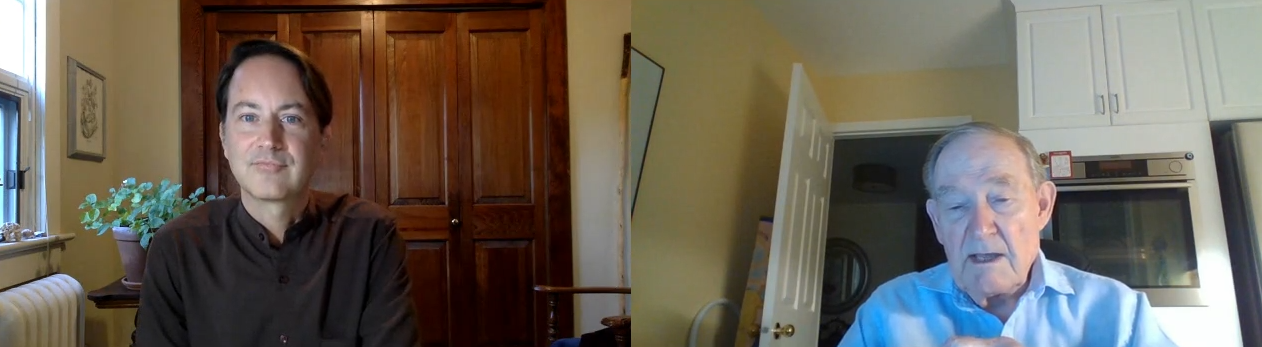
Kevin Allen and Brian Crane in conversation as part of Calgary Pride’s 2020 History Program

The Calgary Gay History Project is very grateful to have been part of this journey with the Klippert family. To learn more about Everett’s story, and why it is important to Canadian history, we have included a few links.

Gross Indecency: The Everett Klippert Story, an award-winning 17 minute documentary by director Laura O’Grady.

Legislating Love, the podcast by playwright Natalie Meisner, Sage Theatre and the Alberta Queer Calendar Project.

Why I’m Celebrating 1969 and Calgary’s Gay Rights Anti-Hero in the Sprawl.

Everett Klippert in the Canadian Encyclopedia

Klippert Month: a series of articles on this website about the life of Everett Klippert.

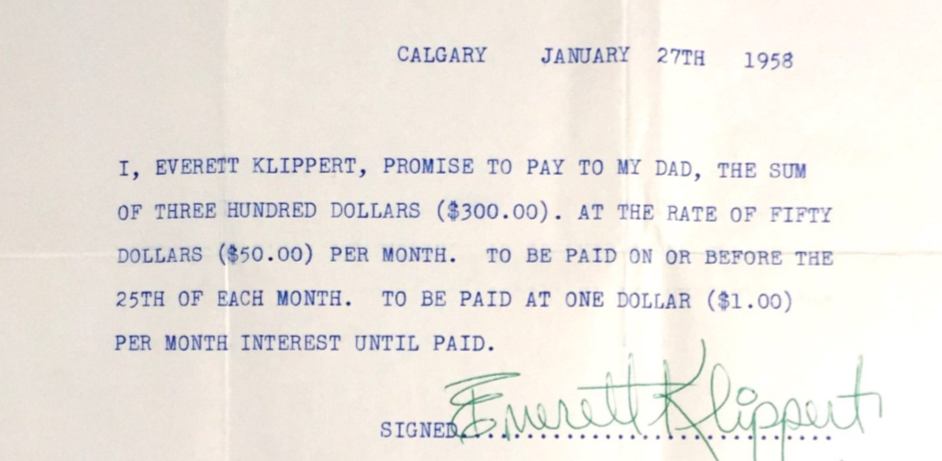
A car loan due to Merton Klippert—Everett’s debts are paid in full.

{KA}

YYC Queer History be my Valentine

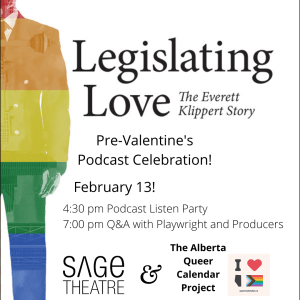
Legislating Love: The Everett Klippert Story has returned as a radioplay and podcast. To celebrate, the Alberta Queer Calendar Project and Sage Theatre are hosing an online Listening Party, on Saturday, February 13th at 4:30 pm. Participants will gather to listen to the episode, followed by a Q&A with members of the cast and crew at 7:00 pm {including Kevin and Tereasa from the Calgary Gay History Project}.

Legislating Love was written by Calgary author, playwright, poet, and professor Natalie Meisner. It premiered in March 2018 at Sage Theatre to critical acclaim. The play explores the story of Calgary bus driver Everett Klippert, who was the last Canadian convicted of being a dangerous sexual offender because of his homosexuality. The Supreme Court of Canada’s landmark judgment in November 1967 set a new bar for injustice: Klippert was given a life sentence.

The play is told through the perspective of aspiring historian Maxine, who is researching the story of Everett. She becomes fascinated with Everett’s case and with discovering the man beyond the headlines. Inspired and captivated, Maxine connects with a senior at a local assisted living facility she knows only as Handsome, one of Klippert’s lovers and perhaps the only person who can truly illuminate the past. At the same time, Maxine is navigating her own new relationship with Métis comedian Tonya. This heartwarming, multi-generational exploration of queer love tells the near-forgotten story of one of Canada’s quiet heroes and reminds us all that the past must be remembered as we work together for a better future.

The radioplay features the work of Jason Mehmel (director/production coordinator), Kathryn P. Smith (sound designer), as well as actors Jenn Forgie, Matt McKinney, Kevin Rothery, and Kathy Zaborsky. Details about the episode and the launch party can be found at sagetheatre.com.

===

Shaun Hunter recently released an online literary map of Calgary; a product of her Historian in Residence time at the Calgary Public Library. Heritage Calgary is a partner organization in this residency and you can find the map on its website: here. Note: there are several queer spots to discover (I was delighted to find the Tegan and Sara house). Shaun has compiled an LGBTQ+ reading list that can accompany one’s geographic sleuthing.

===

Finally, my own valentine, Gordon Sombrowski, has publicly released a new short story, titled Pigeon Droppings—set in Calgary—as a teaser to his upcoming collections of short stories: What Narcissus Saw.

{KA}