Category Archives: Uncategorized

#WeAreCalgaryPride

I’m looking very much forward to Pride Week which starts today. So many community organizations and businesses have taken up the call to be celebrate pride creatively in reaction to the pandemic.

There is a lot of queer history programming in 2020, in recognition of Pride’s 30th Anniversary. Four events remain in our colleague, Tereasa Maillie’s Our History Matters online series. {In fact, the Calgary Pride Founders are speaking tonight in a panel called Origins!}

Calgary Pride has set up a helpful mobile app to help organize your pride week schedule.

I {Kevin} have four more gay history walking tours – all of which are fundraisers for Calgary Pride.

Beltline Walking Tour with Brunch – Saturday, August 29th @ 11 AM

Downtown Walking Tour – Saturday, August 29th @ 2 PM

Beltline Walking Tour with Brunch – Sunday August 30th @ 11 AM

Downtown Walking Tour – Saturday, September 5th @ 2 PM

On Thursday, September 3rd @ 7PM, the Calgary Institute for the Humanities at the U of C is presenting The Rise and Fall of Lesbian Nation: A Brief History of Lesbian Feminism, with one of my favourite historians. Dr. Lillian Faderman is the award-winning author of 11 books on lesbian and LGBT history; The New York Times named three of her books on its “Notable Books of the Year” list, and The Guardian named her book, Odd Girls and Twilight Lovers, one of the Top 10 Books of Radical History. Amazing!

In collaboration with Calgary Public Library and Shelf Life Books, I will be doing an outdoor reading from Our Past Matters in Central Memorial Park on Sunday, September 6th from 3-4 PM. Books will be available for sale and enticingly I have some new stories to tell—history that was discovered after the book was published. Please register in advance.

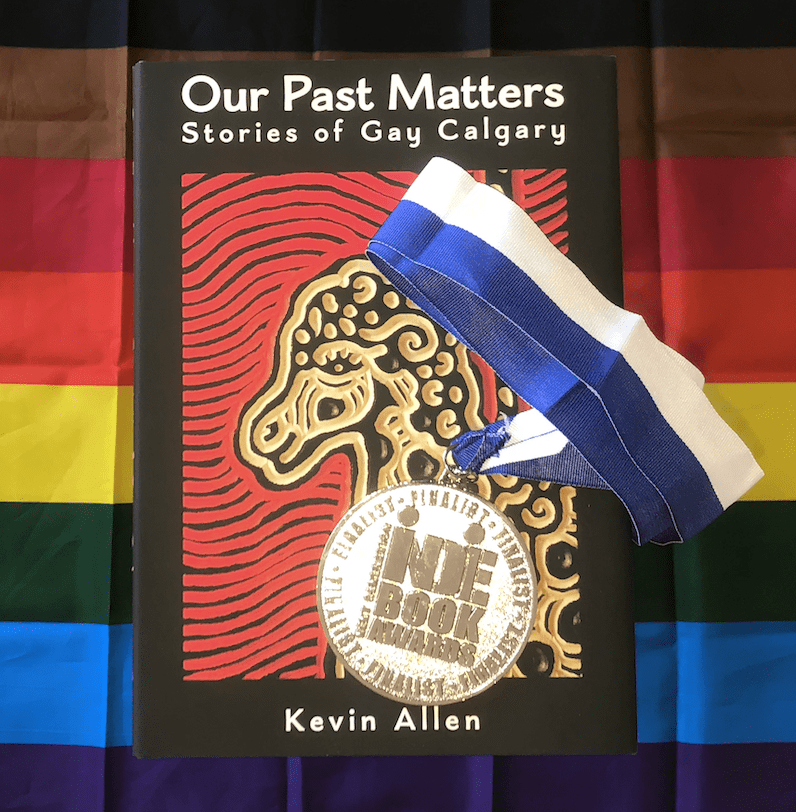
Surprisingly, a medallion arrived in the mail this week for a book award we received earlier this summer. (I didn’t know a medallion was coming—it is too embarrassing to wear—but I am very grateful and proud.)
Finally, I would like to give a shout out to the Library’s current Historian in Residence, Shaun Hunter, who came up with a sensational YYC Pride Week reading list, queering our city in fiction, non-fiction, and on our stages!

{KA}
Social Distancing in 1985

{As part of a new series, the Calgary Gay History Project is writing about AIDS to explore how Calgarians and Canadians reacted to this earlier pandemic.}

In the early years of the AIDS pandemic, people didn’t know how it spread. The gay community was particularly fearful and reactions varied. In 1985, Brian Chittock of the AIDS Committee of Montreal reported that the friends of one person with AIDS summoned a police car when he fell sick in their house, sent him away and then discarded all his clothes and everything he touched. Social distancing made pariahs of many AIDS victims. A mobilizing fact for journalist June Callwood, who founded the first AIDS hospice in the world, Toronto’s Casey House.

By the mid-80s however, scientists had determined that casual touching was not transmitting the virus; it could only be transmitted by an exchange of bodily fluids.

Nonetheless, some gay and bisexual men were so terrified of contracting AIDS they became celibate and had physical intimacy problems ever after – call it “sexual distancing” or “sexual self-isolation” perhaps. Allan Pletcher, a Vancouver community college teacher who had tested positive, participated in a three-part panel show on CBC television that was watched by more than a million people each day. He declared: “I am chaste, and I will remain so until I am cured or I die. I assume that responsibility.”

The Body Politic, Canada’s gay newspaper founded on gay liberation principles, had an editorial approach to AIDS coverage that was skeptical of scientific and media authority. They wrote about: “the need to resist panic and hysteria both within and beyond the gay community; the need to seek information on which we can make informed judgments about sexual practices; and, most recently, the need to preserve what is best and most distinctive about gay erotic culture in the face of a disease which apparently threatens its very roots.”

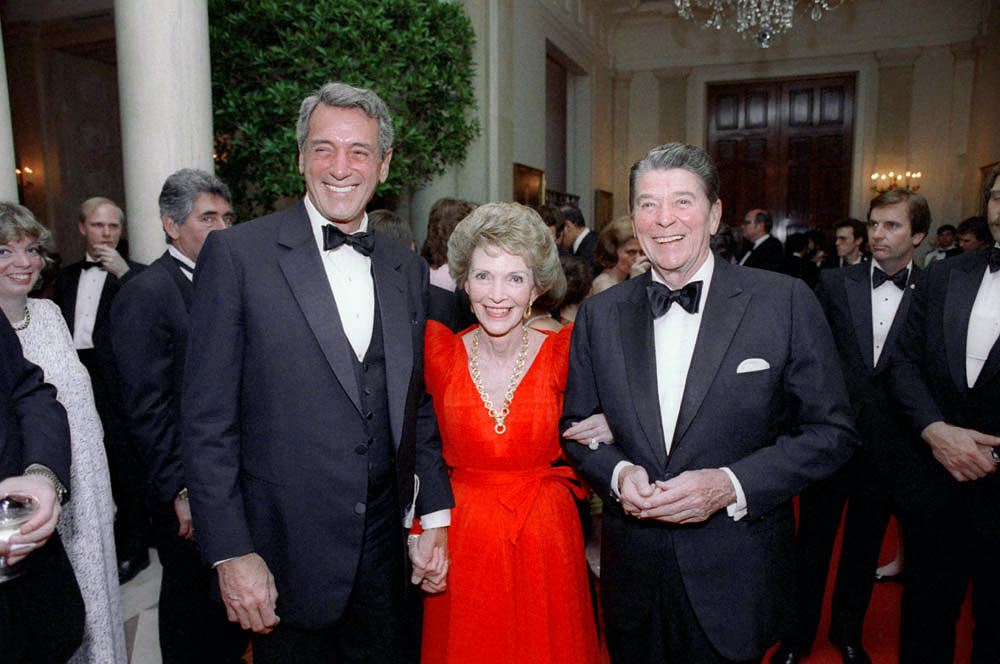
A telephone survey of 500 San Francisco gay and bisexual men in June 1985, found that eight out of 10 respondents said they had made dramatic changes in their sexual behaviour. Later that summer, celebrity actor Rock Hudson revealed he had AIDS; he was dead by October. Hudson’s plight had an immediate impact on the public profile of AIDS.

Reagans_with_Rock_Hudson

Rock Hudson with Nancy & Ronald Reagan in 1984: source, Wikipedia.

In Calgary, there was a “social coming together” of people concerned about AIDS and the deaths that were happening in the city. The first meeting for what was to become AIDS Calgary happened in September 1985.

{KA}

Klippert Month – Week 2

It was (Inter) National Coming Out Day this week, which makes it timely to discuss Everett Klippert and his repeated disclosures. Despite homosexuality being a criminal offence in 1960s Canada, and his multiple convictions of gross indecency, he was always frank and truthful in his interactions with the state, even though he paid a severe penalty for that honesty.

Screen Shot 2017-10-12 at 4.05.44 PM

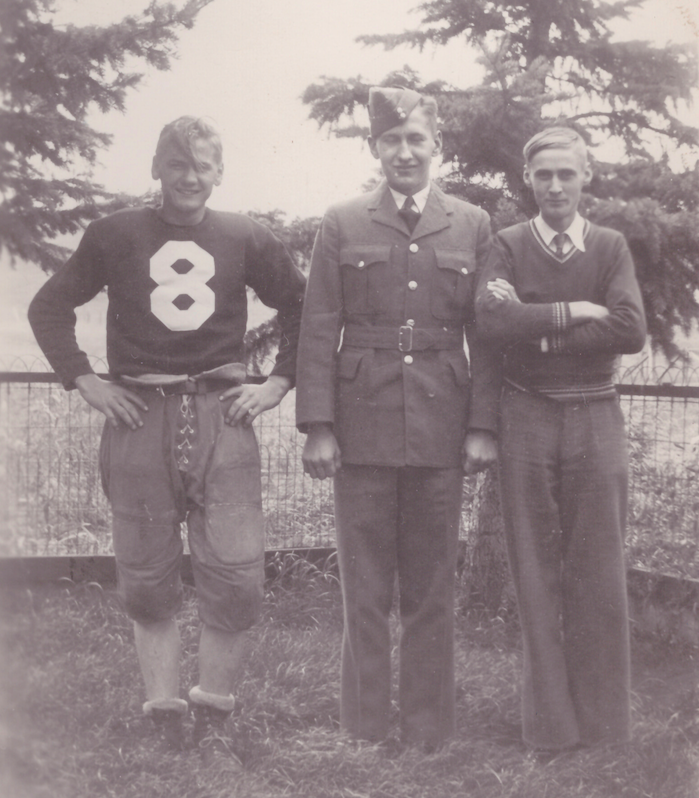
Young Everett Klippert (right) in Klippert Family Photo.

When Calgary Police questioned him about the 18 names in his little black book, which was also his dating record, he confessed to having had homosexual relations with them all.

In Pine Point, NWT, local RCMP brought Klippert in for questioning and threatened him with an arson charge of which he was innocent. Using it as leverage to open Klippert up about his sex life, he readily confessed to having had intimate relations with four men there.

In every court case, he pled guilty. A court psychiatrist reported that Klippert told him his “homosexual behaviour had existed since the age of 15; that to him homosexual activity [was] his only satisfactory sexual outlet. He found the thought of heterosexual conduct abhorrent. He told me that he never had heterosexual relations.”

Screen Shot 2017-10-12 at 4.08.47 PM

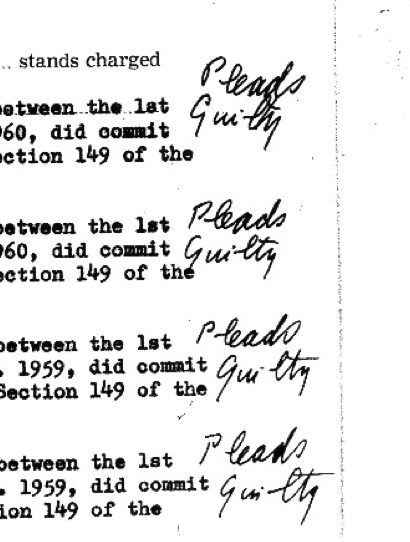
Hand-scribbled judicial annotations in Klippert’s 1960 conviction in Calgary. Source: Provincial Archives of Alberta.

Gay activist and lawyer Douglas Saunders interviewed the incarcerated Klippert in December 1967 in what he described as the “fortress-like Penitentiary at Prince Albert, Saskatchewan.” His unjust treatment gave his convictions a certain resolve. Klippert told Saunders: “If I meet someone on the outside now and he asks me, I’ll say sure I’m a homosexual, what are you? I’m not going to be ashamed of it anymore.” Klippert who grew up Christian took comfort in his prison bible and noted Psalm 22:24 to Saunders: “For he has not despised or scorned the suffering of the afflicted one; he has not hidden his face from him but has listened to his cry for help.”

Coming out cost Klippert much. We can thank his candour for prompting Canada to change its draconian laws around sexual orientation in 1969.

{KA}