Tag Archives: Rudy Labuhn

The Parkside Continental Logo

This summer, the historic leaded glass piece, which was the iconic logo of the Parkside Continental, was restored to the address of that legendary Calgary gay bar at 1302 4 St. SW (now Shelf Life Books).

The piece was reclaimed and preserved by John Holt, a former co-owner of The Green Room, a secondary space that opened above the Parkside in the early ’80s. {He is also handy enough that he personally installed it at Shelf Life!}
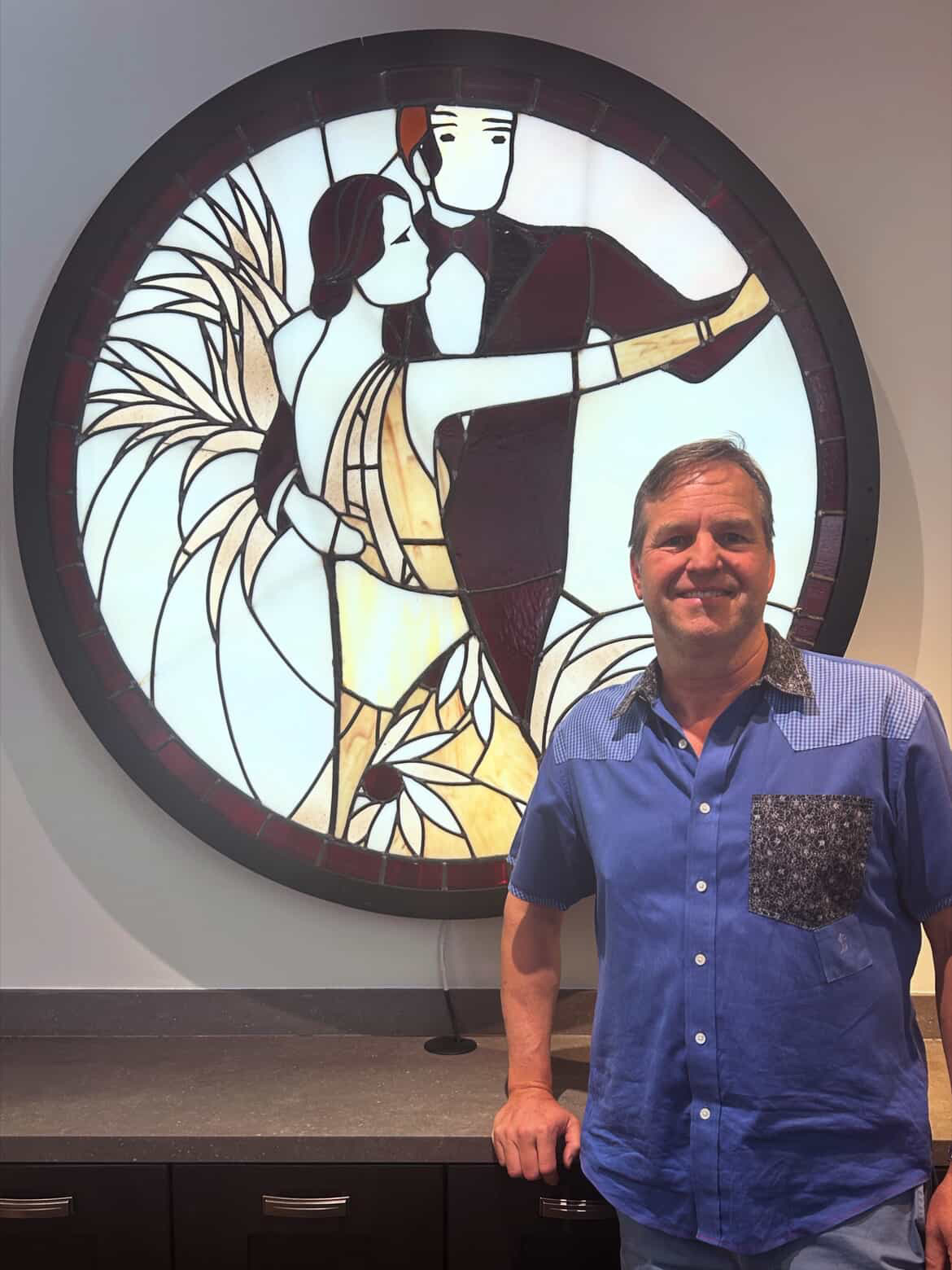
John Holt with the restored Parkside Continental glass panel at Shelf Life Books.

The building at 1302 4 St. SW was built in 1972 by developer Oscar Fech, who also opened a restaurant there in the spring of 1973, the Continental Steak House. Later that same year, Oscar sold the restaurant to Vance Campbell, who rebranded the spot the Parkside Continental Steak House and made it gay in the evenings (to Oscar’s chagrin).
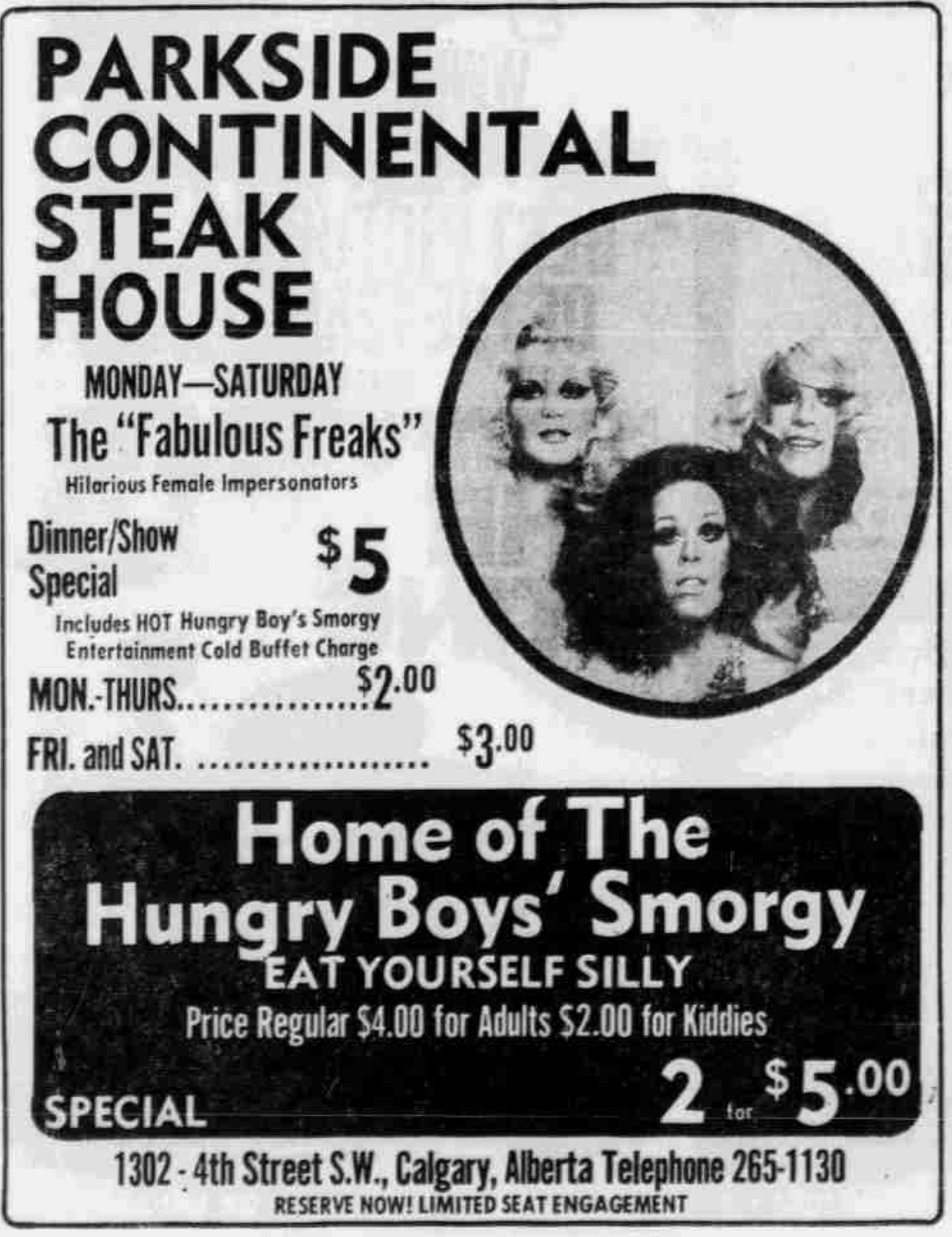
Advertisement in the Calgary Herald, June 27, 1974.

As the business developed (and got gayer), Vance and Parkside manager Rudy Labuhn were looking for an image for the corporate brand. They stumbled across an image in an art deco magazine and repurposed it for the Parkside. Vance remembers: “I used the logo on our vehicles, our other venues, on the staff uniforms of the Parkside Tropicana and Myrt’s Cafe in Vancouver, and at Myrt’s Cafe in Calgary. I recall asking my Calgary lawyer years ago to trademark the logo as ‘an art deco illustration of a man and woman dancing within a circle’ used for the expanding Parkside empire, which included Myrt’s.”

The leaded glass piece was commissioned when Vance and company renovated the Parkside and opened The Green Room on the second floor. It was installed at the top of the stairs adjacent to the entrance of The Green Room.

John Holt writes that the Parkside Continental was a raucous place. “The discotheque [was] busier past midnight, after patrons would finish with their “straight” lives. Thick blue air from cigarette smoke, thumping disco music, wild hair, skin-tight jeans, handkerchiefs signallying desires, spinning and spiralling on the dance floor. THE place to party.”

In contrast, John recalls: “The Green Room was a luxurious lounge with a white mahogany piano bar, a glorious fireplace, and bulletproof green sofas. It defined glamourous! There were drag performances every night of the week.”

When asked why John paid for the restoration of the glass panel and its installation at Shelf Life, he explains: “Many memories were created in the walls of this building; some clear, some faded, some lost. It has played a vital role in our community. I celebrate bringing this piece of the past to the present. It belongs to all of us.”

{KA}
The Golden Age of Gay Bars in YYC

{The Calgary Gay History Project is revisiting its most impactful blog posts—now numbering in the hundreds—since its inception nine years ago. The Golden Age of Gay Bars in YYC has been the source of much nostalgia since it was published on September 22, 2017. It recounts a time of oppression, community, possibility and camaraderie.}

Calgary was booming in the 70s. The city’s population increased about 50% in those 10 years. Club Carousel, the only gay club at the beginning of the decade saw its popularity wane as commercial gay bars opened in the city. The owners and operators had more capital to invest in their emerging discotheques, and the growing gay community flocked to them.

The Parkside Continental ran from 1973-1986 and was located at the corner of 13th Avenue and 4th Street SW (where Shelf Life Books is currently). The Parkside was named after a famous gay tavern in Toronto. Vance Campbell, a businessman and gay bar owner from Vancouver moved to Calgary to start the Parkside with local partners.

In the early years, there were provincial regulations about food being served with alcohol at bars. Rudy Labuhn, who was initially a DJ at the club and then manager, remembered that when the Parkside began they served 50 cent burgers to all drinkers.  He explained that the Province also limited the amount of recorded music that could be played. Fortunately, a straight bar called Lucifer challenged those rules successfully ushering in the age of disco to Calgary. Interestingly, the bar would end most nights with a song that was decidedly more downtempo: Broadway singer Maureen McGovern’s song, “The Continental.”

Vance

A grainy image of Vance Campbell in front of the Parkside Continental from the Body Politic, Sept. 1980.

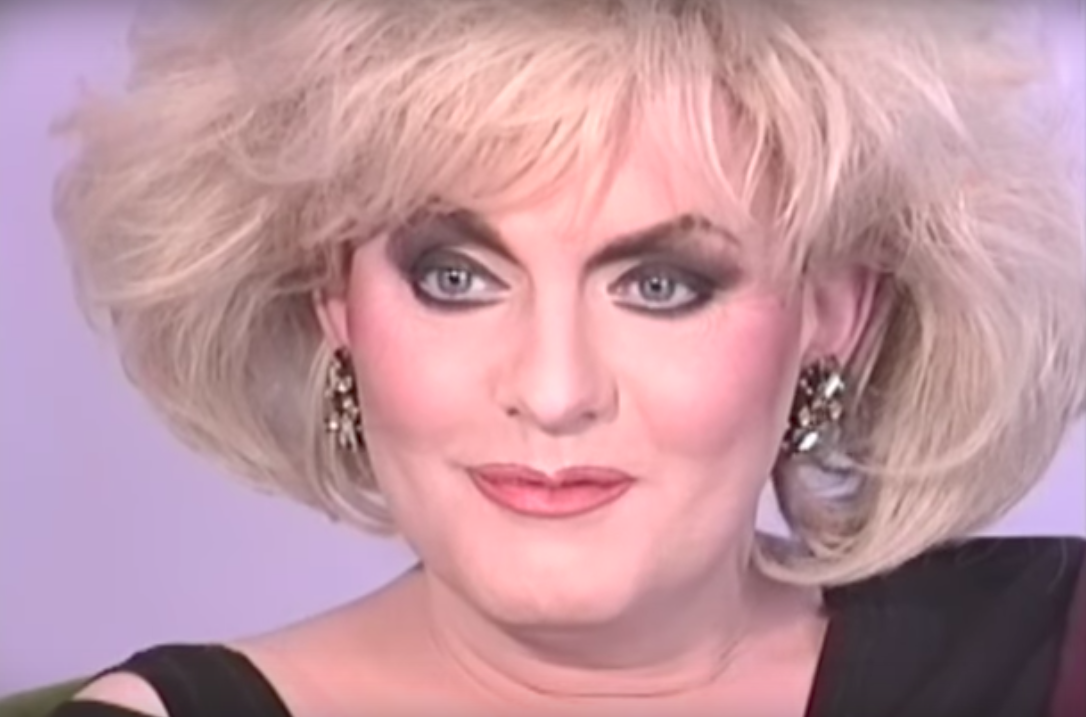
The Parkside expanded upstairs creating a second bar called The Green Room. The Imperial Sovereign Court of the Chinook Arch in April 1976 was founded there; their first coronation followed in January 1977 at the Holiday Inn Downtown. Drag legend, Sandy St. Peters who grew up in Calgary and lived and performed across Canada, entertained occasionally at the Parkside. After a big Saturday night at the bar, she would run across the street to campily welcome churchgoers arriving Sunday morning for early service at the First Baptist Church. In addition to drag performances, Eartha Kitt famously did a highly regarded concert one night in the Green Room.

Screen Shot 2017-09-22 at 12.46.50 PM

Sandy St. Peters (1953-2001). Image Source: YouTube

Vance Campbell proved to be a divisive figure at times publicly opposing the local gay activist community, which revolved around Gay Information & Resources Calgary (GIRC), headquartered only one block away. He was described by the Body Politic in 1980 as one of the power brokers in the gay community “confident enough of his position to write to the mayor and counter GIRC’s claim that Calgary could face a gay rights march.”

Another reason perhaps why Campbell felt powerful was he was an owner of Calgary’s other gay bar of note: Myrt’s.  Opened in 1976, the sign on the building said Myrt’s Beauty Parlour and was located at 808 9 Ave. SW (now a parking lot). This gay lounge and disco were initially open Friday and Saturday nights for men only. As its popularity grew, it operated six nights/week and became a mixed club, reportedly played the best music in the city.

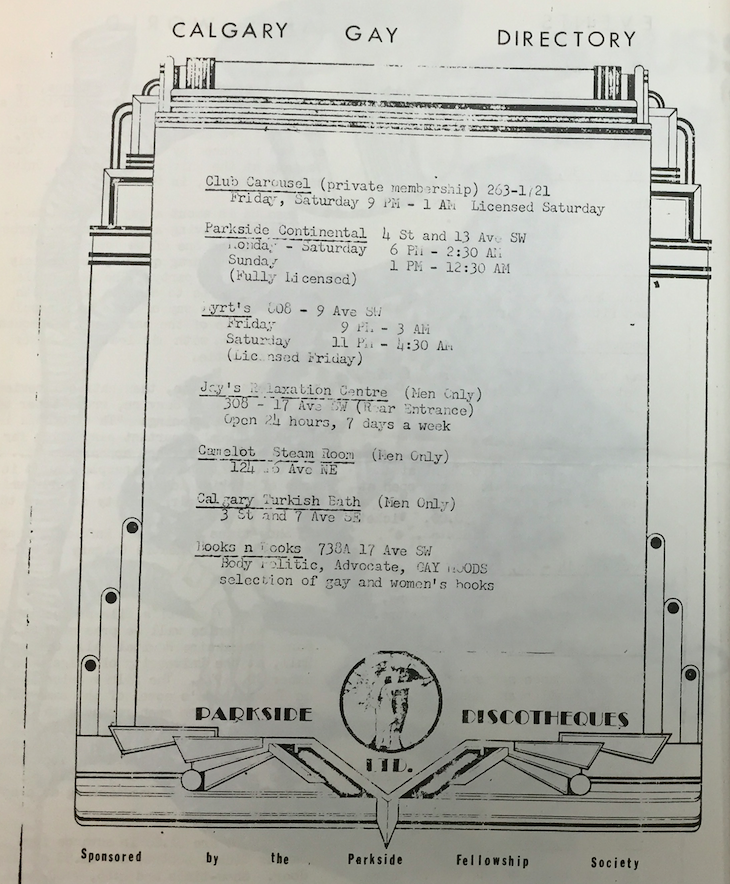
Parkside Discotheques

Advertisement in GIRC’s 1977 publication, “Gay Moods”

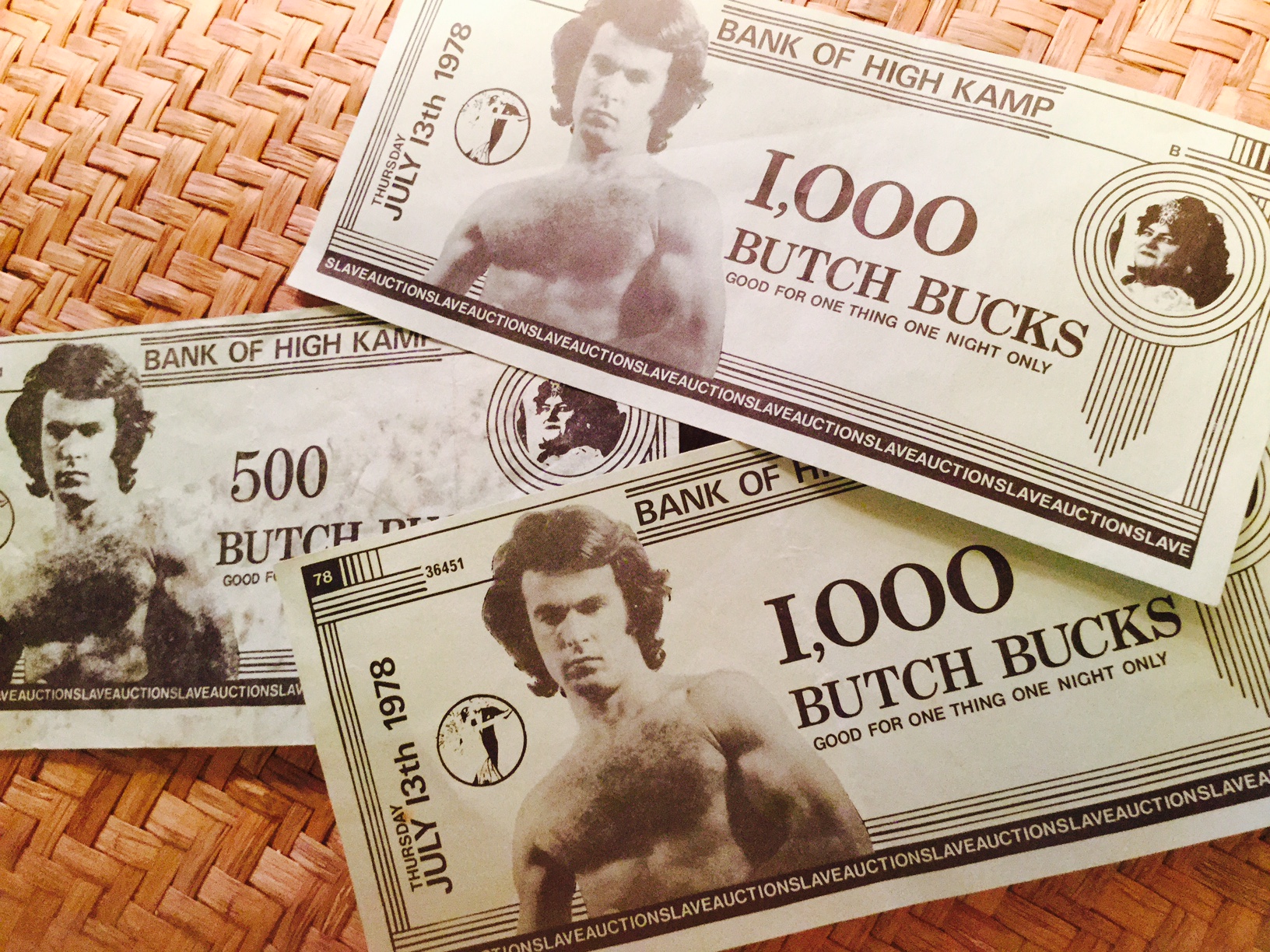
A hallway off the dance floor led to a 150-seat theatre known as the “Backlot” which also served as an after-hours bar. The gay community was encouraged to use it as much as possible; it was the venue for emerging theatre artists, Imperial Court drag shows, Mr Butch Calgary “Slave Auctions” and, on Sunday mornings, Metropolitan Community Church services. Myrts’ final song every night was Kermit the Frog’s “Rainbow Connection.”

Butch Bucks

Butch Bucks from a Calgary Slave Auction in 1978. Donated to the YYC Gay Archives by Terry MacKenzie.

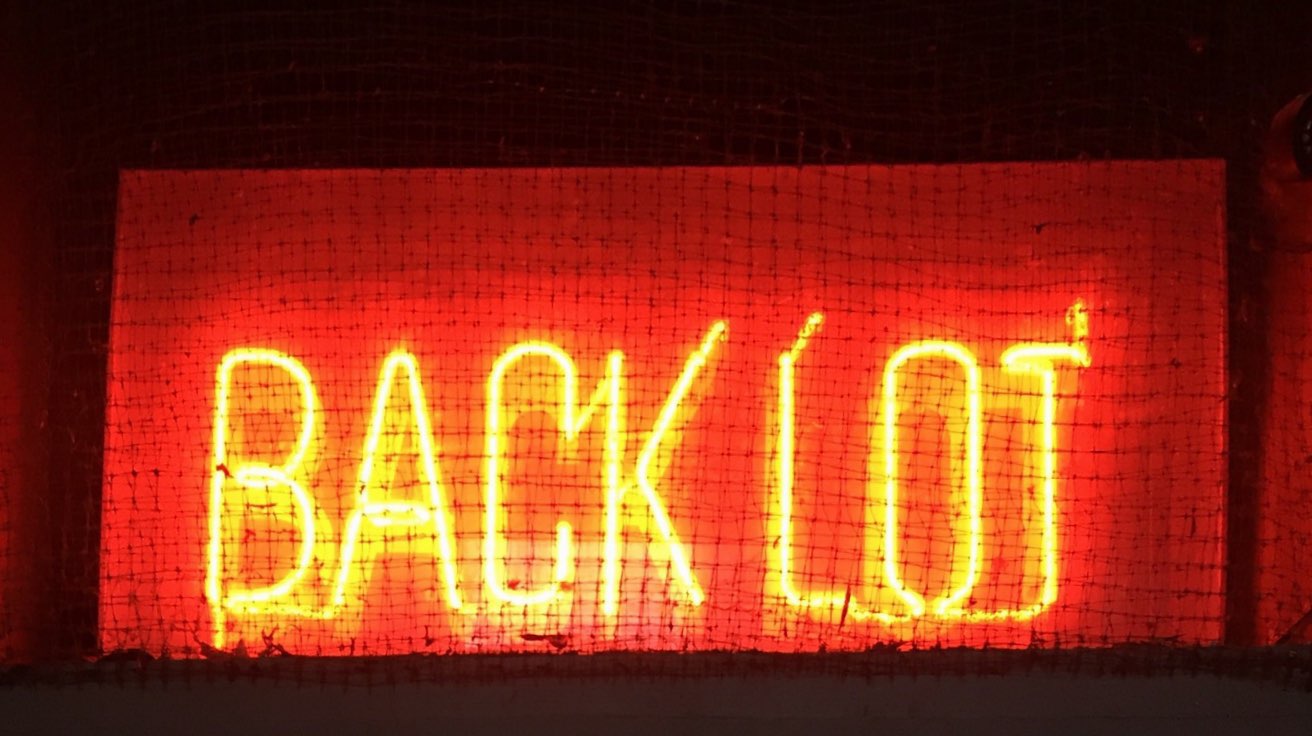
The bar closed on New Year’s Eve 1981/1982 as the building fell victim to boomtown redevelopment. Myrt’s and the Backlot briefly moved to 17th avenue before it closed again. One former patron broke into the site and retrieved the neon “Backlot” sign. The preserved sign now hangs over the door of the contemporary Backlot bar on 10th Ave. SW.

Backlot

Neon sign at the Backlot Bar, 2017. Photo: Kevin Allen.

{KA}