Tag Archives: Casey House

Casey and Diana at ATP: Theatre & Queer History

Casey and Diana, currently on stage until March 15th at Alberta Theatre Projects, revisits a specific historical moment during the AIDS crisis: Princess Diana’s 1991 visit to Casey House, Canada’s first free-standing AIDS hospice in Toronto. Set against a backdrop of fear, stigma, and widespread misinformation about HIV/AIDS, the play focuses on the residents and caregivers of Casey House as they prepare for a visit that would later be seen as culturally significant.
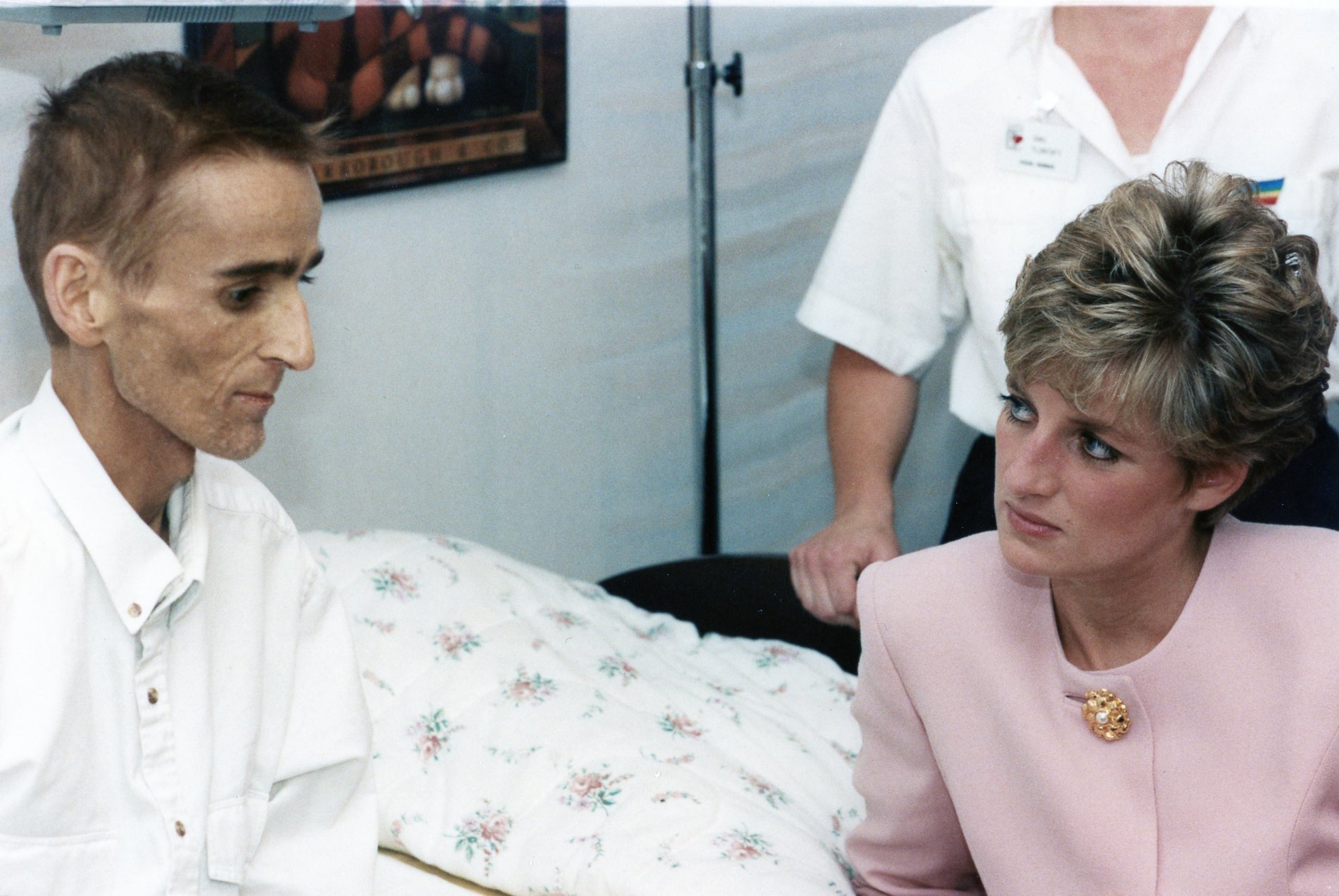
Diana, Princess of Wales with a resident of Casey House in 1991

Princess Diana helped shift public perception by challenging the myth that people living with AIDS were untouchable. But the play’s real power lies in its focus on the residents and caregivers — queer people and allies navigating love, humour, grief, and survival amid a crisis that decimated communities while governments largely looked away.
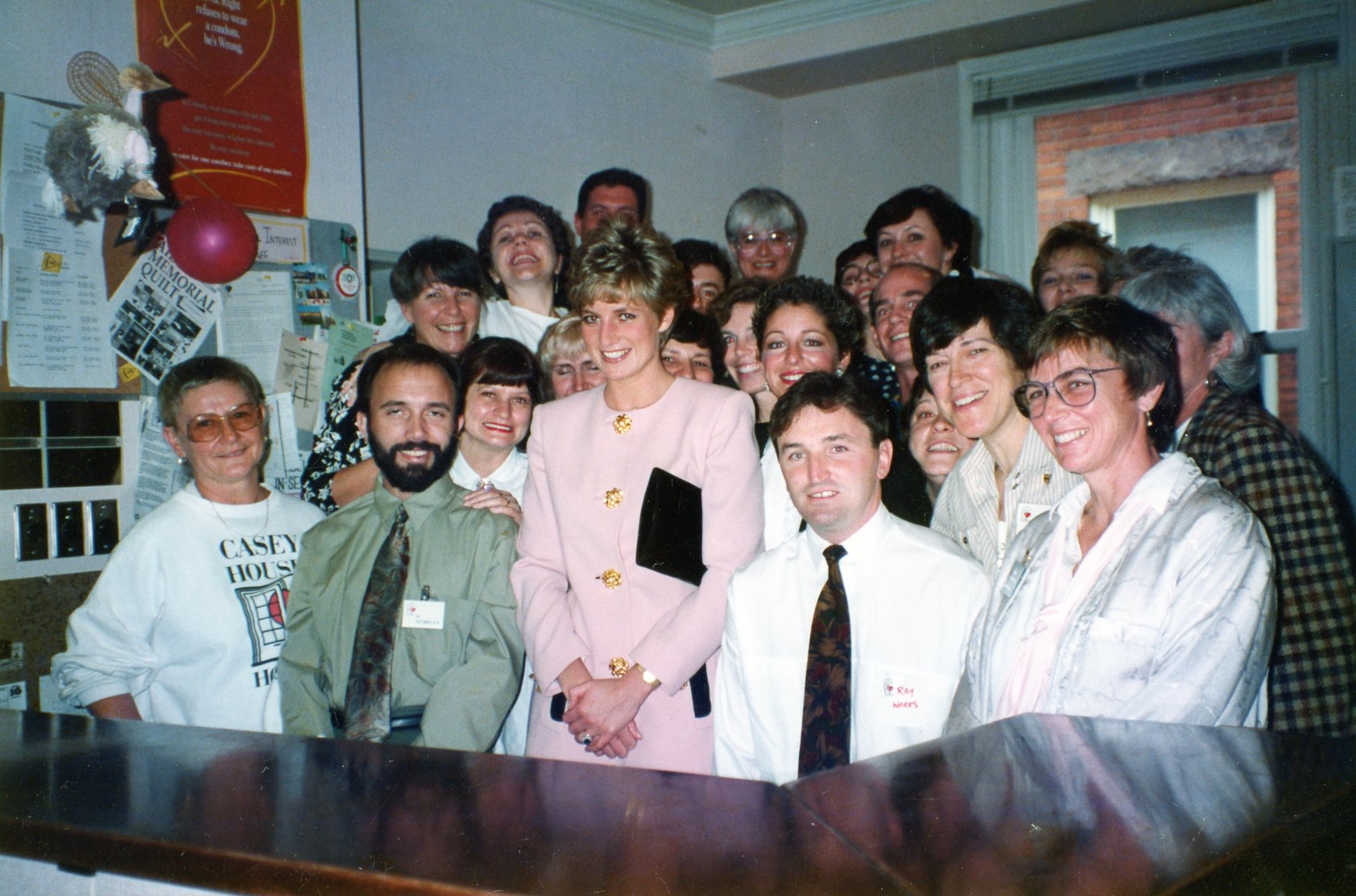
Diana with staff and volunteers of Casey House, 1991

ATP extends this historical framing beyond the stage through its lobby installations and community partnerships. As Raegan Frenette, from the company, notes:

Part of coming to Alberta Theatre Projects is being in the lobby and engaging with activations that make theatre more than just a show, but a full experience. For Casey and Diana, we wanted the lobby to feel like an extension of the story of Casey House, offering more context for how the AIDS crisis impacted our community here in Calgary.

To do this, we reached out to HIV-related organizations that have, and continue to, support our community through education, treatment, and prevention. We also included LGBTQ+ organizations that help build and sustain queer community across generations. Alongside these partnerships, we incorporated historical elements like the Queer Map of Calgary, Section 7 of the Canadian AIDS Memorial Quilt, and anecdotes in our program from real Calgarian experiences.

A very special shoutout to Safelink Alberta, SHARP Foundation, Calgary Pride, Rainbow Elders Society, Grandmothers to Grandmothers, the Afro-Care Support Network, Canadian AIDS Society, and the Calgary Gay History Project for engaging in the arts with us. We are so grateful for their participation and the amazing work they do in the community.
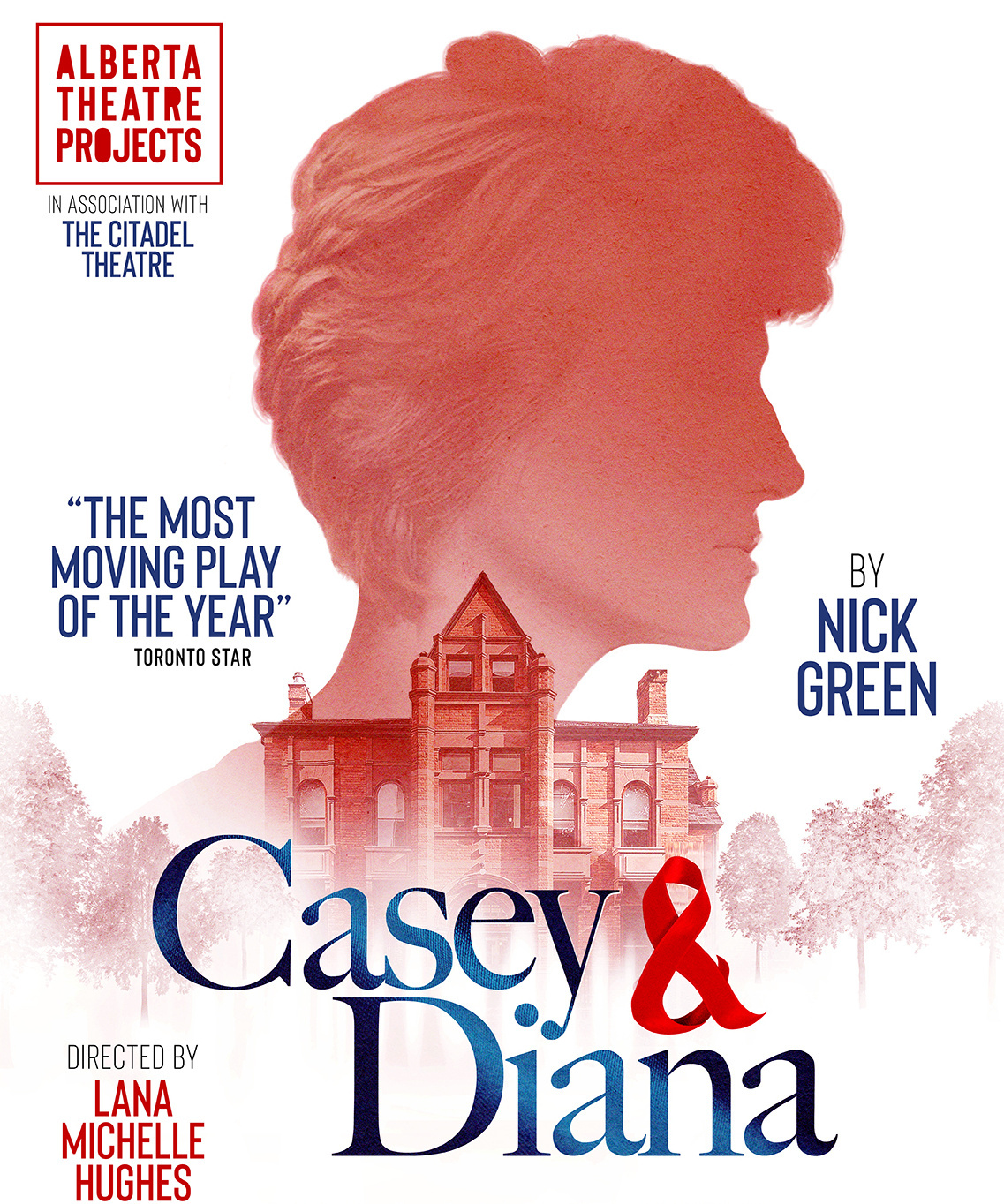
Image
ATP’s Casey & Dianaclick image for showtimes & tickets!

By connecting Casey and Diana to Calgary’s own queer and HIV history, ATP makes it clear that the AIDS crisis was not something that only happened elsewhere. It affected people here, and its impact is still felt today. The production invites audiences to reflect on how community care, advocacy, and remembrance have shaped queer life in Calgary, and why those histories continue to matter.

{KA}
Social Distancing in 1985

{As part of a new series, the Calgary Gay History Project is writing about AIDS to explore how Calgarians and Canadians reacted to this earlier pandemic.}

In the early years of the AIDS pandemic, people didn’t know how it spread. The gay community was particularly fearful and reactions varied. In 1985, Brian Chittock of the AIDS Committee of Montreal reported that the friends of one person with AIDS summoned a police car when he fell sick in their house, sent him away and then discarded all his clothes and everything he touched. Social distancing made pariahs of many AIDS victims. A mobilizing fact for journalist June Callwood, who founded the first AIDS hospice in the world, Toronto’s Casey House.

By the mid-80s however, scientists had determined that casual touching was not transmitting the virus; it could only be transmitted by an exchange of bodily fluids.

Nonetheless, some gay and bisexual men were so terrified of contracting AIDS they became celibate and had physical intimacy problems ever after – call it “sexual distancing” or “sexual self-isolation” perhaps. Allan Pletcher, a Vancouver community college teacher who had tested positive, participated in a three-part panel show on CBC television that was watched by more than a million people each day. He declared: “I am chaste, and I will remain so until I am cured or I die. I assume that responsibility.”

The Body Politic, Canada’s gay newspaper founded on gay liberation principles, had an editorial approach to AIDS coverage that was skeptical of scientific and media authority. They wrote about: “the need to resist panic and hysteria both within and beyond the gay community; the need to seek information on which we can make informed judgments about sexual practices; and, most recently, the need to preserve what is best and most distinctive about gay erotic culture in the face of a disease which apparently threatens its very roots.”

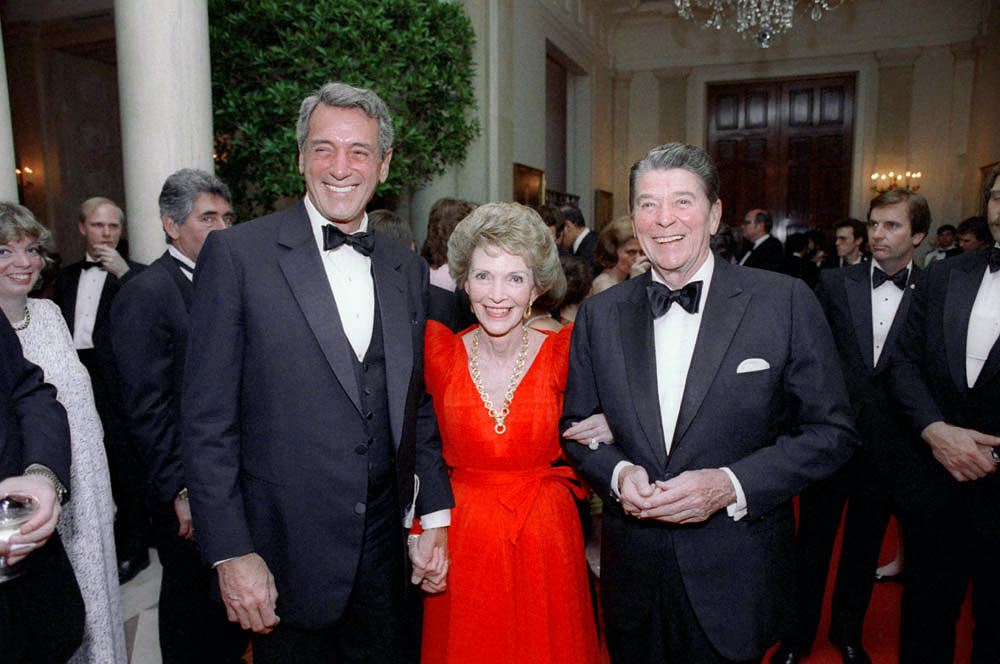
A telephone survey of 500 San Francisco gay and bisexual men in June 1985, found that eight out of 10 respondents said they had made dramatic changes in their sexual behaviour. Later that summer, celebrity actor Rock Hudson revealed he had AIDS; he was dead by October. Hudson’s plight had an immediate impact on the public profile of AIDS.

Reagans_with_Rock_Hudson

Rock Hudson with Nancy & Ronald Reagan in 1984: source, Wikipedia.

In Calgary, there was a “social coming together” of people concerned about AIDS and the deaths that were happening in the city. The first meeting for what was to become AIDS Calgary happened in September 1985.

{KA}